
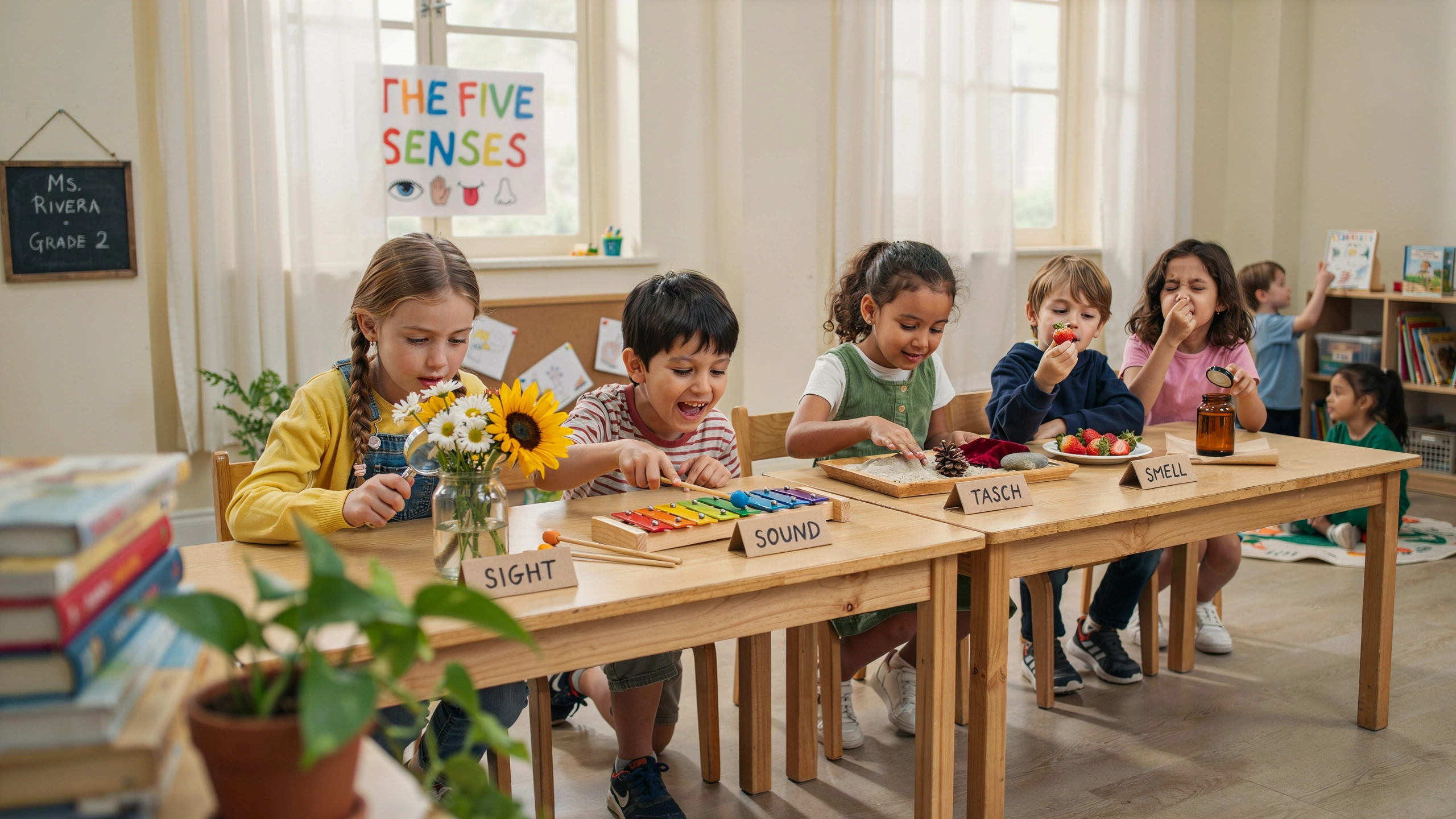
Children learn about the world through their senses long before they understand scientific concepts. Every sound they hear, texture they touch, scent they smell, taste they experience, and object they see helps them build knowledge about their environment. By exploring the five senses through fun, hands-on activities, children develop observation skills, critical thinking, and a deeper appreciation for science.
Whether at home, in the classroom, or during homeschool lessons, these simple activities encourage curiosity while making science meaningful and enjoyable.
Why Learning About the Five Senses Is Important
The five senses—sight, hearing, smell, taste, and touch—are essential for everyday learning. Exploring them helps children:
- Develop observation and comparison skills
- Build descriptive vocabulary
- Improve memory and concentration
- Strengthen communication skills
- Practice making predictions
- Understand how the human body collects information
These activities also encourage mindfulness by helping children pay closer attention to the world around them.
Safety Tips
Before beginning:
- Supervise young children during all activities.
- Check for food allergies before taste or smell experiments.
- Use clean, child-safe materials.
- Encourage handwashing before and after activities.
- Avoid very hot, sharp, or potentially harmful objects.
A safe learning environment allows children to explore confidently.
Activity 1: Mystery Touch Box
Materials
- Small box or bag
- Cotton ball
- Spoon
- Toy car
- Sponge
- Pine cone
- Feather
- Small rock
Instructions
- Place one object inside the box.
- Ask your child to reach inside without looking.
- Feel the object carefully.
- Guess what it is before removing it.
Science Behind It
The skin contains nerve endings that send information about texture, shape, and temperature to the brain, allowing us to recognize objects through touch alone.
Activity 2: Sound Detective
Materials
- Several household items
- Spoon
- Glass
- Keys
- Paper
- Plastic bottle
Instructions
- Hide the objects behind a screen or table.
- Make one sound at a time.
- Ask your child to identify the object using only hearing.
Science Behind It
Sound travels through the air as vibrations. Our ears collect these vibrations, and the brain interprets them as different sounds.
Activity 3: Guess the Smell
Materials
- Small containers
- Cinnamon
- Vanilla
- Lemon peel
- Coffee
- Mint leaves
Instructions
- Place each item in a covered container.
- Let children smell one container at a time.
- Guess the scent before revealing the answer.
Science Behind It
Tiny scent molecules travel through the air and enter the nose, where special receptors send signals to the brain to identify different smells.
Activity 4: Taste Test Challenge
Materials
- Apple slices
- Banana
- Crackers
- Cheese
- Orange segments
- Small cups of water
Instructions
- Blindfold your child if appropriate.
- Offer one food at a time.
- Ask them to identify each food using only taste.
Science Behind It
Taste buds on the tongue detect flavors such as sweet, salty, sour, bitter, and umami. Smell also plays an important role in how we experience flavor.
Activity 5: Color Hunt
Materials
- Colored paper
- Basket
- Household objects
Instructions
- Choose one color.
- Ask children to find objects around the room that match the color.
- Repeat with different colors.
Science Behind It
Our eyes detect light reflected from objects. The brain processes different wavelengths of light as different colors.
Activity 6: Nature Texture Walk
Materials
- Outdoor space
- Collection bag
- Magnifying glass (optional)
Instructions
- Walk through a garden or park.
- Collect safe natural items like leaves, smooth stones, bark, and grass.
- Compare their textures.
Science Behind It
Different natural materials have unique physical properties, allowing us to classify and compare them using touch.
Activity 7: Sensory Water Play
Materials
- Large container
- Water
- Cups
- Sponges
- Floating toys
- Ice cubes
Instructions
- Fill the container with water.
- Add different objects.
- Encourage children to explore how each item feels and behaves.
Science Behind It
Water allows children to experience temperature, texture, buoyancy, and movement while engaging multiple senses at once.
Encourage Scientific Observation
Ask questions such as:
- Which object feels the softest?
- Which smell is strongest?
- Which sound is loudest?
- How do these two textures differ?
- What surprised you the most?
These conversations encourage children to describe observations using scientific language.
Skills Children Develop
Five-senses activities help strengthen:
- Observation skills
- Scientific inquiry
- Vocabulary development
- Listening skills
- Memory
- Attention to detail
- Comparison and classification
- Critical thinking
These foundational skills support future learning in science and many other subjects.
Extend the Learning
To deepen the experience, encourage children to:
- Create a five-senses journal with drawings and notes.
- Sort collected objects by texture, color, or smell.
- Compare experiences indoors and outdoors.
- Invent their own sensory games.
- Share their discoveries with family or classmates.
These extension activities promote creativity and reinforce scientific thinking.
Final Thoughts
Exploring the five senses is one of the most enjoyable ways to introduce children to science. Everyday experiences become exciting opportunities for discovery when children are encouraged to observe, compare, and ask questions.
By using simple materials and engaging activities, parents and educators can help children understand how their bodies gather information about the world. More importantly, these hands-on experiences nurture curiosity, confidence, and a lifelong love of learning through science.