
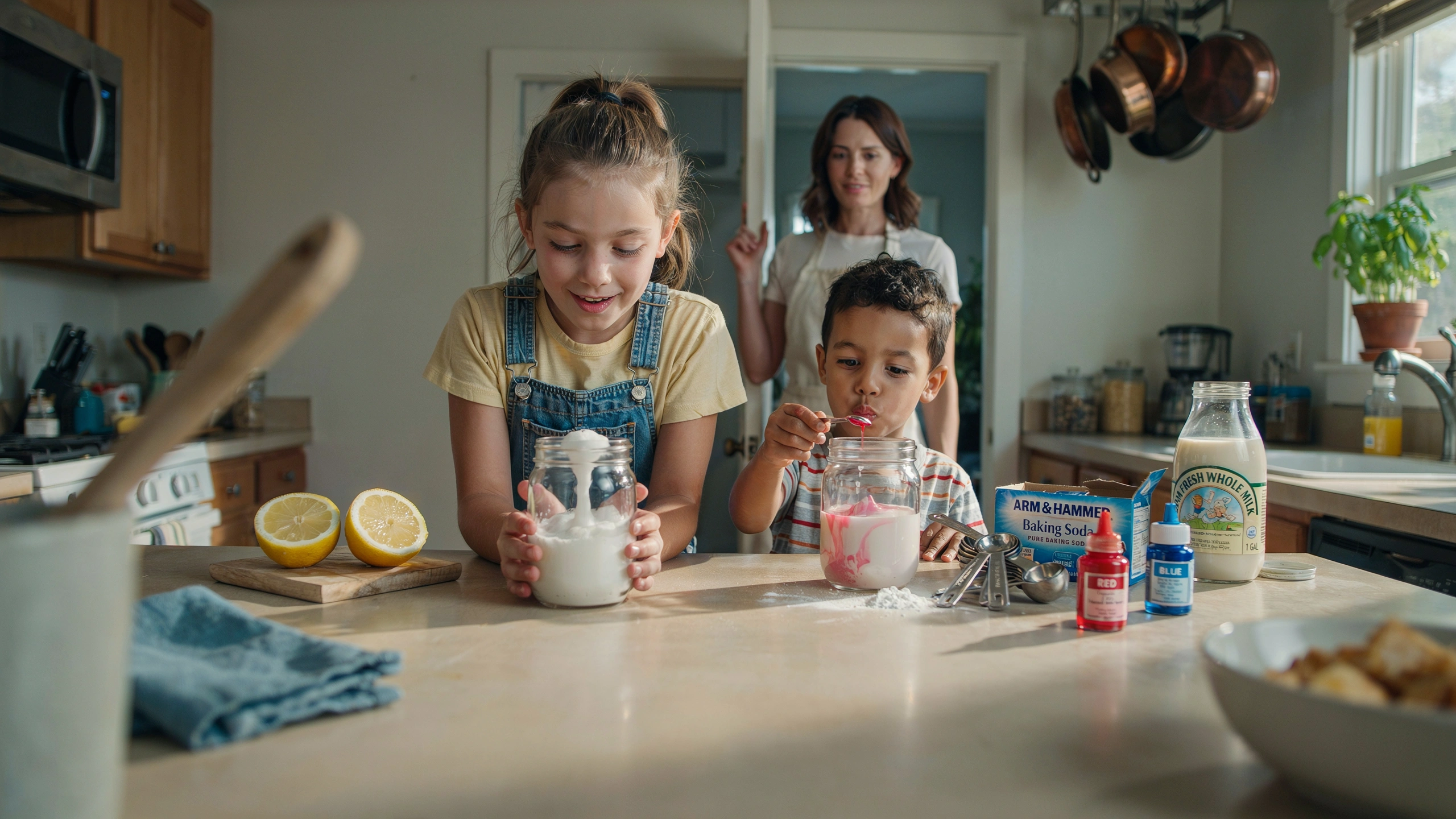
The kitchen is one of the best places to introduce children to science. Everyday ingredients can become exciting learning tools that teach chemistry, physics, and biology through hands-on exploration. From bubbling reactions to growing crystals, kitchen science activities encourage curiosity while making learning both fun and memorable.
Whether you’re a parent, teacher, or homeschool educator, these simple experiments require minimal preparation and use items you likely already have at home.
Why Kitchen Science Is Perfect for Children
Children learn best by doing. Kitchen science activities allow them to explore scientific concepts in a familiar environment while developing important life skills.
Benefits include:
- Encouraging curiosity and creativity
- Building observation and critical thinking skills
- Teaching basic scientific principles
- Improving problem-solving abilities
- Developing patience and attention to detail
- Making science enjoyable and accessible
Most activities can be completed in less than 30 minutes, making them perfect for busy families.
Kitchen Safety First
Before starting any experiment:
- Always supervise young children.
- Wash hands before and after activities.
- Use child-safe utensils whenever possible.
- Avoid tasting experiment materials unless they are prepared specifically as food.
- Clean up spills immediately to prevent slipping.
Safety helps ensure that learning remains enjoyable for everyone.
Activity 1: Baking Soda and Vinegar Volcano
Materials
- Small cup or bottle
- Baking soda
- White vinegar
- Dish soap (optional)
- Food coloring (optional)
- Tray
Instructions
- Place the cup on a tray.
- Add two tablespoons of baking soda.
- Add a few drops of food coloring.
- Pour in vinegar.
- Watch the eruption.
Science Behind It
Baking soda is a base, while vinegar is an acid. When combined, they create a chemical reaction that produces carbon dioxide gas, causing the bubbly eruption.
Activity 2: Homemade Butter
Materials
- Heavy cream
- Small jar with a lid
Instructions
- Fill the jar halfway with cream.
- Close the lid tightly.
- Shake for several minutes.
- Watch as the cream thickens into butter.
Science Behind It
Shaking breaks the membranes surrounding fat molecules. The fat sticks together, separating from the liquid to form butter.
Activity 3: Invisible Ink with Lemon Juice
Materials
- Lemon juice
- Cotton swab
- White paper
- Lamp or warm iron (adult supervision required)
Instructions
- Dip the cotton swab into lemon juice.
- Write a secret message.
- Allow the paper to dry.
- Gently heat the paper with adult assistance.
What Happens?
The hidden message becomes visible.
Science Behind It
The lemon juice oxidizes more quickly than the paper when heated, causing the writing to turn brown.
Activity 4: Growing Salt Crystals
Materials
- Hot water
- Salt
- Glass jar
- String
- Pencil
Instructions
- Dissolve as much salt as possible in hot water.
- Pour the solution into a jar.
- Tie a string to a pencil and suspend it in the jar.
- Leave the jar undisturbed for several days.
What Happens?
Small salt crystals begin to grow on the string.
Science Behind It
As the water evaporates, dissolved salt particles bond together, forming crystals.
Activity 5: Pepper and Soap Experiment
Materials
- Plate
- Water
- Black pepper
- Dish soap
Instructions
- Fill the plate with water.
- Sprinkle pepper over the surface.
- Touch the water with a clean finger.
- Dip your finger in soap and touch the water again.
What Happens?
The pepper quickly moves away from your finger.
Science Behind It
Dish soap reduces the water’s surface tension, causing the pepper to move toward the edges of the plate.
Activity 6: Homemade Rock Candy
Materials
- Sugar
- Water
- Glass jar
- Wooden skewer
- Clothespin
Instructions
- Dissolve large amounts of sugar in boiling water.
- Pour the solution into a jar.
- Suspend the skewer in the center.
- Leave it undisturbed for one to two weeks.
What Happens?
Sparkling sugar crystals begin growing on the stick.
Science Behind It
As the water slowly evaporates, sugar molecules attach to one another and form crystals.
Activity 7: Raisins That Dance
Materials
- Sparkling water
- Clear glass
- Raisins
Instructions
- Fill the glass with sparkling water.
- Add several raisins.
- Observe their movement.
What Happens?
The raisins repeatedly float and sink.
Science Behind It
Carbon dioxide bubbles stick to the raisins, making them buoyant until the bubbles burst.
Questions to Ask During Each Activity
Encourage children to think like scientists by asking:
- What do you think will happen?
- Why did that happen?
- What changed?
- What would happen if we used a different ingredient?
- Can you explain your observations?
These questions develop reasoning skills and scientific thinking.
Turn Every Experiment into a Learning Opportunity
After each activity, invite children to:
- Draw the experiment.
- Write down their predictions.
- Record the results.
- Explain the science in their own words.
- Repeat the activity with slight changes.
Keeping a science journal helps children organize their observations and improve communication skills.
Scientific Skills Children Develop
Kitchen science activities strengthen many important abilities, including:
- Observation
- Measuring and comparing
- Logical reasoning
- Problem-solving
- Fine motor coordination
- Vocabulary development
- Patience
- Creativity
These skills support learning across many subjects beyond science.
Final Thoughts
The kitchen is a wonderful classroom filled with opportunities for discovery. With simple ingredients like baking soda, vinegar, salt, sugar, and lemon juice, children can explore fascinating scientific concepts while having fun.
The greatest lesson isn’t memorizing scientific facts—it’s learning to ask questions, make predictions, test ideas, and enjoy the excitement of discovering how things work. Every experiment helps build confidence, curiosity, and a lifelong appreciation for science.