
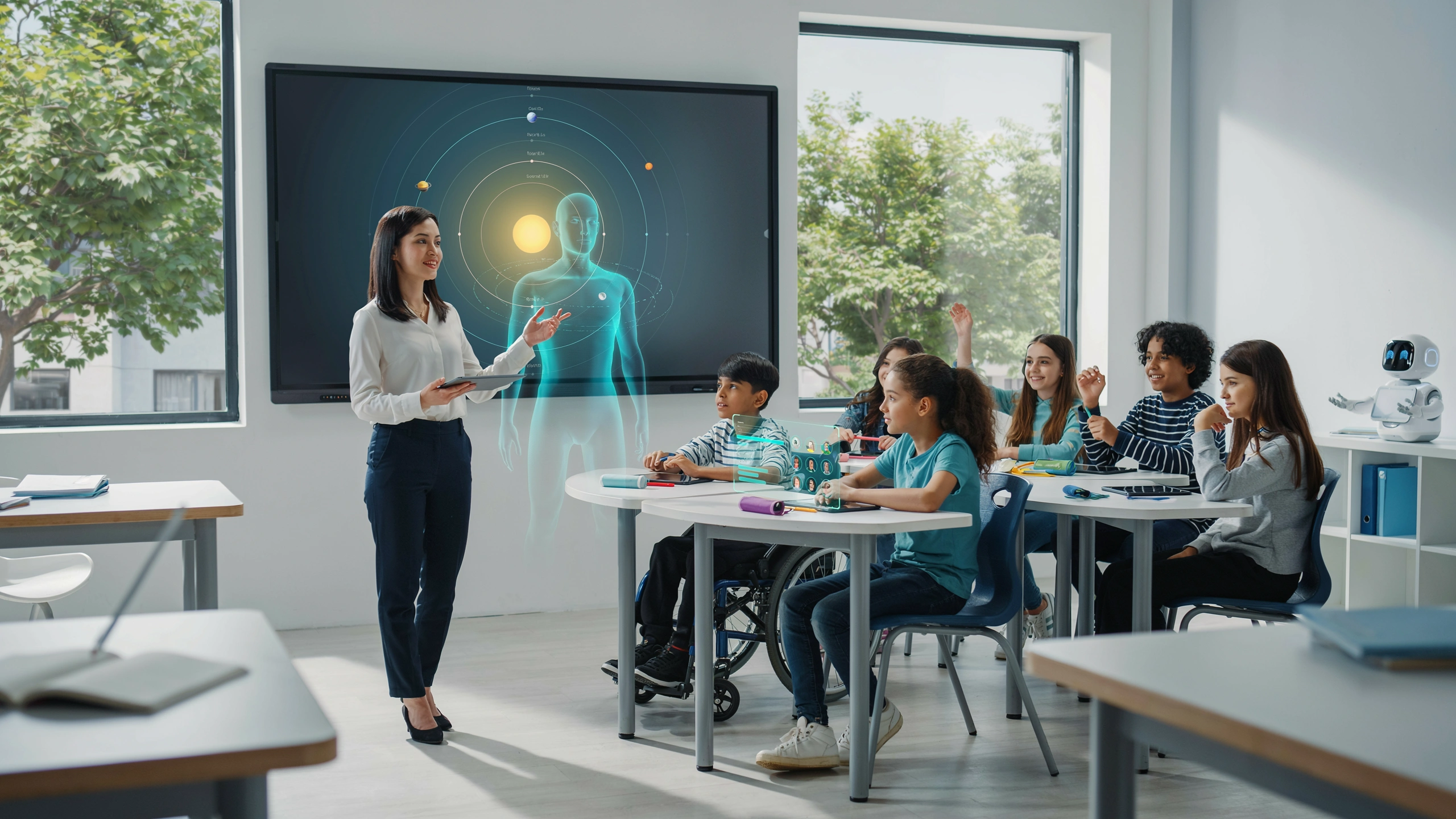
Artificial Intelligence (AI) is no longer a futuristic concept—it has become an important part of modern education. Schools, teachers, and students around the world are using AI-powered tools to improve learning, simplify administrative tasks, and create more engaging educational experiences. While AI cannot replace great teachers, it can support them in delivering personalized instruction and helping every student reach their full potential.
What Is Artificial Intelligence in Education?
Artificial Intelligence refers to computer systems that can perform tasks requiring human intelligence, such as recognizing patterns, understanding language, solving problems, and making recommendations. In education, AI is used to analyze student performance, provide personalized feedback, automate routine tasks, and create interactive learning experiences.
Examples of AI in education include intelligent tutoring systems, automated grading software, adaptive learning platforms, language learning applications, and AI-powered virtual assistants.
Personalized Learning for Every Student
One of the greatest advantages of AI is its ability to personalize education. Every student learns differently. Some grasp concepts quickly, while others need additional practice and support.
AI-powered learning platforms monitor student progress and adjust lessons according to each learner’s strengths and weaknesses. If a student struggles with fractions in mathematics, the system can provide additional exercises, videos, and explanations before moving on to more advanced topics.
This personalized approach helps students learn at their own pace and reduces frustration while increasing confidence.
Helping Teachers Save Time
Teachers spend many hours grading assignments, preparing lesson plans, and completing administrative work. AI can automate many of these repetitive tasks, allowing educators to focus more on teaching and supporting students.
For example, AI can:
- Grade quizzes and multiple-choice tests instantly.
- Generate practice questions and worksheets.
- Analyze classroom performance data.
- Suggest personalized learning activities.
- Organize lesson materials.
By reducing administrative workload, teachers gain more time to build meaningful relationships with their students.
Improving Student Engagement
Modern students are surrounded by technology in their daily lives. AI-powered educational tools make learning more interactive and engaging through games, simulations, virtual tutors, and adaptive quizzes.
Instead of passively reading textbooks, students can participate in interactive activities that provide immediate feedback. This active learning approach often increases motivation and improves knowledge retention.
Supporting Students with Different Learning Needs
AI can make education more inclusive by supporting students with diverse learning needs.
Examples include:
- Text-to-speech software for struggling readers.
- Speech-to-text tools for students with writing difficulties.
- Real-time translation for multilingual classrooms.
- Personalized support for students with learning disabilities.
- AI captioning for hearing-impaired learners.
These technologies help ensure that more students can participate successfully in classroom activities.
Enhancing Language Learning
Language education has greatly benefited from AI technologies. Many language-learning applications use AI to evaluate pronunciation, recommend vocabulary, and create customized practice sessions.
Students receive instant corrections instead of waiting for teacher feedback, allowing them to improve their speaking, reading, writing, and listening skills more efficiently.
Better Data for Better Decisions
AI helps educators identify learning patterns that may not be immediately visible.
Schools can use learning analytics to:
- Detect students who may be falling behind.
- Monitor attendance and participation.
- Measure learning progress.
- Identify knowledge gaps.
- Evaluate the effectiveness of teaching strategies.
With better information, teachers can intervene early and provide targeted support before small problems become larger ones.
Preparing Students for the Future
Technology is changing the workplace rapidly. Many future careers will require digital literacy, problem-solving skills, creativity, and the ability to work alongside AI systems.
By introducing AI responsibly in classrooms, schools help students develop technological confidence and prepare them for careers that may not even exist today.
Students also learn important skills such as critical thinking, digital ethics, and responsible technology use.
Challenges of AI in Education
Although AI offers many benefits, it also presents challenges that schools must address.
Some concerns include:
- Protecting student privacy and data security.
- Ensuring equal access to technology.
- Preventing overreliance on automated systems.
- Reducing algorithmic bias.
- Training teachers to use AI effectively.
Educational institutions should implement clear policies to ensure AI is used ethically and responsibly.
The Role of Teachers Remains Essential
Despite rapid technological advances, AI cannot replace the human qualities that teachers bring to education.
Teachers inspire curiosity, encourage creativity, build emotional connections, resolve conflicts, and understand students’ social and emotional needs. AI should be viewed as a supportive tool rather than a replacement for professional educators.
The best learning environments combine innovative technology with compassionate, skilled teaching.
Conclusion
Artificial Intelligence is transforming modern classrooms by making learning more personalized, efficient, engaging, and inclusive. It helps teachers reduce administrative work, supports students with diverse learning needs, and prepares young people for a technology-driven future.
As AI continues to evolve, schools must balance innovation with ethical responsibility, ensuring that technology enhances education while keeping human relationships at the center of the learning experience. When used thoughtfully, Artificial Intelligence has the potential to improve educational outcomes for learners of all ages and create classrooms that are better equipped for the challenges and opportunities of the twenty-first century.