
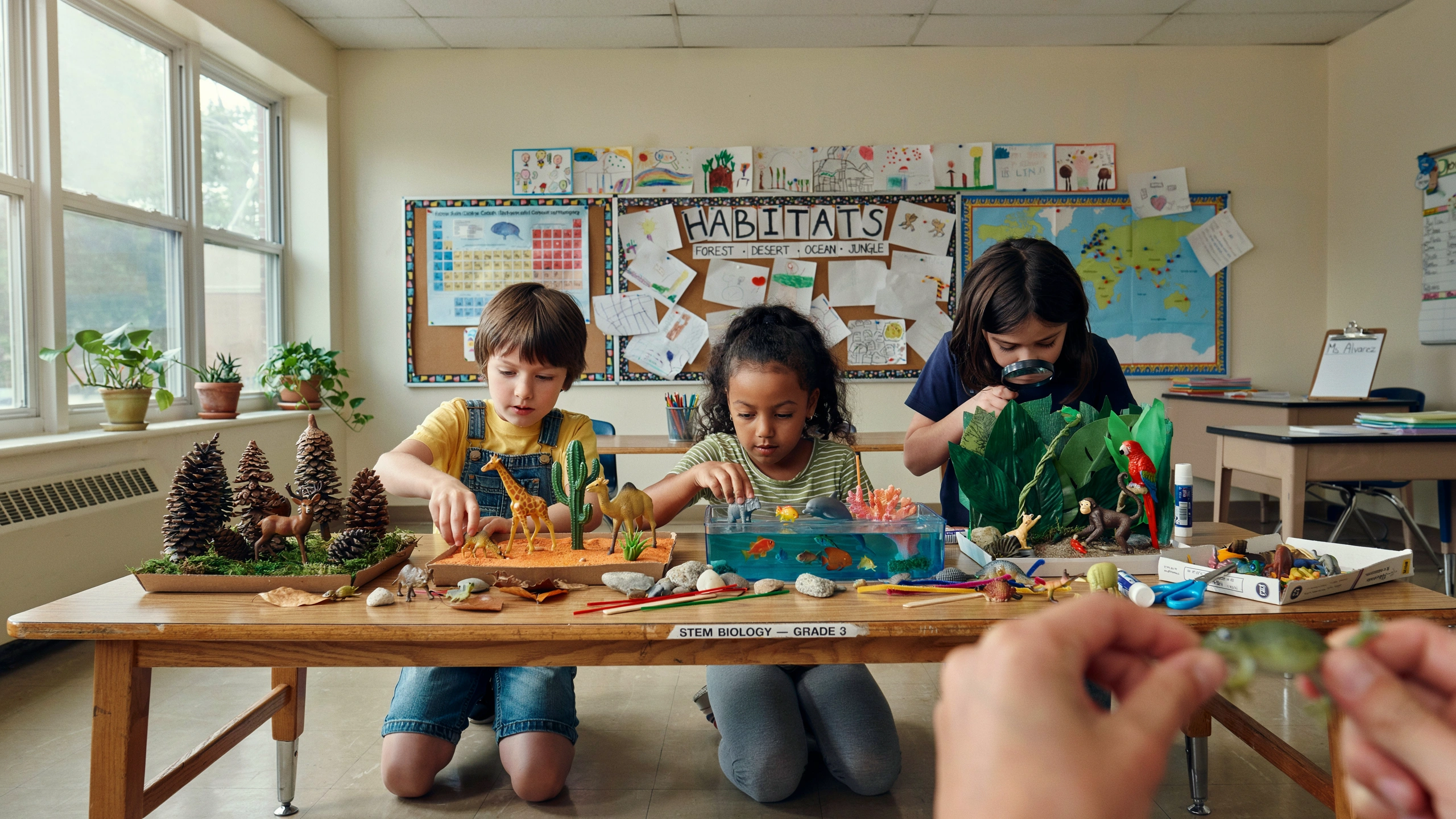
Animals live in many different environments, from forests and deserts to oceans and mountains. Each habitat provides the food, water, shelter, and space that animals need to survive. By exploring animal habitats through interactive activities, children can learn about biodiversity, ecosystems, and the importance of protecting nature.
These hands-on science activities encourage curiosity, observation, and critical thinking while helping children understand how animals adapt to their surroundings.
Why Teach Children About Animal Habitats?
Learning about habitats helps children understand the relationship between animals and their environments. Instead of simply memorizing facts, they discover how living things depend on one another.
Benefits include:
- Building environmental awareness
- Understanding ecosystems
- Developing observation skills
- Encouraging empathy for wildlife
- Improving classification and comparison skills
- Inspiring curiosity about nature
Habitat activities also support geography, biology, and earth science learning.
What Is a Habitat?
A habitat is the natural home of a plant or animal. It provides everything needed for survival, including:
- Food
- Water
- Shelter
- Space
- Suitable weather and climate
Every habitat is unique, and different animals have adapted to thrive in different environments.
Common Types of Animal Habitats
Introduce children to some of the world’s major habitats:
- Forests
- Deserts
- Grasslands
- Oceans
- Rivers and wetlands
- Mountains
- Polar regions
- Rainforests
Discuss the weather, plants, and animals found in each habitat.
Activity 1: Match the Animal to Its Habitat
Materials
- Animal picture cards
- Habitat picture cards
Instructions
- Place habitat cards on a table.
- Mix the animal cards.
- Ask children to match each animal with its correct habitat.
- Discuss why each animal belongs there.
Science Behind It
Animals survive in habitats that provide the right conditions for food, shelter, and reproduction.
Activity 2: Build a Mini Habitat
Materials
- Shoebox
- Colored paper
- Natural materials
- Small animal figures
- Glue
Instructions
- Choose a habitat.
- Decorate the shoebox to represent the environment.
- Add plants, rocks, or water features.
- Place animals inside their appropriate habitat.
Science Behind It
Habitats contain both living (biotic) and non-living (abiotic) components that work together to support life.
Activity 3: Nature Scavenger Hunt
Materials
- Observation sheet
- Pencil
- Magnifying glass (optional)
Instructions
Take a walk outdoors and search for:
- Birds
- Insects
- Leaves
- Animal tracks
- Nests
- Spider webs
Record or draw each discovery.
Science Behind It
Even small outdoor spaces are ecosystems where plants and animals interact.
Activity 4: Animal Adaptation Challenge
Materials
- Animal pictures
- Question cards
Instructions
Choose an animal and discuss:
- How does it find food?
- How does it stay safe?
- How does it survive the weather?
- What special body features help it?
Science Behind It
Adaptations are physical or behavioral traits that help animals survive in their habitats.
Activity 5: Build a Food Chain
Materials
- Picture cards of plants and animals
- String or arrows
Instructions
Arrange cards in order:
Plant → Herbivore → Carnivore
Discuss how energy moves through the food chain.
Science Behind It
Every ecosystem depends on food chains that connect plants and animals.
Activity 6: Habitat Sorting Game
Materials
- Picture cards
- Sorting trays
Instructions
Sort objects into habitat groups such as:
- Ocean
- Forest
- Desert
- Arctic
Include animals, plants, and natural features.
Science Behind It
Classification helps scientists organize information and understand relationships between organisms.
Activity 7: Design Your Own Animal
Materials
- Paper
- Colored pencils
Instructions
- Invent a new animal.
- Choose its habitat.
- Draw special adaptations.
- Explain how it survives.
Science Behind It
Children apply their knowledge of habitats and adaptations by designing an animal suited to a specific environment.
Encourage Scientific Thinking
Ask children questions such as:
- Why can’t a polar bear live in the desert?
- What would happen if a habitat lost its water source?
- Which animals share the same habitat?
- How do plants help animals survive?
- What adaptations are most important?
These questions help children think critically about ecosystems.
Skills Children Develop
Habitat activities strengthen:
- Observation skills
- Scientific reasoning
- Classification
- Environmental awareness
- Communication
- Creativity
- Critical thinking
- Problem-solving
These skills support science learning and foster respect for nature.
Extend the Learning
Expand the activities by:
- Visiting a zoo, aquarium, or nature reserve.
- Watching wildlife documentaries.
- Creating habitat posters.
- Researching endangered animals.
- Building a classroom ecosystem display.
- Planting a pollinator-friendly garden.
These experiences help children connect classroom learning with the natural world.
Why Protecting Habitats Matters
Human activities such as pollution, deforestation, and climate change can damage natural habitats. Explain to children that protecting ecosystems helps animals, plants, and people.
Simple actions include:
- Recycling materials
- Saving water
- Planting trees
- Avoiding littering
- Respecting wildlife
These habits encourage children to become responsible environmental stewards.
Final Thoughts
Learning about animal habitats helps children understand the incredible diversity of life on Earth. Through interactive games, creative projects, and outdoor exploration, young learners discover how animals depend on their environments to survive.
Every forest, ocean, desert, and meadow tells a story of adaptation and balance. By exploring these habitats, children develop curiosity, compassion for wildlife, and a deeper appreciation for the natural world—laying the foundation for a lifelong interest in science and conservation.