
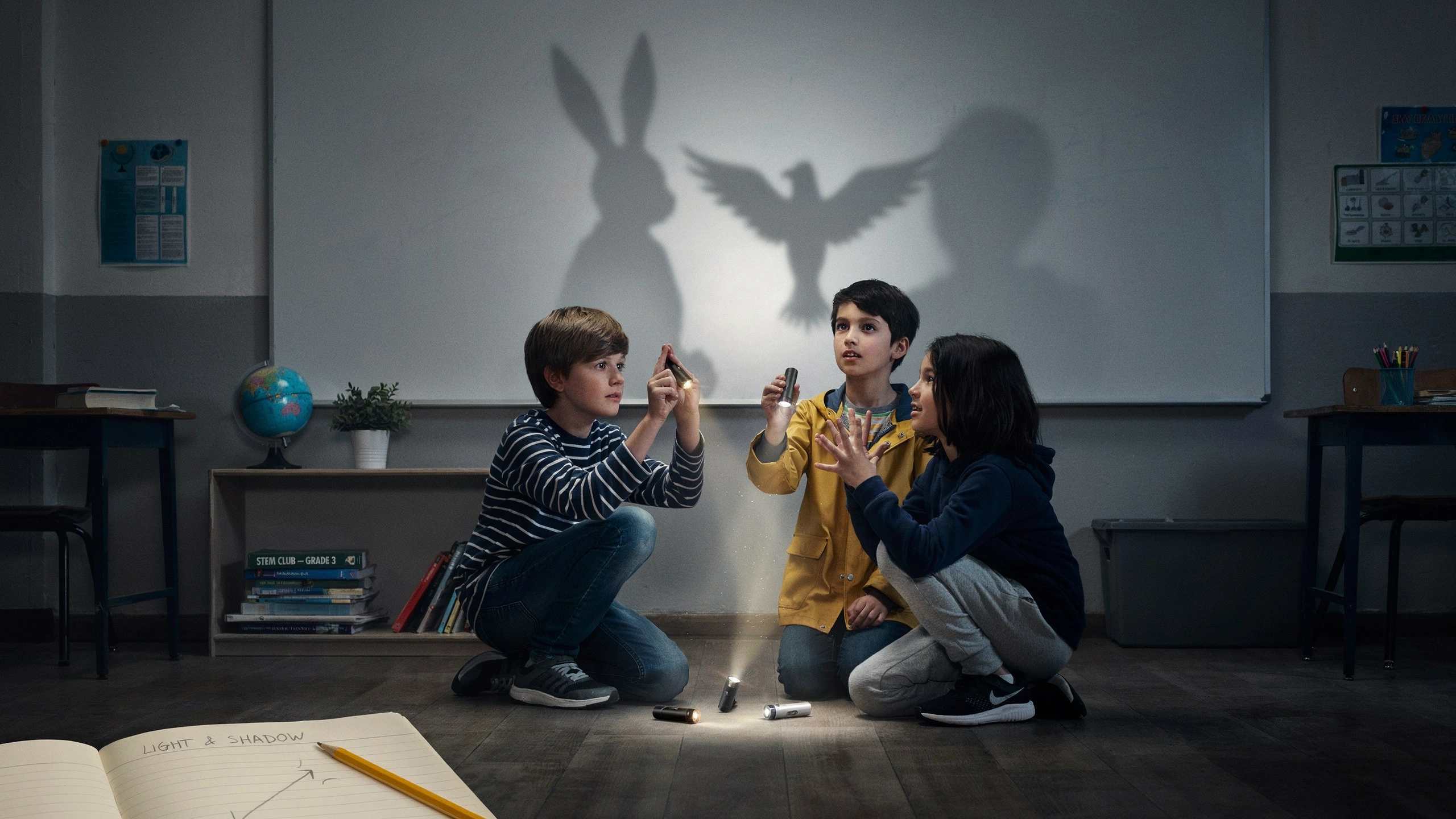
Light and shadows are part of children’s everyday experiences, yet they often seem mysterious. Why does a shadow change size? Why do shadows disappear at night? Can light travel through every object? Exploring these questions through hands-on activities helps children understand the science of light while encouraging curiosity, creativity, and observation.
With a flashlight, a few household objects, and a little imagination, children can become young scientists investigating the fascinating world of light and shadows.
Why Learn About Light and Shadows?
Light is essential for seeing the world around us. By experimenting with shadows, children begin to understand important scientific concepts in an engaging and memorable way.
These activities help children:
- Develop observation skills
- Understand how light travels
- Explore cause and effect
- Improve critical thinking
- Build creativity and imagination
- Learn basic physics concepts
Shadow play also combines science with storytelling, art, and outdoor exploration.
Safety Tips
Before beginning:
- Never look directly at the sun.
- Avoid shining flashlights into anyone’s eyes.
- Use LED flashlights that remain cool to the touch.
- Supervise children during outdoor activities.
- Choose safe indoor and outdoor play areas.
Safety ensures children can explore confidently.
Understanding Shadows
Before starting the activities, explain the basics.
A shadow forms when an object blocks light. Since light travels in straight lines, it cannot pass through opaque objects. The area behind the object receives less light, creating a shadow.
Three things are needed to make a shadow:
- A light source
- An object
- A surface where the shadow appears
Without one of these, a shadow cannot form.
Activity 1: Shadow Matching Game
Materials
- Flashlight
- Small toys
- White wall or large sheet of paper
Instructions
- Place one toy between the flashlight and the wall.
- Observe its shadow.
- Guess which object created the shadow.
- Repeat with different objects.
Science Behind It
Different objects block light in different ways, producing unique shadow shapes.
Activity 2: Change the Shadow Size
Materials
- Flashlight
- Toy
- Wall
Instructions
- Shine the flashlight toward the toy.
- Move the toy closer to the light.
- Move it farther away.
- Compare the shadow sizes.
Science Behind It
Objects closer to the light source create larger shadows, while objects farther away create smaller ones.
Activity 3: Shadow Tracing Outdoors
Materials
- Sidewalk chalk
- Sunny day
Instructions
- Stand in the same place.
- Ask someone to trace your shadow.
- Repeat every hour.
- Compare the outlines.
Science Behind It
As Earth rotates, the Sun appears to move across the sky, causing shadows to change length and direction.
Activity 4: Transparent, Translucent, or Opaque?
Materials
- Flashlight
- Plastic wrap
- Wax paper
- Cardboard
- Glass
Instructions
- Shine the flashlight through each material.
- Observe how much light passes through.
- Sort the materials into groups.
Science Behind It
- Transparent materials let almost all light pass through.
- Translucent materials allow some light through but scatter it.
- Opaque materials block light completely.
Activity 5: Create Shadow Animals
Materials
- Flashlight
- Hands
- Wall
Instructions
- Shine the flashlight at the wall.
- Use your hands to create animal shapes.
- Try making birds, rabbits, dogs, or butterflies.
- Tell stories using the shadow animals.
Science Behind It
Changing the position of your hands changes how light is blocked, creating different shadow shapes.
Activity 6: Build a Shadow Puppet Theater
Materials
- Cardboard box
- White paper
- Flashlight
- Craft sticks
- Paper characters
Instructions
- Create a small theater using the cardboard box.
- Cover one side with white paper.
- Attach paper characters to craft sticks.
- Shine a flashlight behind the screen.
- Put on a shadow puppet show.
Science Behind It
The paper characters block the light, creating moving shadows that appear on the screen.
Activity 7: Explore Natural Shadows
Materials
- Notebook
- Pencil
Instructions
Take a walk outside and observe shadows created by:
- Trees
- Buildings
- Cars
- Animals
- Playground equipment
Draw or describe the different shadow shapes.
Science Behind It
The shape and size of each shadow depend on the object’s form and the position of the light source.
Questions to Encourage Scientific Thinking
Ask children:
- Why do shadows appear?
- What happens when the light moves?
- Which objects create the darkest shadows?
- Why are some shadows larger than others?
- Can every object make a shadow?
These questions help children observe, predict, and explain scientific phenomena.
Skills Children Develop
Shadow activities strengthen:
- Observation skills
- Scientific inquiry
- Spatial awareness
- Creativity
- Communication
- Problem-solving
- Fine motor coordination
- Understanding of light and physics
These skills support learning in science, art, and mathematics.
Extend the Learning
Continue exploring by:
- Creating a daily shadow journal.
- Comparing shadows during different seasons.
- Learning about solar eclipses.
- Investigating how animals use camouflage and shadows.
- Building larger shadow sculptures outdoors.
- Exploring how light is used in photography and theater.
These extension activities connect simple experiments with real-world science.
Final Thoughts
Shadow science is a fun and engaging way to introduce children to the fascinating world of light. Through simple experiments and playful exploration, young learners discover how light travels, why shadows change, and how scientists observe natural phenomena.
Every flashlight, sunny afternoon, and shadow on the ground becomes an opportunity to ask questions, make discoveries, and develop a lifelong curiosity about the world around them. By turning everyday experiences into science lessons, parents and educators can inspire the next generation of curious thinkers.