
Introduction
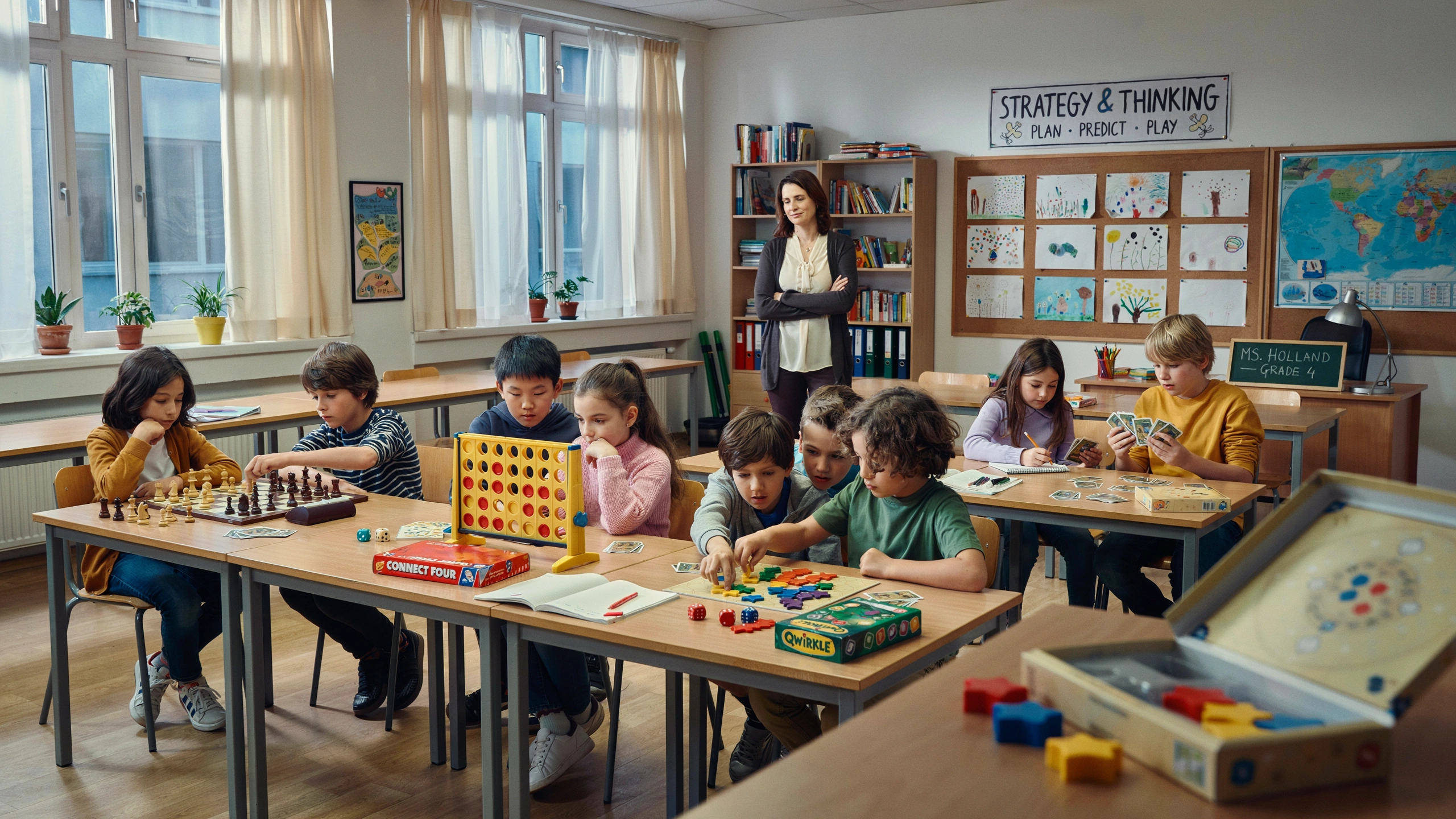
Board games have been bringing families together for generations, but they offer much more than entertainment. Many classic and modern board games challenge children to think ahead, solve problems, and make thoughtful decisions. As children plan their moves and adapt to changing situations, they naturally develop logical reasoning, patience, and strategic thinking.
Whether played at home, in the classroom, or during family game nights, logic board games provide a fun and interactive way to strengthen essential life skills while creating lasting memories.
Why Board Games Are Great Learning Tools
Unlike games based entirely on luck, logic board games encourage children to:
- Plan ahead
- Evaluate different options
- Predict possible outcomes
- Learn from mistakes
- Stay patient under pressure
- Solve problems creatively
These skills help children succeed not only in school but also in everyday life.
1. Chess
Chess is one of the world’s most well-known strategy games. Every move requires careful planning, observation, and prediction.
Children learn to:
- Think several moves ahead
- Protect valuable pieces
- Analyze their opponent’s strategy
- Adapt when plans change
Skills Developed:
- Strategic thinking
- Logical reasoning
- Patience
- Decision-making
2. Checkers
Although easier to learn than chess, checkers still teaches important planning skills.
Children practice:
- Predicting future moves
- Recognizing opportunities
- Thinking before acting
Skills Developed:
- Planning
- Focus
- Strategy
- Critical thinking
3. Connect Four
Players take turns dropping colored discs into a grid while trying to connect four in a row.
Success requires both offensive and defensive thinking.
Skills Developed:
- Pattern recognition
- Planning
- Observation
- Logical reasoning
4. Tic-Tac-Toe
Simple but surprisingly strategic, Tic-Tac-Toe teaches younger children to anticipate an opponent’s next move.
Even preschoolers can begin learning basic planning through this classic game.
Skills Developed:
- Prediction
- Decision-making
- Logical thinking
- Turn-taking
5. Blokus
In Blokus, players place uniquely shaped pieces on the board while trying to expand their territory and block opponents.
The game encourages careful planning and spatial reasoning.
Skills Developed:
- Spatial awareness
- Strategy
- Problem-solving
- Creativity
6. Qwirkle
Qwirkle combines colors and shapes in a game that rewards logical thinking and pattern recognition.
Children must build lines while considering future scoring opportunities.
Skills Developed:
- Pattern recognition
- Planning
- Classification
- Mathematical thinking
7. Rush Hour
This single-player puzzle game challenges children to move vehicles in the correct order to free the blocked car.
Each puzzle becomes more difficult over time.
Skills Developed:
- Sequential reasoning
- Problem-solving
- Persistence
- Logical analysis
8. Labyrinth
Players shift pathways to create routes toward hidden treasures while adapting to constantly changing board layouts.
Children quickly learn that flexibility is just as important as planning.
Skills Developed:
- Adaptability
- Spatial reasoning
- Strategy
- Decision-making
9. Mastermind
One player creates a secret color code while the other attempts to solve it using logical deduction.
Each guess provides valuable clues.
Skills Developed:
- Deductive reasoning
- Critical thinking
- Analysis
- Observation
10. Sequence
Players match cards to spaces on the board while planning future moves and blocking opponents.
The combination of luck and strategy keeps every game interesting.
Skills Developed:
- Strategic planning
- Pattern recognition
- Teamwork
- Logical reasoning
How Board Games Teach Patience
Many children naturally want quick results, but strategy games reward thoughtful decision-making.
During play, children learn to:
- Wait for their turn
- Think before acting
- Accept mistakes calmly
- Keep trying after setbacks
- Respect the rules
These habits support emotional development as well as logical thinking.
Learning Through Winning and Losing
Board games teach valuable lessons regardless of the outcome.
Winning helps children build confidence.
Losing teaches them to:
- Reflect on their decisions
- Improve their strategies
- Show good sportsmanship
- Stay motivated
Understanding that mistakes are part of learning builds resilience and perseverance.
Choosing the Right Game by Age
Ages 3–5
- Tic-Tac-Toe
- Simple matching games
- Basic memory games
Ages 6–8
- Connect Four
- Checkers
- Qwirkle
- Beginner strategy games
Ages 9+
- Chess
- Blokus
- Mastermind
- Rush Hour
- Labyrinth
- Sequence
Selecting games that match a child’s developmental level helps maintain both confidence and interest.
Tips for Parents and Teachers
Make board game time even more educational by:
- Asking children to explain their choices.
- Encouraging them to think before moving.
- Discussing different strategies after each game.
- Praising thoughtful decisions instead of only winning.
- Playing regularly to strengthen skills over time.
Remember, the conversations during the game are often just as valuable as the game itself.
Conclusion
Logic board games are powerful tools for helping children develop planning, patience, and strategic thinking. Every thoughtful move encourages young learners to analyze situations, predict outcomes, and make informed decisions. At the same time, these games teach resilience, sportsmanship, and confidence.
Whether you’re introducing a child to Tic-Tac-Toe, challenging them with Chess, or exploring puzzle games like Rush Hour, every game becomes an opportunity to build lifelong critical thinking skills. Most importantly, board games remind us that learning is often most effective when families and friends enjoy the journey together.