
Introduction
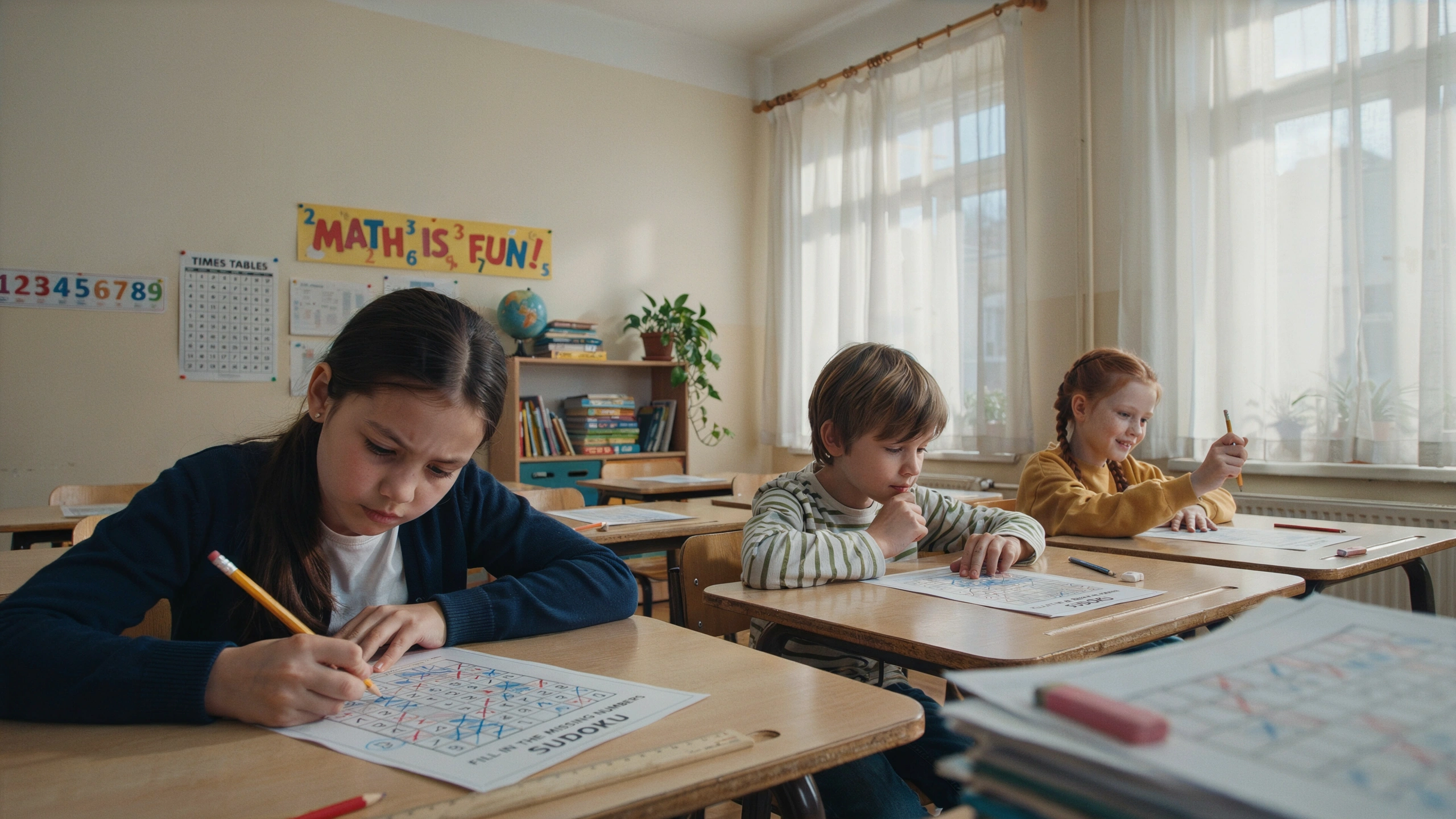
Sudoku and number puzzles are often associated with adults, but they can also be excellent learning tools for children. Kid-friendly versions of these puzzles introduce young learners to logical thinking, pattern recognition, and problem-solving in a fun and engaging way. Instead of relying on advanced math skills, Sudoku teaches children to analyze information, recognize relationships, and make thoughtful decisions.
Whether children solve puzzles with numbers, pictures, colors, or symbols, they develop valuable cognitive skills that support success in school and everyday life.
What Is Sudoku?
Sudoku is a logic puzzle where players fill a grid according to specific rules. In the classic version, each row, column, and smaller section must contain each number only once.
For younger children, Sudoku can be simplified by using:
- Animals
- Shapes
- Colors
- Letters
- Pictures
These child-friendly versions focus on logical reasoning rather than mathematical calculations.
1. Sudoku Strengthens Logical Thinking
Every Sudoku puzzle encourages children to think carefully before making a move. Instead of guessing, they must use clues to determine the correct answer.
Children learn to:
- Eliminate impossible choices
- Compare information
- Follow logical rules
- Make evidence-based decisions
Skills Developed:
- Logical reasoning
- Critical thinking
- Analysis
- Decision-making
2. Number Puzzles Improve Concentration
Solving a puzzle requires children to stay focused for extended periods.
As they search for solutions, they naturally improve:
- Attention span
- Mental focus
- Patience
- Self-discipline
These skills benefit classroom learning and homework.
3. Pattern Recognition Becomes Stronger
Sudoku is built around recognizing patterns and relationships.
Children begin noticing:
- Missing numbers
- Repeating arrangements
- Visual patterns
- Logical connections
Pattern recognition is an essential skill in mathematics, science, coding, and reading.
4. Children Learn to Solve Problems Step by Step
Large puzzles can seem overwhelming at first.
Sudoku teaches children to break the challenge into smaller parts by solving one row, column, or section at a time.
This structured approach helps them become more confident problem solvers.
5. Mistakes Become Learning Opportunities
Every incorrect answer provides valuable feedback.
Children discover how to:
- Check their work
- Correct errors
- Try a different strategy
- Learn through trial and improvement
This encourages resilience and a growth mindset.
6. Sudoku Builds Working Memory
Children must remember which numbers have already been used while considering possible solutions.
This strengthens working memory, which supports:
- Reading comprehension
- Mathematics
- Following instructions
- Everyday learning
7. Number Puzzles Encourage Independent Learning
Unlike many classroom assignments, Sudoku allows children to work at their own pace.
They gain confidence by:
- Solving challenges independently
- Testing different strategies
- Celebrating personal progress
This independence motivates children to enjoy learning.
8. Sudoku Supports Mathematics Without Feeling Like Math
Although Sudoku uses numbers, it is not a calculation activity.
Instead, children practice important mathematical habits such as:
- Logical reasoning
- Sequencing
- Pattern recognition
- Careful observation
These thinking skills make future math learning easier.
9. Puzzle Time Reduces Screen Time
Sudoku provides a meaningful alternative to digital entertainment.
Instead of spending extra time on electronic devices, children can enjoy a quiet activity that exercises their brains while relaxing.
This makes Sudoku an excellent choice for:
- Family game nights
- Travel
- Waiting rooms
- Rainy afternoons
- Classroom brain breaks
10. Solving Puzzles Builds Confidence
Every completed puzzle gives children a sense of achievement.
As puzzles become more challenging, children realize that persistence and careful thinking lead to success.
This confidence often carries over into schoolwork and other learning experiences.
Choosing the Right Sudoku for Your Child
Select puzzles that match your child’s age and experience.
Ages 4–6
- Picture Sudoku
- Color Sudoku
- 4×4 grids
- Simple matching puzzles
Ages 7–9
- Easy 6×6 Sudoku
- Beginner number puzzles
- Pattern challenges
Ages 10+
- Classic 9×9 Sudoku
- Advanced logic puzzles
- Multi-step number challenges
Gradually increasing difficulty helps children stay motivated without becoming frustrated.
Tips for Parents and Teachers
Help children enjoy Sudoku by following these simple suggestions:
- Start with easy puzzles.
- Let children solve problems independently before offering hints.
- Encourage them to explain their thinking.
- Praise persistence instead of speed.
- Solve puzzles together occasionally to model logical reasoning.
- Include puzzle time as part of a regular learning routine.
Beyond Sudoku: Other Great Number Puzzles
Children who enjoy Sudoku may also like:
- Magic squares
- Number sequences
- Kakuro puzzles
- Number mazes
- Logic grids
- Math riddles
- Pattern puzzles
Each activity strengthens logical reasoning in a different way.
Conclusion
Sudoku and number puzzles are powerful tools for developing children’s logical reasoning, concentration, and problem-solving skills. They encourage young learners to think carefully, recognize patterns, and approach challenges with confidence rather than guessing.
Whether using colorful picture Sudoku for beginners or classic number puzzles for older children, these activities provide enjoyable learning experiences that support academic success and lifelong critical thinking. A few puzzles each week can make a lasting difference in the way children think, learn, and solve problems.