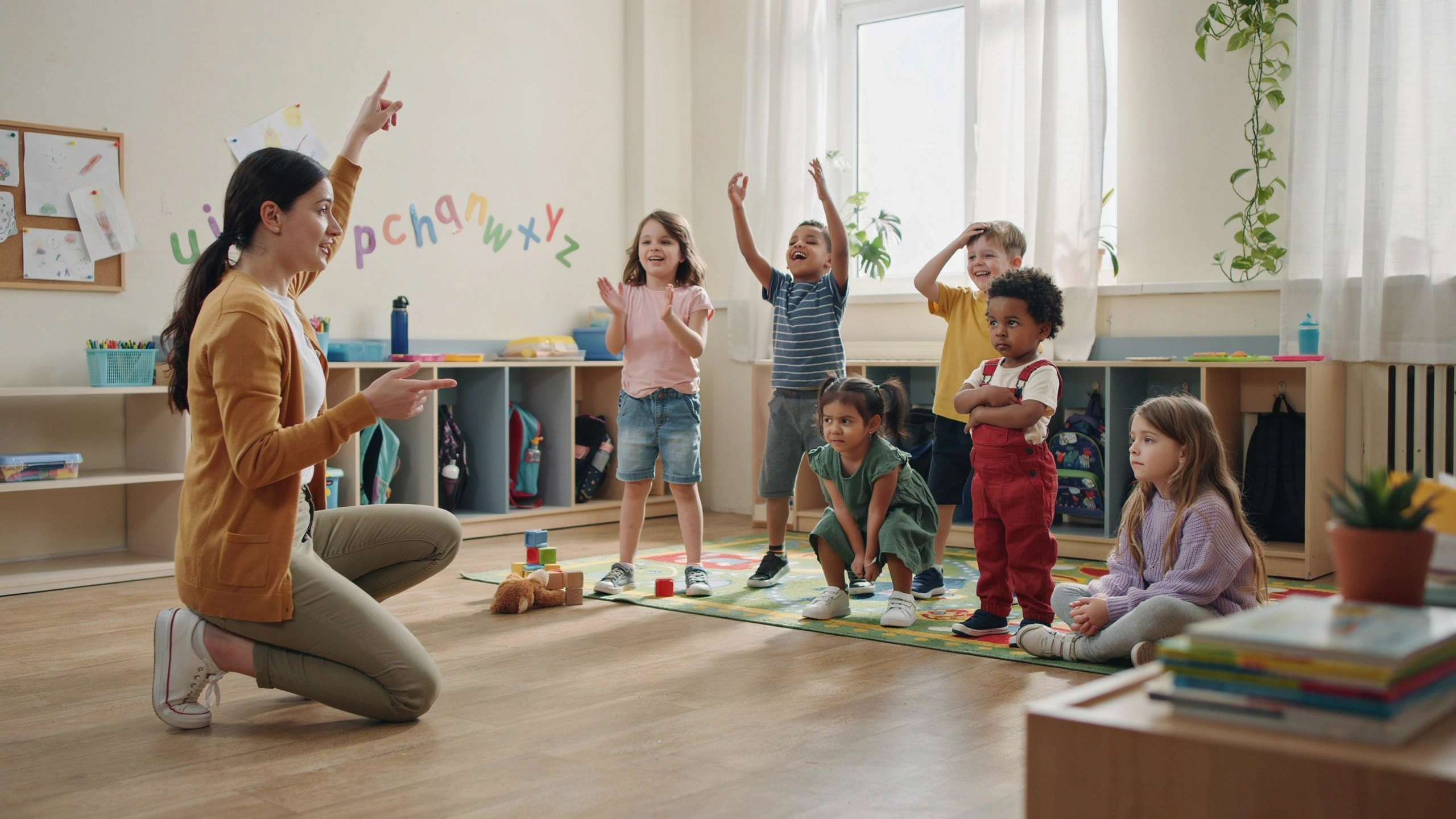
“Simon Says” is one of the most popular children’s games, but it is also a powerful educational activity. While children laugh, move, and have fun, they are developing important cognitive skills such as attention, listening, self-control, working memory, and decision-making.
The classic version of the game is simple, but adding creative variations keeps children engaged while introducing new learning challenges. Whether you’re a parent, teacher, or homeschool educator, these activities can help children strengthen their focus and concentration through active play.
In this article, you’ll discover exciting Simon Says variations that boost brain development while making learning enjoyable.
Why Simon Says Is Good for Brain Development
To succeed in Simon Says, children must:
- Listen carefully.
- Think before acting.
- Ignore misleading instructions.
- Remember the game rules.
- Control impulsive reactions.
These mental processes strengthen executive functioning, a group of cognitive skills responsible for planning, attention, and self-regulation.
Benefits of Playing Simon Says
Regularly playing Simon Says helps children develop:
- Attention span
- Working memory
- Listening skills
- Self-control
- Concentration
- Coordination
- Decision-making
- Confidence
Because the game combines movement and thinking, children stay motivated throughout the activity.
1. Classic Simon Says
The traditional version remains one of the best attention-building games.
Examples include:
- Simon says touch your nose.
- Simon says clap your hands.
- Simon says jump three times.
Children should only perform the action if the instruction begins with “Simon says.”
This simple rule encourages careful listening and thoughtful responses.
2. Color Simon Says
Add color recognition to the game.
Examples:
- Simon says touch something blue.
- Simon says find a red object.
- Simon says point to something green.
Children improve observation while practicing color identification.
3. Shape Simon Says
Introduce basic geometry by using shapes.
Examples:
- Simon says find a circle.
- Simon says point to a square.
- Simon says touch something shaped like a rectangle.
This variation supports early math skills.
4. Animal Simon Says
Encourage imagination and movement.
Examples:
- Simon says hop like a rabbit.
- Simon says roar like a lion.
- Simon says flap your wings like a bird.
- Simon says crawl like a turtle.
Children build gross motor skills while staying attentive.
5. Number Simon Says
Combine movement with counting.
Examples:
- Simon says clap five times.
- Simon says jump four times.
- Simon says take three giant steps.
This variation reinforces early numeracy.
6. Opposite Simon Says
Increase the challenge by asking children to do the opposite of the instruction.
For example:
- Simon says stand up → children sit down.
- Simon says raise your hands → children lower them.
This activity strengthens flexible thinking and self-control.
7. Memory Simon Says
Instead of giving one instruction, provide a sequence.
Example:
- Simon says touch your head.
- Clap twice.
- Turn around.
- Sit down.
Children complete the actions in the correct order.
This variation develops working memory and sequencing skills.
8. Emotion Simon Says
Help children recognize and express emotions.
Examples:
- Simon says smile.
- Simon says pretend you’re surprised.
- Simon says show an excited face.
- Simon says act sleepy.
This activity encourages emotional awareness and communication.
9. Outdoor Simon Says
Take the game outside for extra movement.
Examples:
- Simon says run to the tree.
- Simon says hop to the bench.
- Simon says touch the grass.
- Simon says walk backward five steps.
Outdoor play combines exercise with attention training.
10. Classroom Simon Says
Teachers can reinforce classroom routines through the game.
Examples:
- Simon says open your notebook.
- Simon says point to today’s date.
- Simon says raise your pencil.
- Simon says find the letter B.
This makes classroom transitions more engaging and interactive.
Tips for Making Simon Says More Effective
To maximize learning:
- Start with simple instructions.
- Speak clearly and slowly.
- Increase the difficulty gradually.
- Mix movement with learning concepts.
- Encourage participation instead of competition.
- Allow children to become the leader.
Giving children the chance to lead builds confidence and communication skills.
Skills Developed Through Simon Says
Although it appears simple, Simon Says strengthens many essential abilities, including:
- Sustained attention
- Working memory
- Listening comprehension
- Impulse control
- Coordination
- Language development
- Problem-solving
- Social interaction
These skills support success both in school and in everyday life.
Everyday Learning Opportunities
Simon Says can easily become part of daily routines.
Use it during:
- Morning warm-up activities
- Classroom brain breaks
- Physical education lessons
- Birthday parties
- Family game nights
- Outdoor play sessions
- Homeschool lessons
A five-minute game can refresh children’s attention while reinforcing valuable learning skills.
Final Thoughts
Simon Says is much more than a traditional playground game. Its simple rules encourage children to listen carefully, think before acting, and stay focused while having fun. By introducing creative variations that include colors, numbers, shapes, emotions, and movement, parents and teachers can transform this classic activity into a powerful brain-training exercise.
With regular play, children develop stronger attention, better self-control, and improved working memory—skills that will benefit them throughout their education and beyond.