Introduction
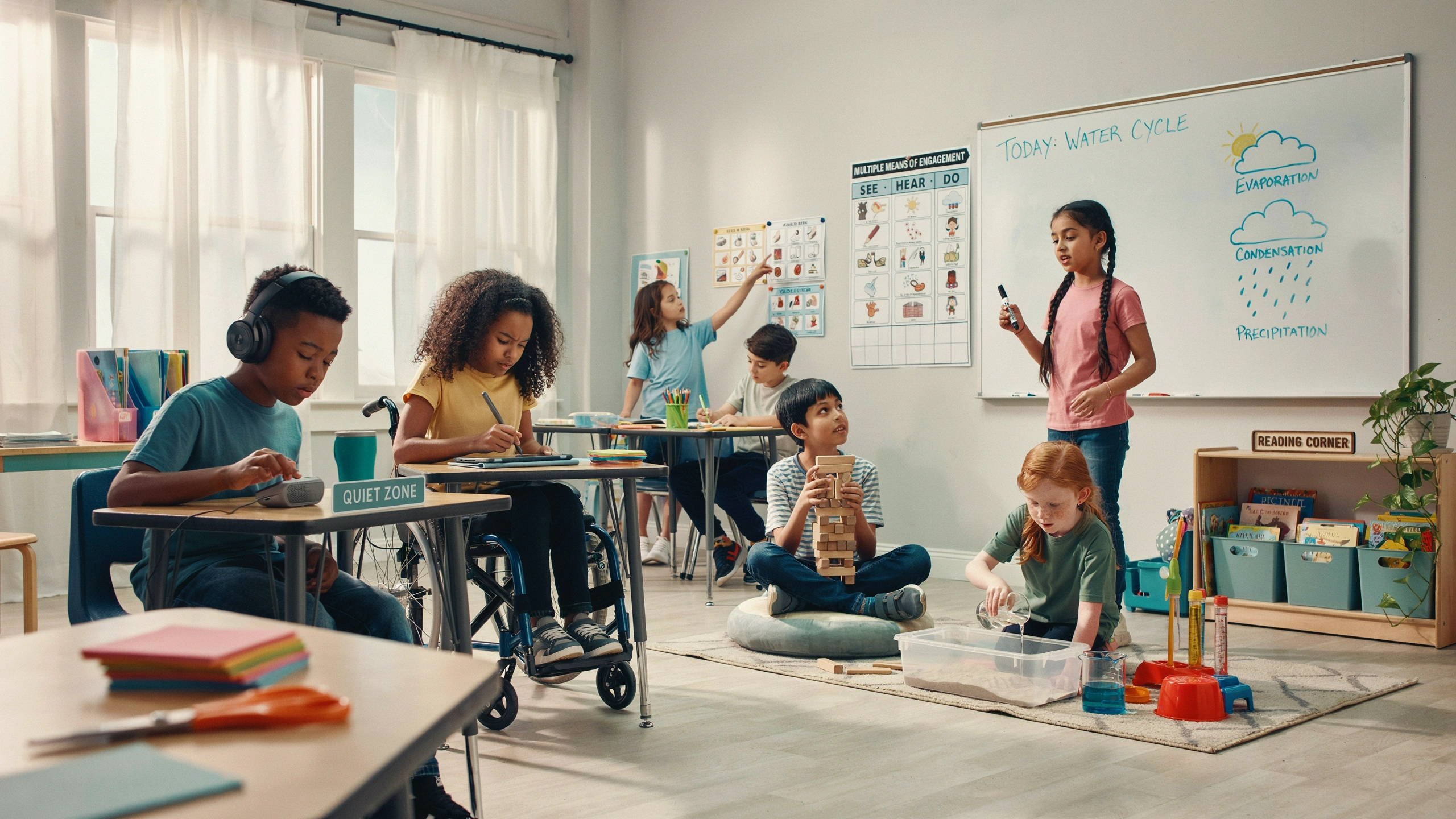
Every classroom is filled with students who learn in different ways. Some students understand concepts best through visual materials, while others benefit from hands-on activities, discussions, or written explanations. Traditional teaching methods often assume that all students learn in similar ways, but this is rarely the case. Universal Design for Learning (UDL) offers a solution by providing a flexible framework that helps educators design lessons that are accessible and engaging for every learner.
Rather than creating separate lessons for different students, UDL encourages teachers to design instruction from the beginning so that all students can participate successfully. This proactive approach benefits students with disabilities, English language learners, gifted students, and those with varying interests and learning preferences.
What Is Universal Design for Learning?
Universal Design for Learning is an educational framework based on the idea that learning environments should be designed to accommodate the widest possible range of learners. Inspired by the concept of universal design in architecture, UDL removes barriers to learning before they become obstacles.
Instead of asking students to adapt to a single teaching method, UDL encourages teachers to adapt instruction to meet the needs of diverse learners.
The framework is built on three core principles:
- Multiple Means of Engagement
- Multiple Means of Representation
- Multiple Means of Action and Expression
Together, these principles create flexible learning experiences that support student success.
Principle 1: Multiple Means of Engagement
Students are motivated by different factors. Some enjoy independent work, while others thrive in collaborative settings. Providing various ways to engage students increases participation and motivation.
Teachers can encourage engagement by:
- Offering students choices in assignments.
- Connecting lessons to real-life situations.
- Using games and interactive activities.
- Setting achievable learning goals.
- Encouraging collaboration through group work.
- Celebrating student progress and effort.
When students feel motivated, they are more likely to remain engaged and develop a positive attitude toward learning.
Principle 2: Multiple Means of Representation
Students process information differently. Presenting content in multiple formats ensures that everyone has access to the material.
Teachers can represent information through:
- Written text
- Images and diagrams
- Videos
- Audio recordings
- Demonstrations
- Graphic organizers
- Interactive digital resources
For example, a science lesson about ecosystems might include a video, a class discussion, labeled diagrams, and a hands-on experiment, allowing students to learn through different modalities.
Principle 3: Multiple Means of Action and Expression
Students should have different opportunities to demonstrate what they know.
Instead of relying solely on written tests, teachers can allow students to:
- Write essays
- Create presentations
- Build models
- Record videos
- Design posters
- Participate in interviews
- Complete digital projects
Providing multiple options allows students to showcase their understanding using their strengths.
Benefits of UDL for Students
Universal Design for Learning supports a wide range of learners.
Students with Disabilities
Accessible materials and flexible learning methods reduce barriers and promote independence.
English Language Learners
Visual supports, multimedia resources, and collaborative learning help students understand new concepts while developing language skills.
Gifted Students
Flexible assignments allow advanced learners to explore topics in greater depth and demonstrate higher-level thinking.
Students with Different Learning Styles
Whether students prefer visual, auditory, reading, or kinesthetic learning, UDL provides opportunities that match their preferences.
Practical UDL Strategies for Teachers
Teachers do not need to redesign their entire curriculum to implement UDL. Small adjustments can make a significant difference.
Examples include:
- Providing lesson objectives before instruction.
- Offering digital and printed learning materials.
- Allowing students to choose project topics.
- Using captions on educational videos.
- Breaking complex tasks into smaller steps.
- Providing checklists and visual schedules.
- Giving regular feedback during learning activities.
- Encouraging peer collaboration.
These strategies improve accessibility for all learners.
The Role of Technology in UDL
Technology plays an important role in supporting Universal Design for Learning.
Useful tools include:
- Text-to-speech software
- Speech-to-text applications
- Closed captions
- Digital note-taking tools
- Interactive whiteboards
- Learning management systems
- Educational apps
- Online quizzes with immediate feedback
Technology allows students to access information and demonstrate learning in flexible and personalized ways.
Overcoming Common Challenges
Some teachers worry that implementing UDL requires additional time or resources. While planning may initially take more effort, many UDL strategies save time in the long run by reducing the need for individual accommodations.
Schools can support teachers by:
- Providing professional development.
- Encouraging collaboration among staff.
- Sharing teaching resources.
- Investing in accessible educational technology.
- Promoting a culture of inclusion.
With proper support, UDL becomes a natural part of effective teaching.
Why UDL Benefits Everyone
One of the greatest strengths of Universal Design for Learning is that it benefits all students—not just those with identified learning needs.
Students experience:
- Increased engagement
- Greater independence
- Higher academic achievement
- Improved confidence
- Better problem-solving skills
- Stronger collaboration
- More meaningful learning experiences
Teachers also benefit by creating more flexible, creative, and responsive classrooms.
Conclusion
Universal Design for Learning transforms education by recognizing that learner diversity is the norm, not the exception. By providing multiple ways to engage with content, access information, and demonstrate understanding, UDL creates classrooms where every student has an opportunity to succeed.
Inclusive education begins with thoughtful lesson design. When teachers embrace the principles of UDL, they reduce barriers, increase participation, and create learning environments where every student feels capable, valued, and empowered. Universal Design for Learning is not simply an instructional framework—it is a commitment to making education accessible for everyone.