
Introduction
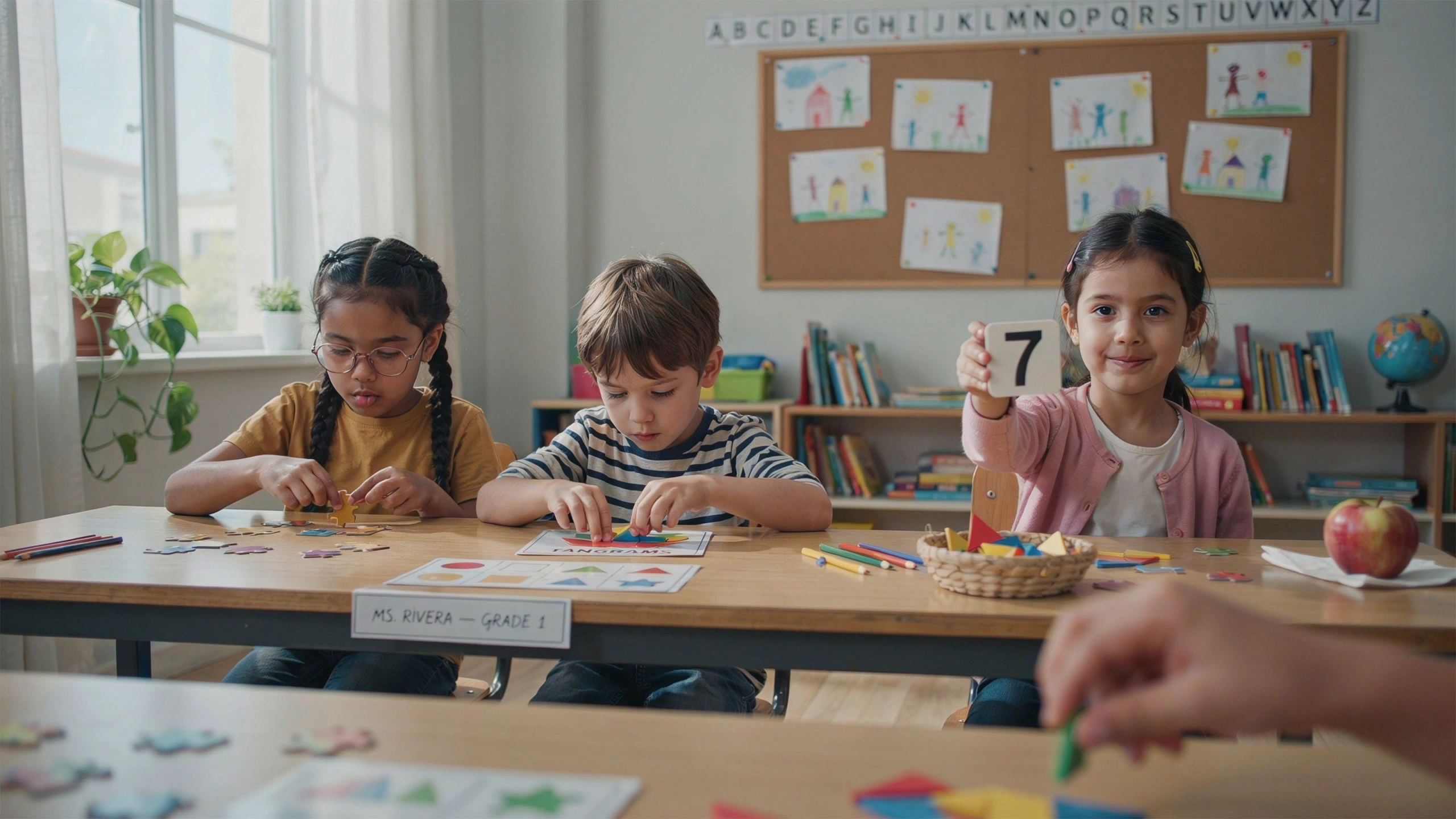
Puzzle games are more than just a fun way to keep children entertained—they are powerful learning tools that strengthen logical reasoning, critical thinking, and problem-solving abilities. Every puzzle presents a challenge that encourages children to observe carefully, recognize patterns, test ideas, and think through possible solutions.
Whether it’s a jigsaw puzzle, Sudoku, tangram, maze, or brain teaser, each activity helps children build important cognitive skills while developing patience and confidence. Best of all, puzzle games make learning enjoyable, motivating children to keep trying even when a challenge seems difficult.
What Is Logical Reasoning?
Logical reasoning is the ability to analyze information, identify relationships, and make decisions based on facts rather than guesses. Children use logical reasoning every day when they solve math problems, follow instructions, organize ideas, or make choices.
Puzzle games provide regular opportunities to practice these thinking skills in a playful, low-pressure environment.
1. Puzzles Teach Children to Solve Problems Step by Step
Many children initially try to solve puzzles by guessing. Over time, they learn that breaking a problem into smaller steps leads to better results.
Instead of becoming frustrated, they begin asking questions like:
- Where should I start?
- Which pieces fit together?
- What clues can help me?
This structured approach strengthens logical thinking and builds confidence in solving increasingly difficult challenges.
2. They Improve Pattern Recognition
Recognizing patterns is one of the foundations of logical reasoning.
When children complete puzzles, they naturally begin noticing:
- Similar colors
- Matching shapes
- Repeating designs
- Number sequences
- Visual relationships
These skills later support mathematics, reading, science, and coding.
3. Puzzle Games Strengthen Memory
Many puzzles require children to remember information while working toward a solution.
Examples include:
- Remembering the location of matching cards
- Keeping track of completed puzzle sections
- Recalling clues from logic puzzles
- Following multi-step instructions
Working memory is essential for classroom learning and everyday problem-solving.
4. Children Learn to Think Before Acting
Puzzle games encourage careful thinking instead of rushing.
Rather than making random moves, children begin asking themselves:
- What will happen if I try this?
- Is there a better option?
- Can I eliminate impossible answers?
This habit improves thoughtful decision-making in many areas of life.
5. Puzzles Encourage Persistence
Not every puzzle is solved immediately.
Children often experience:
- Mistakes
- Dead ends
- Trial and error
- Multiple attempts
Instead of giving up, they learn that persistence often leads to success. This develops resilience and a positive attitude toward learning.
6. Different Types of Puzzles Develop Different Skills
A variety of puzzle games keeps children engaged while strengthening multiple areas of thinking.
Jigsaw Puzzles
- Visual reasoning
- Observation
- Patience
Tangrams
- Spatial awareness
- Geometry
- Creativity
Mazes
- Planning
- Decision-making
- Focus
Sudoku
- Deductive reasoning
- Pattern recognition
- Logical analysis
Logic Grid Puzzles
- Critical thinking
- Elimination strategies
- Careful reasoning
Brain Teasers
- Creative thinking
- Flexible reasoning
- Problem-solving
7. Puzzle Games Build Concentration
Children often become deeply focused while solving puzzles because they enjoy the challenge.
Regular puzzle play helps improve:
- Attention span
- Focus
- Mental endurance
- Self-control
These skills benefit academic learning across every subject.
8. They Encourage Independent Learning
Unlike many classroom activities, puzzles allow children to explore solutions independently.
Instead of relying on adults, they learn to:
- Test ideas
- Learn from mistakes
- Adjust strategies
- Celebrate success
This independence builds confidence and motivation.
9. Puzzle Games Improve Spatial Thinking
Many puzzles require children to mentally rotate objects, compare shapes, or imagine how pieces fit together.
Spatial reasoning supports learning in:
- Mathematics
- Engineering
- Architecture
- Art
- Science
Developing these abilities early creates a strong foundation for future learning.
10. Family Puzzle Time Strengthens Learning
Solving puzzles together creates valuable opportunities for conversation and teamwork.
Parents can encourage learning by asking questions such as:
- Why did you choose that piece?
- What clue helped you?
- Is there another way to solve it?
- What would you try next?
These discussions strengthen reasoning while making learning more enjoyable.
Choosing the Right Puzzle for Your Child
To keep children motivated:
- Choose puzzles that match their age and ability.
- Increase difficulty gradually.
- Offer encouragement instead of giving answers.
- Mix different puzzle types to develop a variety of thinking skills.
- Celebrate effort as much as success.
Simple Puzzle Activities to Try at Home
Here are a few easy ideas:
- Complete a jigsaw puzzle together.
- Solve a kid-friendly Sudoku.
- Build shapes with tangrams.
- Create homemade mazes.
- Play memory matching games.
- Solve daily riddles.
- Try logic card games.
- Build structures with blocks using picture guides.
Conclusion
Puzzle games are among the most effective ways to develop logical reasoning skills in children. They teach young learners how to observe carefully, recognize patterns, think strategically, and solve problems with confidence. More importantly, puzzles show children that challenges are opportunities to learn rather than obstacles to avoid.
By including a variety of puzzle games in everyday play, parents and teachers can nurture curious, resilient, and independent thinkers who are well prepared for both academic success and real-life problem-solving.