

Learning how to manage money is an important life skill, yet many children receive little financial education until they are much older. The good news is that financial literacy can begin at an early age through simple, everyday experiences. By introducing basic money concepts in fun and practical ways, parents can help children develop responsible habits that will benefit them throughout their lives.
Children don’t need to understand complex financial terms to learn valuable lessons about saving, spending, sharing, and making thoughtful choices. Everyday activities provide the perfect opportunities to build these essential skills.
Why Financial Literacy Is Important
Understanding money is about much more than counting coins. Financial literacy teaches children how to make informed decisions, set goals, and appreciate the value of hard work.
Children who learn money management early often develop:
- Responsible spending habits.
- Strong decision-making skills.
- Patience and self-control.
- Confidence in handling money.
- An understanding of budgeting.
- Appreciation for saving and planning ahead.
These habits lay the foundation for financial independence in adulthood.
Start with the Basics
Young children can begin learning simple concepts such as:
- Identifying coins and bills.
- Understanding that money is earned.
- Learning the difference between wants and needs.
- Counting small amounts of money.
- Recognizing that different items have different prices.
Keep explanations simple and connected to everyday experiences.
Teach the Difference Between Wants and Needs
One of the most valuable financial lessons children can learn is distinguishing between things they need and things they simply want.
For example:
Needs include:
- Food.
- Clothing.
- Shelter.
- School supplies.
Wants might include:
- Toys.
- Video games.
- Candy.
- Decorative items.
Discussing these differences helps children make thoughtful spending decisions.

Encourage Saving
Give children a clear savings goal.
For example, they may want to save for:
- A new book.
- A puzzle.
- A sports ball.
- Art supplies.
- A special outing.
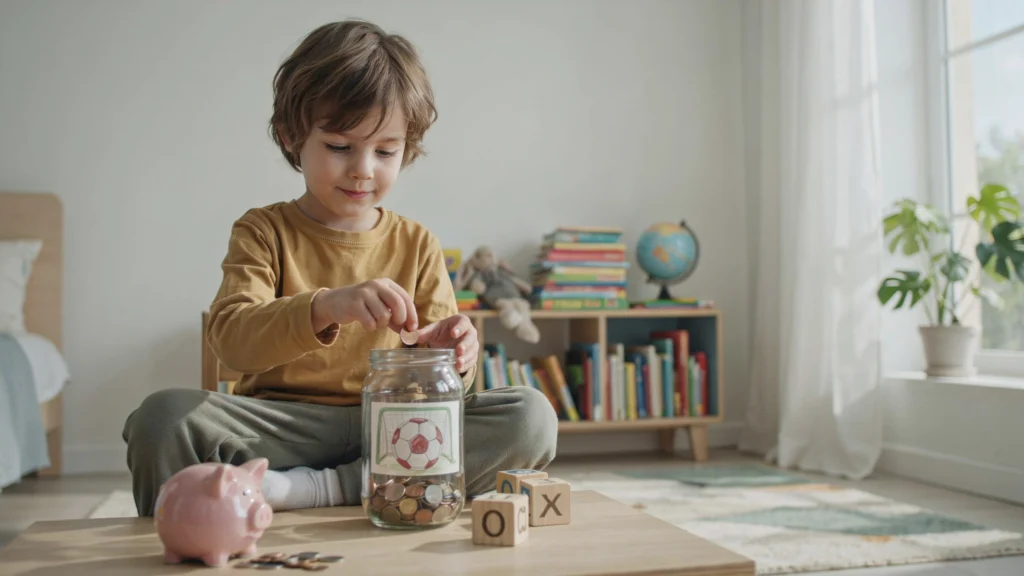
Using a transparent jar allows children to watch their savings grow, making the process exciting and motivating.
Introduce Simple Budgeting
Shopping trips provide excellent budgeting lessons.
Give your child a small amount of money and ask them to choose items without exceeding the budget.
Along the way, they can:
- Compare prices.
- Decide between options.
- Calculate remaining money.
- Understand trade-offs.
These experiences teach practical math while encouraging thoughtful decision-making.
Earn Through Responsibility
Rather than giving money without purpose, encourage children to earn it through extra responsibilities that go beyond their regular household expectations.
Examples might include:
- Washing the family car.
- Helping organize the garage.
- Assisting with a gardening project.
- Completing a special home improvement task.
This teaches children that money is earned through effort and responsibility.

Practice Smart Spending
Before making a purchase, encourage children to ask themselves:
- Do I really need this?
- Will I still enjoy it next month?
- Is there a better choice?
- Should I save my money instead?
These questions help develop thoughtful spending habits and reduce impulsive purchases.
Teach the Joy of Giving
Financial literacy also includes generosity.
Encourage children to set aside a small portion of their money to help others.
They might:
- Donate to a local charity.
- Buy food for an animal shelter.
- Contribute to a community project.
- Help someone in need.
Giving teaches empathy and reminds children that money can be used to make a positive difference.
Be a Positive Financial Role Model
Children observe how adults manage money.
Talk openly about age-appropriate financial decisions, such as:
- Saving for family goals.
- Comparing prices before buying.
- Planning grocery purchases.
- Avoiding unnecessary spending.
Your daily habits provide powerful lessons that children remember.
Preparing Children for Financial Success
Financial literacy is not learned in a single lesson—it develops through consistent everyday experiences. Each shopping trip, saving goal, and thoughtful conversation helps children build confidence in managing money wisely.
By teaching financial responsibility from an early age, parents equip children with skills that will serve them throughout school, adulthood, and future careers. They learn that wise financial decisions require patience, planning, and thoughtful choices.
The greatest financial lesson children can learn is that money is a tool—not just for spending, but for saving, sharing, planning, and building a secure future.