
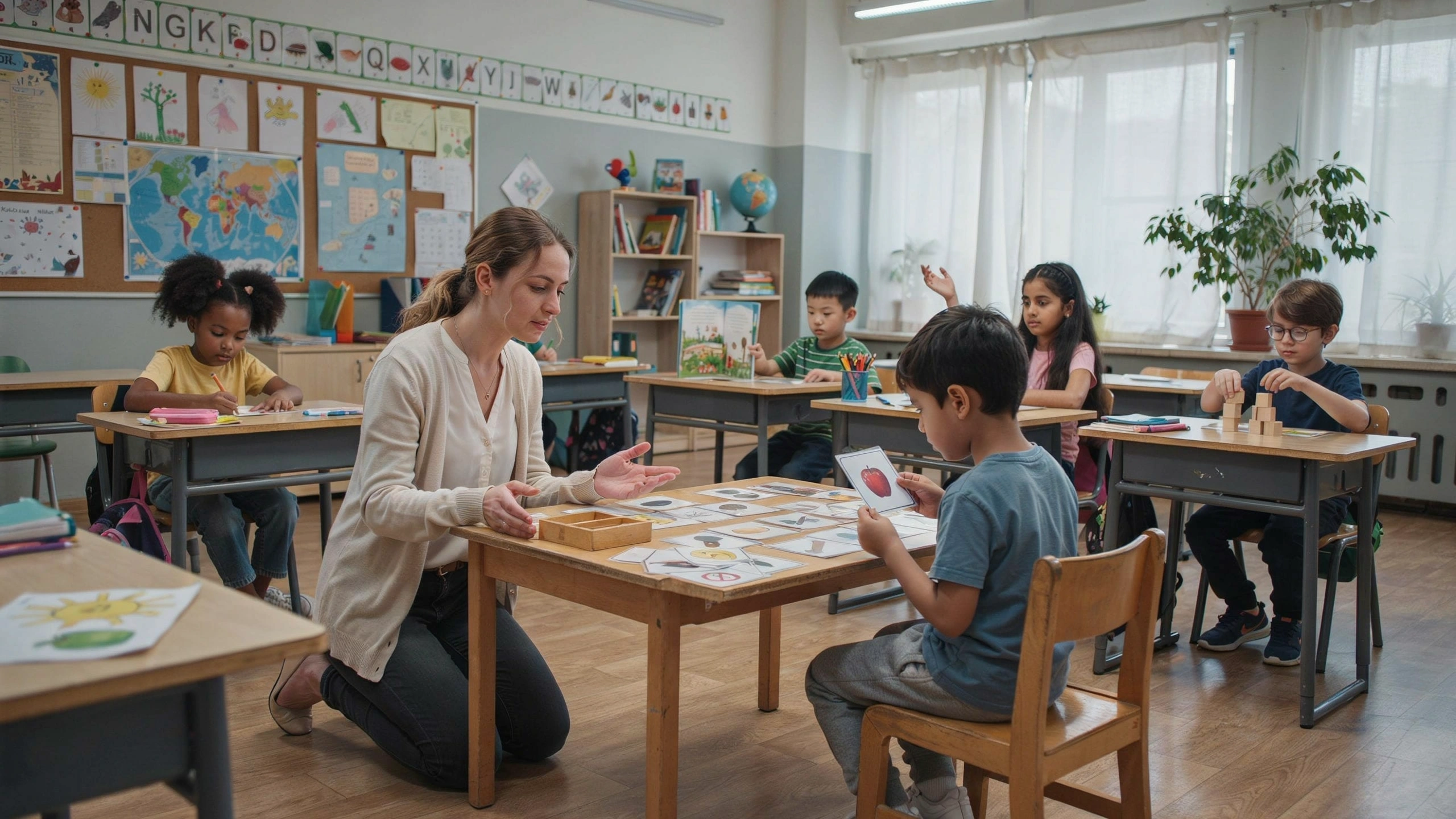
Introduction
Autism Spectrum Disorder (ASD) is one of the most common developmental conditions affecting children and young people worldwide. In education, understanding autism is essential for creating supportive, inclusive, and effective learning environments.
Teachers play a crucial role in helping autistic students develop their academic abilities, communication skills, independence, and confidence. However, successful support begins with knowledge: understanding what autism is, recognizing individual differences, and adapting teaching practices to meet diverse needs.
1. What Is Autism Spectrum Disorder?
Autism Spectrum Disorder is a developmental condition that affects how individuals communicate, interact socially, process information, and experience the world.
The word “spectrum” highlights the fact that autism appears in many different ways. There is no single type of autistic learner. Each student has unique strengths, challenges, interests, and learning preferences.
Some autistic individuals may:
- Communicate verbally, while others may use alternative communication methods.
- Prefer structured routines and predictable activities.
- Have strong abilities in specific areas such as mathematics, memory, art, technology, or problem-solving.
- Experience challenges with social communication or sensory processing.
Educators should focus on the individual student rather than general assumptions about autism.
2. Recognizing Common Characteristics of Autism in Students
While every autistic student is different, educators may observe some common characteristics.
Communication Differences
Some students may:
- Have difficulty understanding nonverbal communication.
- Interpret language literally.
- Need additional time to respond.
- Prefer visual communication supports.
For example, a student may understand instructions better when they are accompanied by pictures or written steps.
Social Interaction Differences
Autistic students may experience challenges with:
- Starting conversations.
- Understanding social rules.
- Participating in group activities.
- Recognizing emotions or facial expressions.
These differences do not mean students lack interest in others. Many autistic learners want friendships but may need support developing social skills.
Sensory Processing Differences
Some autistic students may be highly sensitive or less sensitive to sensory input.
They may react differently to:
- Loud sounds.
- Bright lights.
- Certain textures.
- Crowded spaces.
- Strong smells.
Understanding sensory needs helps teachers create comfortable learning environments.
3. Understanding the Strengths of Autistic Learners
Education should not focus only on challenges. Autistic students often bring valuable strengths to the classroom.
Common strengths may include:
- Strong attention to detail.
- Excellent memory skills.
- Creativity and originality.
- Deep knowledge of specific interests.
- Logical thinking.
- Persistence and dedication.
Teachers can use these strengths to increase engagement and motivation.
For example, a student’s interest in animals, technology, or transportation can be integrated into reading, writing, mathematics, or science activities.
4. Creating an Inclusive Learning Environment
An inclusive classroom welcomes all learners and provides appropriate support.
Teachers can promote inclusion by:
Providing Clear Expectations
Students benefit from:
- Simple instructions.
- Visual classroom rules.
- Step-by-step explanations.
- Consistent routines.
Offering Different Learning Opportunities
Teachers can provide:
- Individual work.
- Small group activities.
- Hands-on learning.
- Visual resources.
- Technology-based activities.
Respecting Individual Differences
Every student has a unique way of learning. Flexibility allows autistic learners to participate successfully.
5. Effective Teaching Strategies for Students with Autism
Use Visual Supports
Many autistic students respond well to visual information.
Teachers can use:
- Pictures.
- Charts.
- Graphic organizers.
- Written instructions.
- Visual schedules.
Visual tools make information clearer and easier to remember.
Break Tasks into Smaller Steps
Large assignments can feel overwhelming.
Instead of:
“Complete the science project.”
Teachers can provide smaller steps:
- Choose a topic.
- Find information.
- Create a plan.
- Prepare the presentation.
This approach improves organization and confidence.
Use Positive Reinforcement
Recognizing effort and progress encourages learning.
Teachers can reinforce positive behaviors through:
- Specific praise.
- Rewards.
- Encouraging feedback.
- Celebrating achievements.
Example:
“You did a great job waiting for your turn during the discussion.”
6. Supporting Communication Development
Communication support should be adapted to each student’s needs.
Strategies include:
- Using clear and direct language.
- Avoiding confusing expressions.
- Giving extra response time.
- Encouraging different forms of communication.
Some students may benefit from:
- Communication boards.
- Picture exchange systems.
- Speech-generating devices.
The goal is always to help students express themselves effectively.
7. Managing Challenging Situations with Understanding
Sometimes autistic students may experience emotional overload or difficulty managing changes.
Teachers should remember that challenging behaviors often communicate a need.
Possible reasons include:
- Stress.
- Sensory overload.
- Confusion.
- Difficulty expressing feelings.
- Unexpected changes.
Helpful responses include:
- Staying calm.
- Identifying triggers.
- Providing support.
- Teaching alternative ways to communicate needs.
A supportive approach is more effective than punishment.
8. The Importance of Individualized Education Plans (IEPs)
Many autistic students benefit from an Individualized Education Plan (IEP).
An IEP helps schools:
- Identify learning goals.
- Provide appropriate accommodations.
- Monitor progress.
- Coordinate support services.
Examples of accommodations include:
- Extra time for tasks.
- Quiet testing environments.
- Alternative assignment formats.
- Visual supports.
9. Building Partnerships with Families
Families are important partners in autism education.
Parents can help educators understand:
- Their child’s interests.
- Communication style.
- Strengths.
- Effective strategies.
Regular communication between school and home creates consistency and improves student outcomes.
10. Changing Perspectives About Autism
One of the most important roles of educators is helping create a culture of acceptance.
Autism should not be viewed only as a difficulty or limitation. Autistic students have unique identities, abilities, and contributions.
Teachers can promote acceptance by:
- Teaching respect for differences.
- Encouraging kindness.
- Challenging stereotypes.
- Celebrating diversity.
Conclusion
Understanding Autism Spectrum Disorder is the foundation of effective autism education. When educators recognize individual differences, focus on strengths, and apply inclusive teaching strategies, they create classrooms where autistic students can succeed.
The goal of education is not to make autistic students fit into a single model of learning. The goal is to create learning environments where every student has the opportunity to grow, participate, and achieve their potential.