
Introduction
As technology continues to transform every aspect of society, the demand for individuals with strong science, technology, engineering, and mathematics (STEM) skills has never been greater. From artificial intelligence and robotics to renewable energy and space exploration, STEM fields are driving innovation and economic growth across the globe.
At the same time, coding has become one of the most valuable skills students can learn. Once considered a specialized subject for computer scientists, programming is now recognized as an essential form of digital literacy. Schools worldwide are increasingly integrating coding and STEM education into their curricula to prepare students for future careers and equip them with the problem-solving skills needed in the twenty-first century.
What Is STEM Education?
STEM education is an interdisciplinary approach that integrates Science, Technology, Engineering, and Mathematics into meaningful learning experiences. Rather than teaching these subjects separately, STEM encourages students to apply knowledge from multiple disciplines to solve real-world problems.
For example, students designing a solar-powered vehicle may use:
- Science to understand energy and motion.
- Technology to research and test ideas.
- Engineering to build and improve prototypes.
- Mathematics to calculate measurements and efficiency.
This integrated approach helps students see how different subjects connect in practical situations.
Why Coding Matters
Coding, also known as computer programming, is the process of creating instructions that tell computers how to perform tasks. Learning to code develops much more than technical knowledge—it strengthens logical thinking, creativity, and perseverance.
Students who learn coding gain the ability to:
- Solve complex problems step by step.
- Think logically and systematically.
- Create websites, apps, and games.
- Automate repetitive tasks.
- Understand how digital technologies work.
- Collaborate on software projects.
Even students who do not pursue technology careers benefit from these transferable skills.
Preparing Students for Future Careers
Many of today’s fastest-growing careers require STEM knowledge and digital skills.
Fields such as:
- Artificial Intelligence.
- Cybersecurity.
- Software development.
- Data science.
- Robotics.
- Biotechnology.
- Environmental engineering.
- Renewable energy.
- Aerospace engineering.
all rely heavily on STEM education.
By introducing coding and STEM concepts early, schools help students develop the skills needed to thrive in an increasingly technology-driven economy.
Developing Critical Thinking and Problem-Solving Skills
Coding teaches students that mistakes are part of the learning process.
When a program does not work as expected, students must:
- Identify the problem.
- Test possible solutions.
- Analyze results.
- Revise their approach.
- Try again.
This process develops resilience, analytical thinking, and persistence—qualities that are valuable far beyond computer science.
Similarly, STEM projects challenge students to investigate real-world issues and design creative solutions using evidence-based reasoning.
Encouraging Creativity and Innovation
Many people mistakenly believe that coding is only about mathematics and technical skills.
In reality, programming is highly creative.
Students use coding to:
- Design educational games.
- Build mobile applications.
- Develop animations.
- Create interactive stories.
- Program robots.
- Produce digital art.
- Solve community challenges.
Combining creativity with technology encourages innovation and entrepreneurial thinking.
Hands-On Learning Through STEM Projects
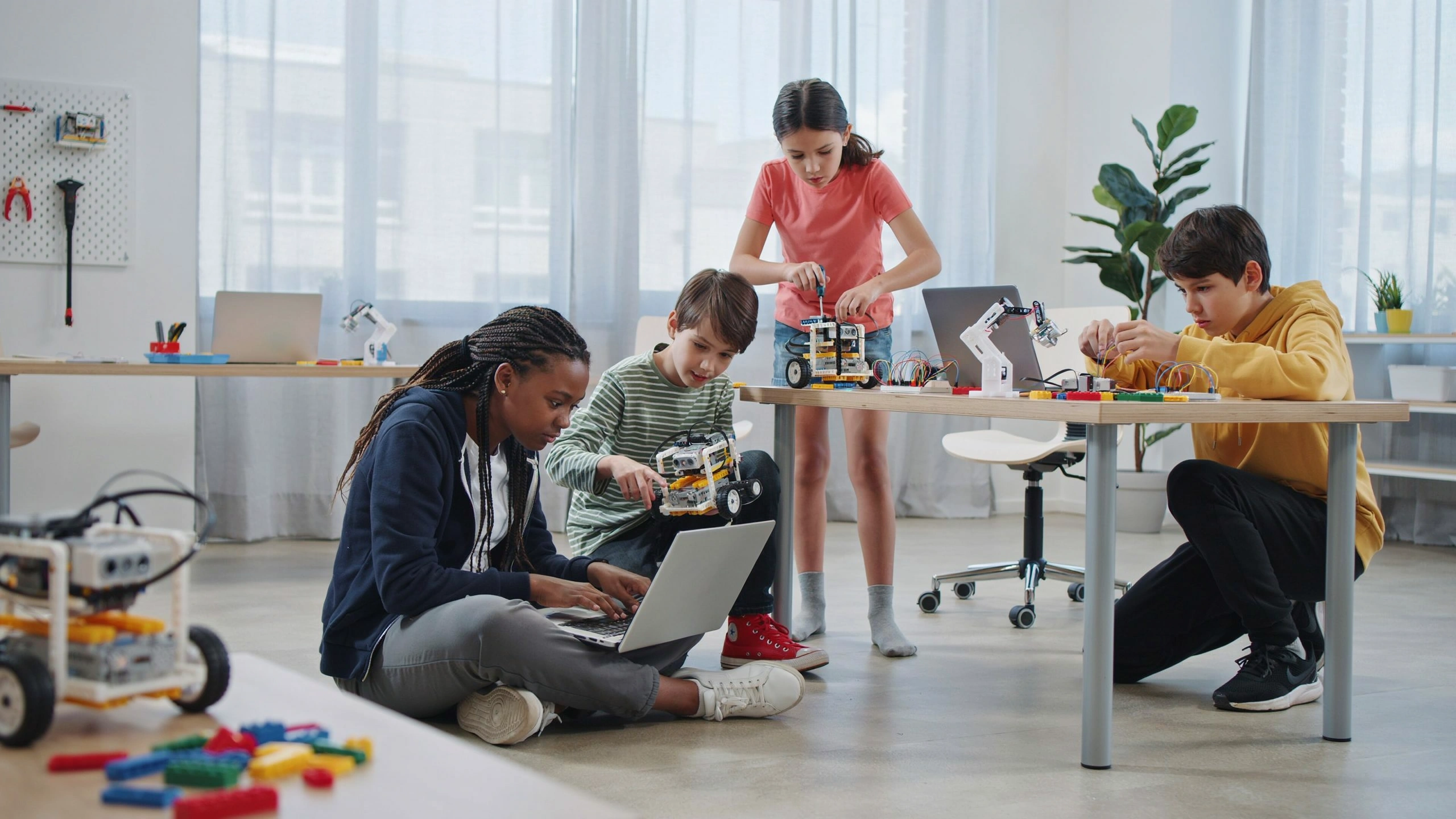
One of the strengths of STEM education is its emphasis on active, project-based learning.
Students participate in activities such as:
- Building bridges and structures.
- Designing water filtration systems.
- Programming robots.
- Conducting scientific investigations.
- Developing renewable energy models.
- Creating smart devices using sensors.
- Participating in engineering competitions.
These experiences make learning more engaging while strengthening teamwork and communication skills.
Promoting Inclusion in STEM
Historically, some groups have been underrepresented in STEM careers, particularly women and students from disadvantaged communities.
Modern STEM education seeks to create equal opportunities by:
- Encouraging participation from all students.
- Providing diverse role models.
- Reducing stereotypes.
- Offering accessible learning resources.
- Supporting inclusive classroom practices.
Expanding participation helps create a more diverse and innovative future workforce.
The Role of Technology
Technology enables students to explore STEM concepts through powerful digital tools.
Schools increasingly use:
- Coding platforms.
- Robotics kits.
- 3D printers.
- Virtual laboratories.
- Artificial Intelligence learning assistants.
- Data analysis software.
- Simulation tools.
- Educational drones.
These technologies allow students to experiment, create, and solve problems in ways that traditional classrooms could not previously support.
Challenges of Implementing STEM Education
Although STEM education offers many advantages, schools face several challenges.
Limited Resources
Equipment such as robotics kits, laboratory materials, and computer devices can be expensive.
Teacher Training
Educators need ongoing professional development to confidently teach coding and STEM subjects.
Curriculum Integration
Successfully connecting science, technology, engineering, and mathematics requires careful curriculum planning.
Digital Divide
Unequal access to technology may prevent some students from fully participating in STEM learning opportunities.
Addressing these challenges is essential to ensuring equitable access to high-quality STEM education.
The Future of Coding and STEM Education
As emerging technologies continue to evolve, STEM education will become even more important.
Future classrooms may include:
- AI-powered coding tutors.
- Virtual Reality engineering laboratories.
- Personalized STEM learning pathways.
- International collaborative innovation projects.
- Increased focus on sustainability and green technologies.
- Integration of robotics, automation, and data science across all grade levels.
These developments will prepare students to solve the complex global challenges of the future.
Conclusion
Coding and STEM education are transforming modern classrooms by equipping students with the knowledge and skills needed for an increasingly technological world. Beyond preparing learners for careers in science and technology, STEM develops creativity, critical thinking, collaboration, communication, and resilience.
By providing hands-on learning experiences and encouraging innovation, schools help students become confident problem-solvers capable of adapting to rapid technological change.
As education continues to evolve, coding and STEM will remain at the heart of preparing future generations to lead, innovate, and contribute to a smarter, more sustainable world.