
Introduction
Education is becoming increasingly data-driven. Every day, schools collect valuable information about student attendance, assessment results, classroom participation, assignment completion, and learning progress. When analyzed effectively, this information can provide powerful insights that help teachers make informed decisions and improve student outcomes.
Data analytics has emerged as one of the most influential trends in modern education. Rather than relying solely on intuition or end-of-term exam results, educators can now use real-time data to understand how students learn, identify learning gaps, personalize instruction, and provide timely support. As technology continues to advance, data analytics is transforming classrooms into more responsive and student-centered learning environments.
What Is Data Analytics in Education?
Data analytics in education refers to the process of collecting, organizing, analyzing, and interpreting educational data to improve teaching and learning.
Schools gather information from various sources, including:
- Test and quiz results.
- Homework and assignment completion.
- Attendance records.
- Classroom participation.
- Online learning platforms.
- Learning management systems (LMS).
- Student surveys.
- Behavioral observations.
By examining these data, educators can identify patterns, monitor progress, and make evidence-based decisions that support student success.
Why Data Analytics Matters
Every student learns differently. Some students grasp concepts quickly, while others require additional time or different teaching strategies.
Data analytics enables teachers to:
- Understand individual learning needs.
- Detect learning difficulties early.
- Measure academic growth.
- Improve lesson planning.
- Evaluate teaching effectiveness.
- Support informed decision-making.
Instead of waiting until final examinations reveal learning problems, teachers can intervene before students fall behind.
Identifying Learning Gaps
One of the greatest strengths of data analytics is its ability to identify areas where students are struggling.
Learning platforms can highlight:
- Frequently missed questions.
- Concepts that require additional practice.
- Skills that have not yet been mastered.
- Students who may need extra support.
Teachers can then adjust instruction, provide targeted interventions, and offer personalized learning opportunities.
Early identification often leads to better academic outcomes.
Supporting Personalized Learning
Data analytics plays a key role in personalized education.
By analyzing student performance, digital learning systems can recommend:
- Individual practice exercises.
- Adaptive learning pathways.
- Enrichment activities for advanced learners.
- Review materials for difficult topics.
- Personalized feedback.
This approach allows every student to receive instruction that matches their current level of understanding.
Improving Instructional Decision-Making
Teachers constantly make decisions about what to teach, how to teach it, and when to revisit important concepts.
Data provides objective evidence that supports these decisions.
For example, if assessment data shows that most students struggled with fractions, the teacher may decide to:
- Review prerequisite concepts.
- Introduce new instructional strategies.
- Provide additional practice.
- Organize small-group instruction.
Using evidence rather than assumptions leads to more effective teaching.
Monitoring Student Progress
Data analytics allows teachers to track learning over time rather than relying on a single examination.
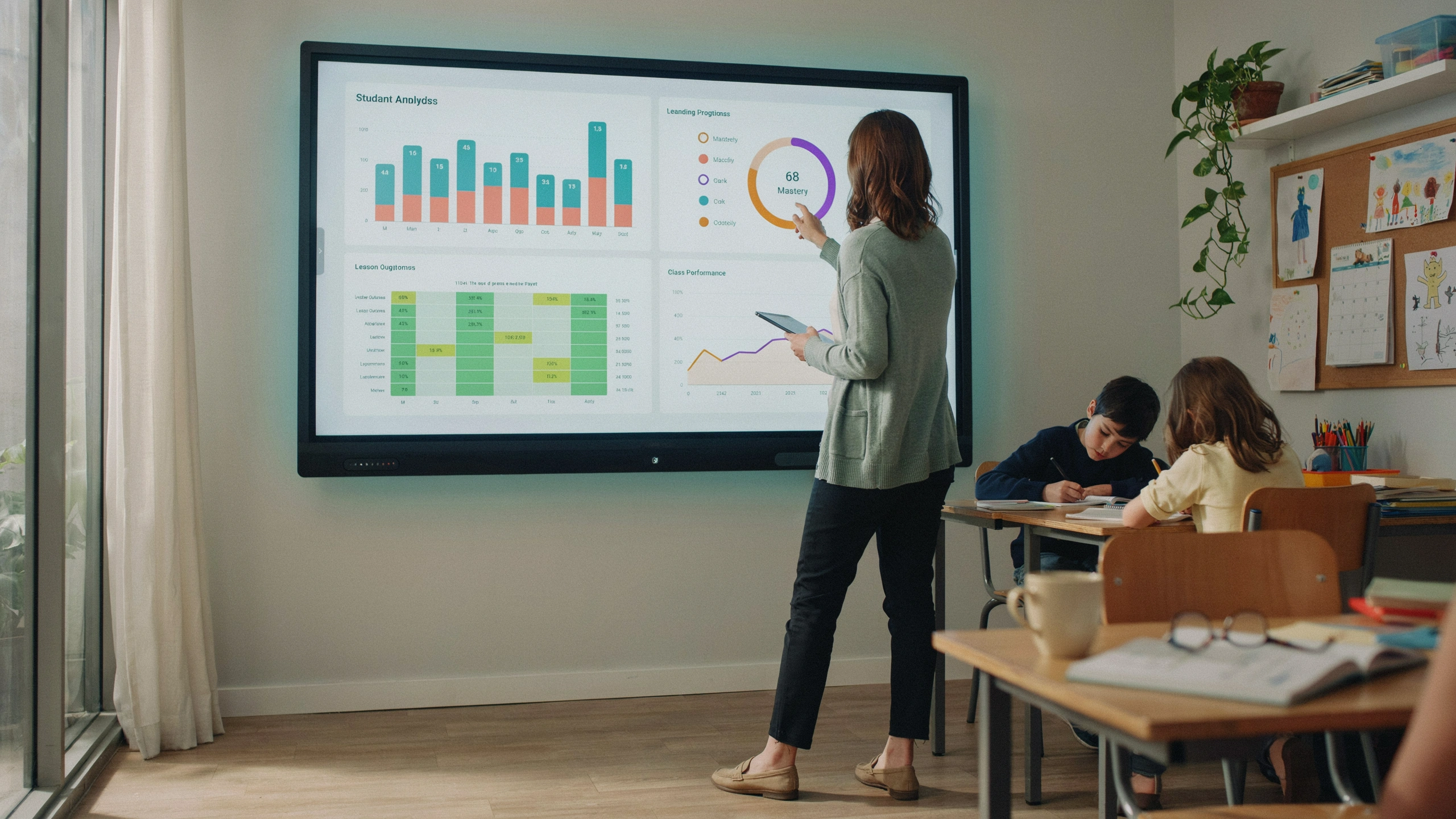
Progress dashboards can display:
- Academic growth.
- Skill mastery.
- Assignment completion.
- Attendance patterns.
- Participation levels.
- Achievement trends.
Continuous monitoring helps teachers celebrate improvement while identifying students who may require additional assistance.
Enhancing Student Engagement
Many educational platforms provide students with access to their own learning data.
Students can monitor:
- Completed lessons.
- Learning goals.
- Assessment scores.
- Skill development.
- Achievement badges.
- Areas for improvement.
When students understand their progress, they become more motivated to take responsibility for their own learning.
This promotes self-reflection and independent learning.
Supporting School Leadership
Data analytics also benefits school administrators.
Educational leaders can analyze school-wide information to:
- Evaluate curriculum effectiveness.
- Identify professional development needs.
- Monitor attendance trends.
- Allocate educational resources.
- Improve student support programs.
- Measure overall school performance.
These insights contribute to better strategic planning and continuous school improvement.
The Role of Artificial Intelligence
Artificial Intelligence is making educational data analytics even more powerful.
AI systems can:
- Predict students at risk of falling behind.
- Recommend personalized learning resources.
- Identify hidden learning patterns.
- Generate automated progress reports.
- Support teachers with instructional planning.
Rather than replacing educators, AI provides valuable information that helps teachers make better decisions.
Challenges of Educational Data Analytics
Although data analytics offers significant benefits, schools must address several important challenges.
Data Privacy
Student information must be collected, stored, and used responsibly to protect confidentiality and comply with privacy regulations.
Data Quality
Accurate decision-making depends on reliable, complete, and meaningful data.
Poor-quality data can lead to incorrect conclusions.
Teacher Training
Educators need professional development to interpret data correctly and translate insights into effective teaching strategies.
Balancing Data with Human Judgment
While data provides valuable evidence, it should never replace teachers’ professional expertise, personal observations, and understanding of individual students.
Successful education combines data-informed decisions with human compassion and experience.
The Future of Data Analytics in Education
As educational technology continues to evolve, data analytics will become increasingly sophisticated.
Future developments may include:
- AI-powered predictive learning systems.
- Real-time classroom analytics.
- Personalized learning recommendations generated automatically.
- Digital competency tracking.
- Early warning systems for academic and emotional support.
- Greater integration of learning data across schools and educational platforms.
These innovations will allow educators to provide even more timely and effective support for every learner.
Conclusion
Data analytics is transforming education by helping teachers better understand student learning and make informed instructional decisions. Through continuous monitoring, personalized learning, and evidence-based interventions, educators can improve academic achievement while supporting the unique needs of every student.
Although responsible data use requires careful attention to privacy, ethics, and teacher training, the benefits of educational analytics are becoming increasingly clear. When combined with professional expertise and meaningful teacher-student relationships, data analytics has the potential to create more effective, equitable, and student-centered classrooms.
As schools continue to embrace digital innovation, data analytics will play a central role in shaping the future of education and ensuring that every student has the opportunity to succeed.