
Introduction
Education has undergone remarkable changes over the past few decades. Advances in technology, globalization, scientific research, and changing workforce demands have transformed how students learn and how teachers teach. Classrooms are becoming more connected, personalized, and flexible than ever before.
As we look toward the next decade, education will continue to evolve in response to new opportunities and global challenges. Artificial Intelligence, digital learning, sustainability, lifelong education, and personalized instruction are only a few of the trends that will redefine schools and universities. Understanding these emerging trends helps educators, students, parents, and policymakers prepare for the future of learning.
Artificial Intelligence Will Become an Everyday Learning Partner
Artificial Intelligence (AI) is expected to become an essential part of education.
AI-powered systems will:
- Personalize learning experiences.
- Provide instant feedback.
- Recommend learning resources.
- Identify students who need additional support.
- Automate administrative tasks.
- Assist teachers in lesson planning.
Rather than replacing educators, AI will serve as an intelligent assistant that enhances teaching and improves student learning outcomes.
Personalized Learning Will Become the Standard
Future classrooms will increasingly recognize that every student learns differently.
Using learning analytics and adaptive technologies, schools will create personalized learning pathways that allow students to:
- Learn at their own pace.
- Receive targeted support.
- Explore personal interests.
- Demonstrate mastery through different assessment methods.
This student-centered approach will improve engagement and academic achievement.
Hybrid and Flexible Learning Models Will Expand
The future of education will combine the strengths of traditional classroom instruction with digital learning.
Hybrid education will offer:
- Face-to-face collaboration.
- Online learning resources.
- Virtual classrooms.
- Flexible schedules.
- Remote participation opportunities.
Students will have greater freedom to choose how and where they learn while maintaining meaningful relationships with teachers and classmates.
Digital Literacy Will Become a Core Skill
Technology is now essential in nearly every profession.
Schools will place greater emphasis on:
- Digital communication.
- Cybersecurity awareness.
- Media literacy.
- Responsible Artificial Intelligence use.
- Information evaluation.
- Online collaboration.
Digital literacy will become as fundamental as reading, writing, and mathematics.
Lifelong Learning Will Continue Beyond Graduation
Education will no longer end with a diploma or university degree.
People will continuously update their knowledge through:
- Online courses.
- Professional certifications.
- Micro-credentials.
- Workplace training.
- Self-directed learning.
Lifelong learning will become essential for adapting to changing careers and technological innovation.
Greater Focus on Well-Being
Future education will pay increasing attention to students’ emotional, social, and physical well-being.
Schools will strengthen:
- Social-Emotional Learning (SEL).
- Mental health support.
- Mindfulness practices.
- Healthy lifestyles.
- Positive school cultures.
Student success will be measured not only by academic achievement but also by overall well-being.
Sustainability Will Be Integrated Across Education
Environmental responsibility will become a permanent feature of school curricula.
Students will explore:
- Climate change.
- Renewable energy.
- Biodiversity.
- Sustainable development.
- Circular economy principles.
- Responsible consumption.
Schools themselves will increasingly model environmentally responsible practices through energy conservation, recycling, and green campus initiatives.
Assessment Will Continue to Evolve
Traditional examinations will gradually be complemented by more authentic forms of assessment.
Future evaluation methods may include:
- Digital portfolios.
- Competency-based assessment.
- Performance tasks.
- Collaborative projects.
- AI-assisted feedback.
- Continuous formative assessment.
These approaches will provide a more complete picture of student learning and development.
Global Collaboration Will Increase
Technology will continue connecting classrooms around the world.
Students will participate in:
- International research projects.
- Cross-cultural exchanges.
- Virtual teamwork.
- Global innovation challenges.
- Language partnerships.
These experiences will prepare learners for international careers and multicultural societies.
The Teacher’s Role Will Continue to Evolve
Even as technology advances, teachers will remain central to education.
Their role will increasingly focus on:
- Coaching and mentoring.
- Facilitating collaboration.
- Supporting critical thinking.
- Encouraging creativity.
- Guiding ethical technology use.
- Building positive relationships.
Technology will enhance teaching, but human connection will remain at the heart of education.
Challenges Ahead
While these educational trends offer exciting possibilities, several important challenges must be addressed.
Educational Equity
All students should have equal access to quality education, technology, and learning opportunities regardless of their background.
Teacher Professional Development
Educators will need continuous training to keep pace with technological and pedagogical innovations.
Ethical Use of Technology
Schools must ensure responsible use of Artificial Intelligence, educational data, and digital platforms while protecting student privacy.
Balancing Innovation and Human Interaction
Technology should enhance education without replacing meaningful relationships, collaboration, and face-to-face learning experiences.
Successfully addressing these challenges will determine how effectively education evolves in the coming years.
A Vision for the Future
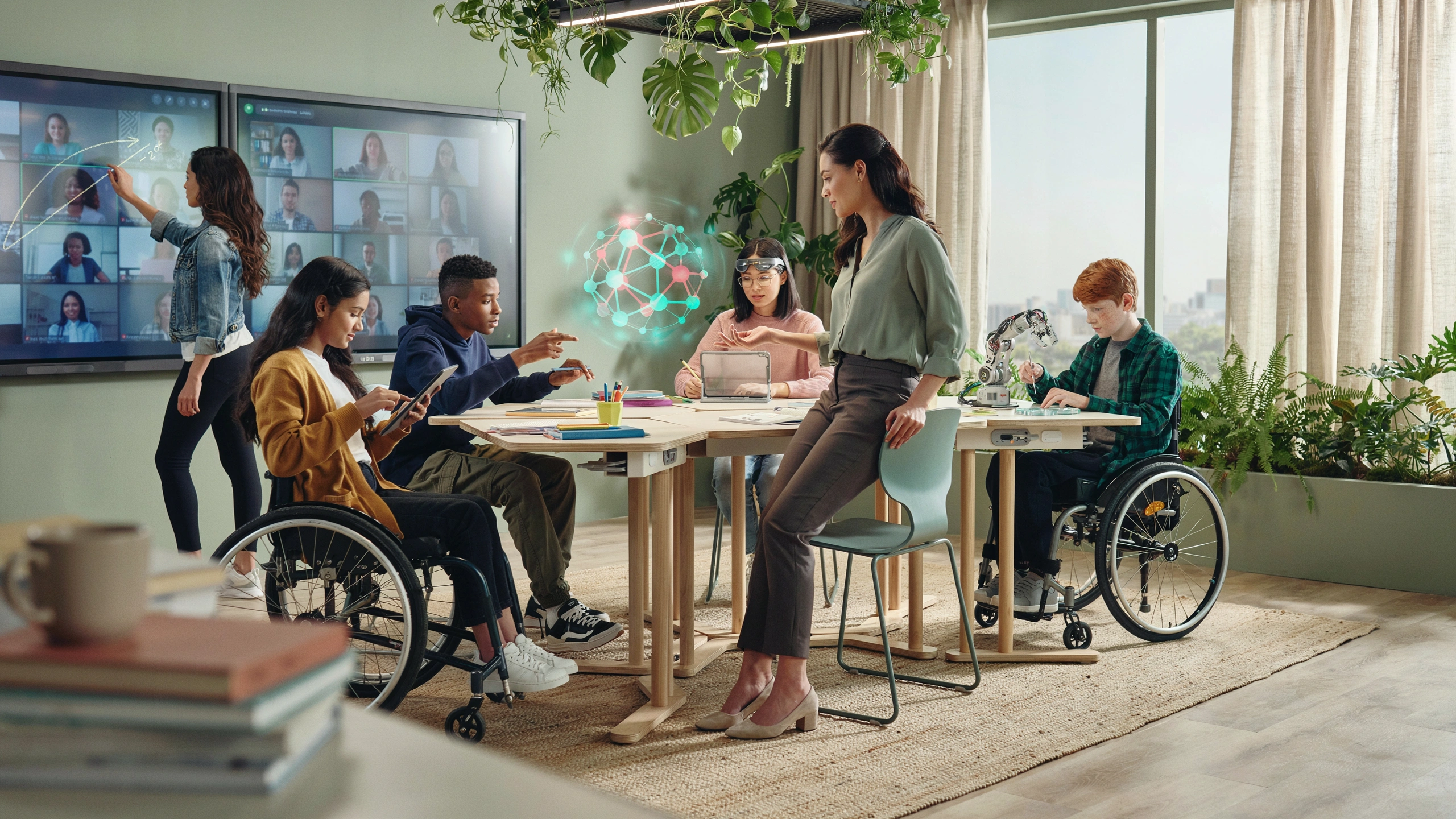
The classroom of the future will likely be:
- More personalized.
- More inclusive.
- More collaborative.
- More technology-enhanced.
- More globally connected.
- More environmentally responsible.
- More focused on lifelong learning.
- More centered on student well-being.
Students will become active creators of knowledge rather than passive recipients of information, while teachers will guide, inspire, and empower learners throughout their educational journeys.
Conclusion
The future of education is being shaped by rapid technological advancement, changing societal needs, and a growing understanding of how people learn best. Emerging trends such as Artificial Intelligence, personalized learning, hybrid education, digital citizenship, sustainability, and lifelong learning are transforming schools into more flexible, inclusive, and learner-centered environments.
Although challenges such as equity, privacy, and teacher preparation remain, these innovations offer tremendous opportunities to improve educational quality and accessibility worldwide.
Ultimately, the future of education is not defined by technology alone but by the ability of educators, students, families, and communities to work together in creating learning experiences that inspire curiosity, foster creativity, promote equity, and prepare every learner to thrive in an ever-changing world.