
Introduction
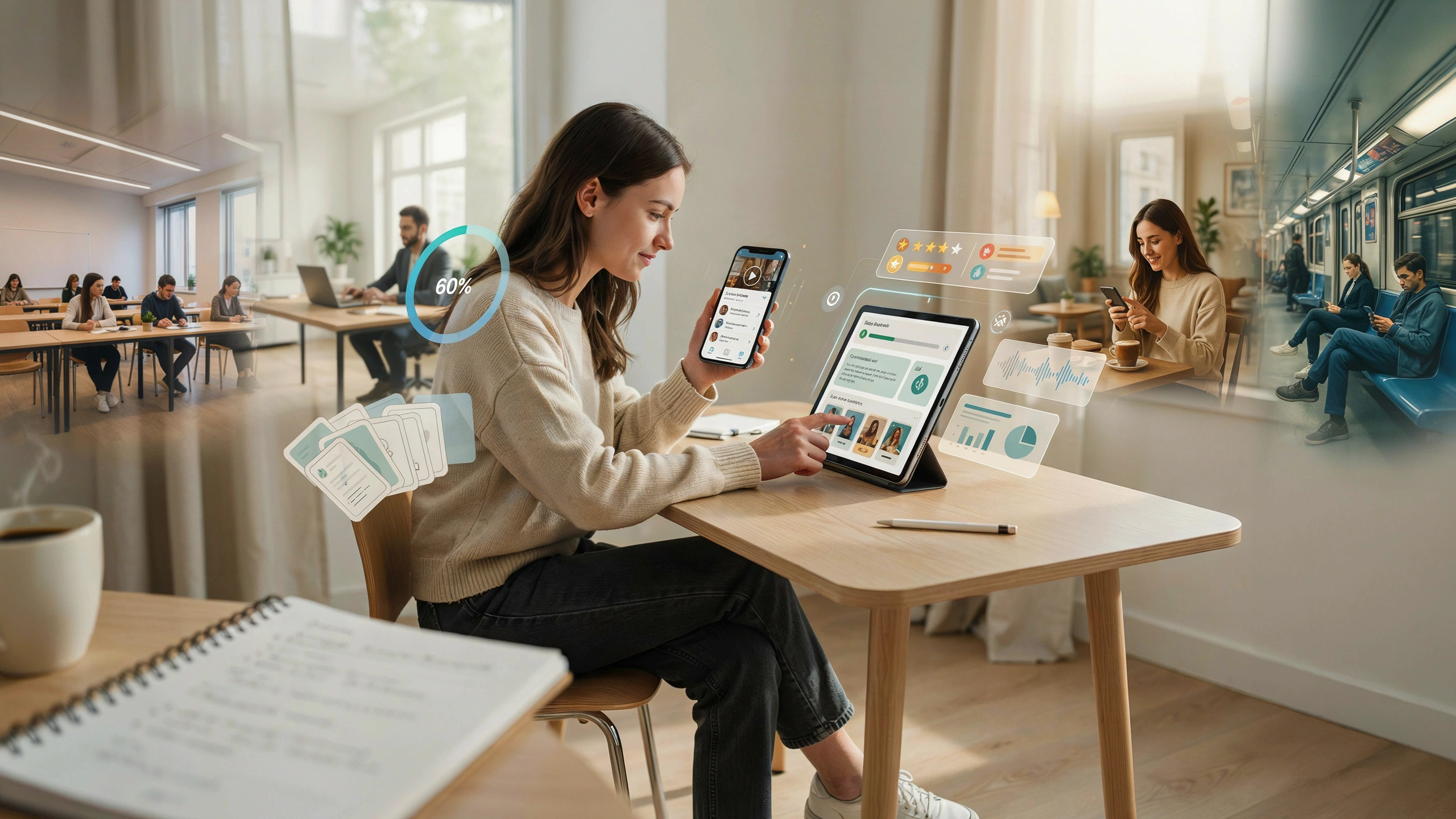
In today’s fast-paced world, students and professionals often struggle to find time for long study sessions. At the same time, the rapid growth of information means that people need to learn new skills more frequently than ever before. As a result, educators are exploring teaching methods that are flexible, efficient, and engaging.
One of the fastest-growing trends in education is microlearning. This approach delivers educational content in short, focused lessons that usually take between three and ten minutes to complete. Instead of overwhelming learners with large amounts of information, microlearning breaks complex topics into manageable learning units that are easier to understand and remember.
From schools and universities to businesses and online learning platforms, microlearning is transforming the way people acquire knowledge in the twenty-first century.
What Is Microlearning?
Microlearning is an instructional approach that presents educational content in small, focused segments designed to achieve a specific learning objective.
Each lesson typically concentrates on one concept or skill and may include:
- Short videos.
- Interactive quizzes.
- Infographics.
- Flashcards.
- Podcasts.
- Mini-games.
- Short readings.
- Practical exercises.
Learners complete one lesson at a time, allowing them to make steady progress without becoming overwhelmed.
Why Microlearning Is Becoming Popular
Several factors have contributed to the rapid growth of microlearning.
These include:
- Busy lifestyles.
- Increased mobile device usage.
- Growing demand for flexible learning.
- Advances in educational technology.
- The need for continuous skill development.
Because lessons are brief and easily accessible, learners can study during breaks, while commuting, or whenever they have a few free minutes.
Improving Knowledge Retention
One of the greatest strengths of microlearning is its ability to improve long-term memory.
Research in cognitive psychology suggests that people remember information more effectively when it is presented in small, organized sections rather than in lengthy sessions.
Microlearning supports retention by:
- Reducing cognitive overload.
- Encouraging regular review.
- Reinforcing learning through repetition.
- Focusing attention on one objective at a time.
These principles help learners remember information more accurately over longer periods.
Supporting Personalized Learning
Microlearning allows students to choose lessons based on their individual learning needs.
For example, learners can:
- Review difficult concepts.
- Skip topics they already understand.
- Learn at their own pace.
- Repeat lessons whenever necessary.
- Follow personalized learning pathways.
This flexibility supports students with different learning styles and academic abilities.
Mobile Learning and Accessibility
Microlearning works especially well on smartphones and tablets.
Students can access lessons through educational apps and online platforms wherever they are.
This mobility increases access to education by allowing learners to study:
- At home.
- On public transportation.
- During work breaks.
- While traveling.
- Between scheduled classes.
Learning becomes more convenient and adaptable to modern lifestyles.
Microlearning in Schools and Universities
Educational institutions are increasingly integrating microlearning into traditional teaching.
Teachers may use short learning activities to:
- Introduce new topics.
- Review previous lessons.
- Reinforce key concepts.
- Prepare students for examinations.
- Support flipped classroom models.
Rather than replacing traditional instruction, microlearning complements classroom learning by providing additional opportunities for practice and revision.
Workplace Learning
Businesses have widely adopted microlearning for employee training and professional development.
Organizations use short learning modules to teach:
- Workplace safety.
- Digital skills.
- Leadership development.
- Customer service.
- Compliance training.
- New software systems.
Employees can complete training without interrupting their daily responsibilities, making learning more efficient and cost-effective.
The Role of Artificial Intelligence
Artificial Intelligence is enhancing microlearning by creating personalized educational experiences.
AI can:
- Recommend the next lesson.
- Adjust difficulty levels.
- Provide immediate feedback.
- Identify learning gaps.
- Track progress.
- Create customized review sessions.
These capabilities help learners focus on the areas where they need the most support.
Challenges of Microlearning
Although microlearning offers many advantages, it also has limitations.
Limited Depth
Complex subjects often require detailed explanations that cannot be fully covered in very short lessons.
Curriculum Planning
Teachers must carefully organize microlearning activities so that individual lessons connect logically.
Student Motivation
Independent learning still requires self-discipline and consistent engagement.
Technology Access
Reliable internet connections and digital devices remain necessary for many microlearning platforms.
When combined with broader instructional methods, however, microlearning can significantly enhance learning outcomes.
The Future of Microlearning
As educational technology continues to evolve, microlearning is expected to become even more sophisticated.
Future developments may include:
- AI-generated personalized lessons.
- Adaptive learning pathways.
- Virtual Reality micro-simulations.
- Voice-assisted learning.
- Wearable learning technologies.
- Gamified learning experiences.
These innovations will make education increasingly flexible, engaging, and learner-centered.
Conclusion
Microlearning is redefining education by making learning shorter, more focused, and more accessible. Through brief but meaningful lessons, learners can build knowledge gradually while improving retention, flexibility, and motivation.
Although it is not suitable for every learning situation, microlearning is an excellent complement to traditional teaching and comprehensive educational programs. It supports lifelong learning, professional development, and personalized education in an increasingly fast-moving world.
As technology continues to advance and learners seek more flexible educational opportunities, microlearning will remain one of the most influential trends shaping the future of education, helping people learn effectively—one small lesson at a time.