
Introduction
The world is facing unprecedented environmental challenges, including climate change, biodiversity loss, pollution, deforestation, and the depletion of natural resources. These issues affect every country and every generation, making environmental awareness and responsible action more important than ever before.
Education plays a vital role in preparing young people to understand these challenges and contribute to sustainable solutions. Sustainability education is becoming a central component of modern curricula because it equips students with the knowledge, values, and skills needed to protect the environment and build a more sustainable future. By integrating sustainability into everyday learning, schools are preparing students to become informed citizens, responsible consumers, and innovative problem-solvers.
What Is Sustainability Education?
Sustainability education is an approach to teaching that helps students understand the relationship between environmental protection, social well-being, and economic development. It encourages learners to think critically about global challenges and to take responsible actions that benefit both people and the planet.
Sustainability education covers topics such as:
- Climate change.
- Renewable energy.
- Biodiversity conservation.
- Water management.
- Waste reduction and recycling.
- Sustainable agriculture.
- Responsible consumption.
- Environmental justice.
- Green technology.
- Global citizenship.
Rather than focusing only on scientific knowledge, sustainability education also promotes ethical decision-making and long-term thinking.
Why Sustainability Education Matters
Young people will inherit the environmental challenges created by previous generations. Schools have a responsibility to prepare students to address these issues with creativity, collaboration, and scientific understanding.
Sustainability education helps students:
- Understand complex environmental systems.
- Develop environmental responsibility.
- Build critical thinking skills.
- Solve real-world problems.
- Make informed lifestyle choices.
- Participate actively in their communities.
By learning about sustainability, students become empowered to create positive change.
Integrating Sustainability Across the Curriculum
Sustainability is not limited to science classes. It can be integrated into nearly every subject.
For example:
- Science: Investigating ecosystems, renewable energy, and climate systems.
- Mathematics: Analyzing environmental data and calculating carbon footprints.
- Geography: Studying natural resources, weather patterns, and land use.
- Language Arts: Reading and writing about environmental issues.
- History: Exploring how societies have managed natural resources over time.
- Economics: Understanding sustainable business practices and the circular economy.
- Art: Creating projects that promote environmental awareness.
This interdisciplinary approach helps students see sustainability as a shared responsibility across all areas of life.
Learning Through Real-World Projects
Project-based learning is especially effective in sustainability education.
Students can participate in activities such as:
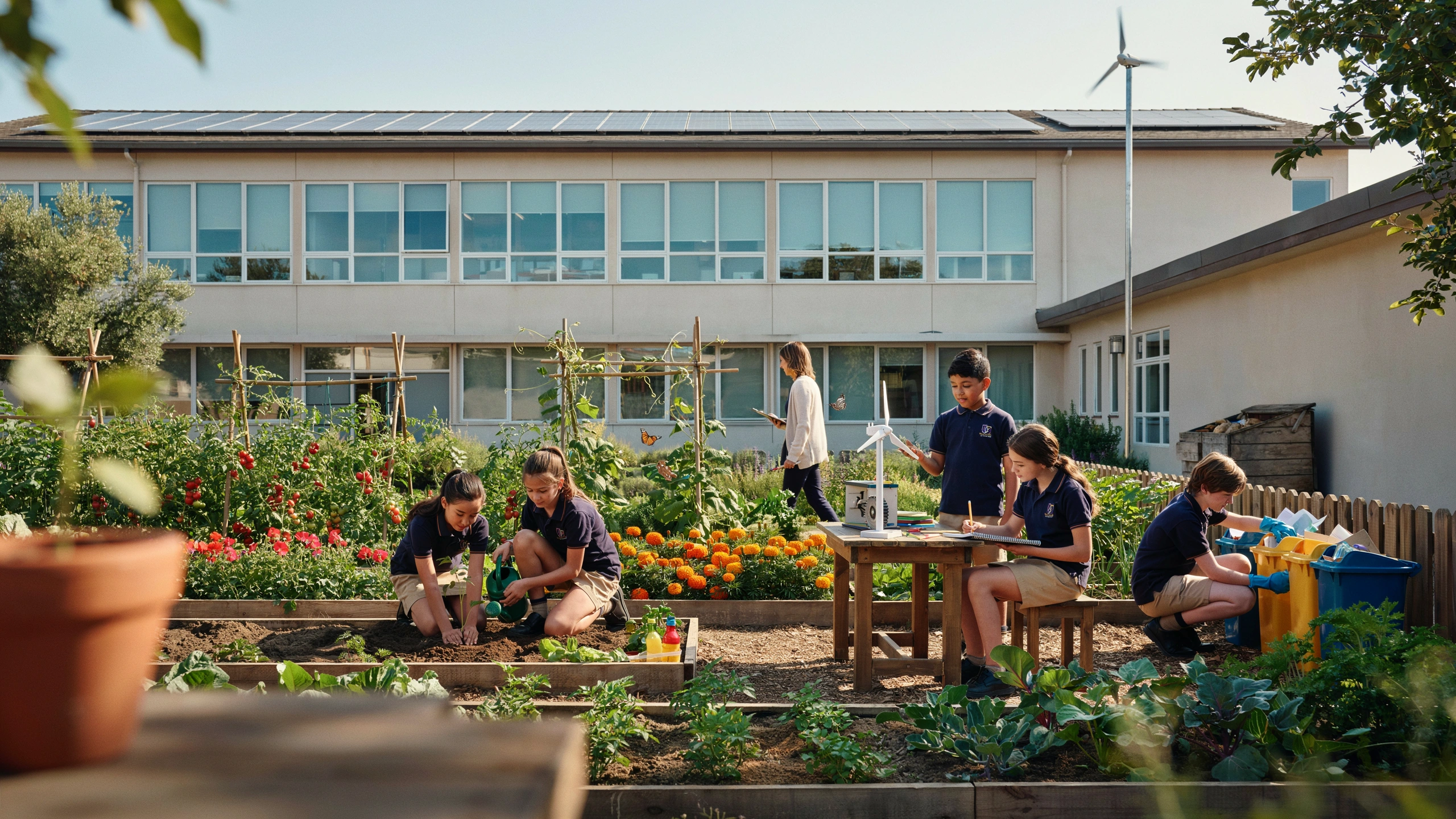
- Planting school gardens.
- Organizing recycling campaigns.
- Monitoring local biodiversity.
- Conducting energy audits.
- Designing water conservation systems.
- Reducing plastic waste.
- Building solar-powered models.
- Cleaning local parks or beaches.
These hands-on experiences allow students to apply classroom knowledge to real environmental challenges.
Developing Environmental Responsibility
Sustainability education encourages students to reflect on the impact of their daily choices.
They learn how simple actions can contribute to environmental protection, including:
- Conserving water and energy.
- Reducing food waste.
- Recycling responsibly.
- Choosing sustainable transportation.
- Supporting environmentally friendly products.
- Protecting wildlife and natural habitats.
These habits help students become responsible environmental stewards throughout their lives.
The Role of Technology
Technology is playing an increasingly important role in sustainability education.
Students use digital tools to:
- Analyze environmental data.
- Monitor weather and climate patterns.
- Explore ecosystems through virtual simulations.
- Model renewable energy systems.
- Collaborate on global sustainability projects.
- Use Artificial Intelligence to study environmental trends.
Technology enables learners to investigate complex environmental issues using real-world information and scientific evidence.
Schools as Models of Sustainability
Schools can demonstrate sustainability by adopting environmentally responsible practices.
Examples include:
- Installing solar panels.
- Reducing paper consumption.
- Recycling waste.
- Conserving water.
- Creating green spaces.
- Encouraging walking or cycling to school.
- Using energy-efficient lighting.
When schools model sustainable practices, students experience environmental responsibility in their everyday lives.
Challenges of Sustainability Education
Despite its growing importance, implementing sustainability education presents several challenges.
Curriculum Integration
Teachers must balance sustainability topics with existing academic requirements.
Teacher Preparation
Educators need professional development to teach environmental issues confidently and accurately.
Resource Availability
Some schools may lack funding for outdoor learning, environmental projects, or specialized materials.
Global Differences
Environmental priorities vary across regions, requiring sustainability education to reflect local needs while addressing global challenges.
The Future of Sustainability Education
Sustainability education will continue to evolve as environmental issues become increasingly urgent.
Future developments may include:
- AI-assisted environmental research.
- Smart classrooms that monitor energy use.
- Virtual Reality field trips to ecosystems around the world.
- International climate collaboration projects.
- Student-led environmental innovation programs.
- Greater integration of the United Nations Sustainable Development Goals (SDGs) into school curricula.
These innovations will help students develop the knowledge and leadership skills needed to build a more sustainable future.
Conclusion
Sustainability education is preparing students to face some of the greatest challenges of the twenty-first century. By combining scientific knowledge, critical thinking, ethical responsibility, and practical action, schools empower young people to protect the environment and contribute to sustainable development.
As environmental concerns continue to shape the future of society, sustainability education will become an increasingly essential part of every student’s learning journey. Through meaningful projects, interdisciplinary learning, and responsible citizenship, today’s students can become tomorrow’s environmental leaders.
By educating learners to care for the planet as well as for one another, schools are helping to create a healthier, greener, and more sustainable world for future generations.