
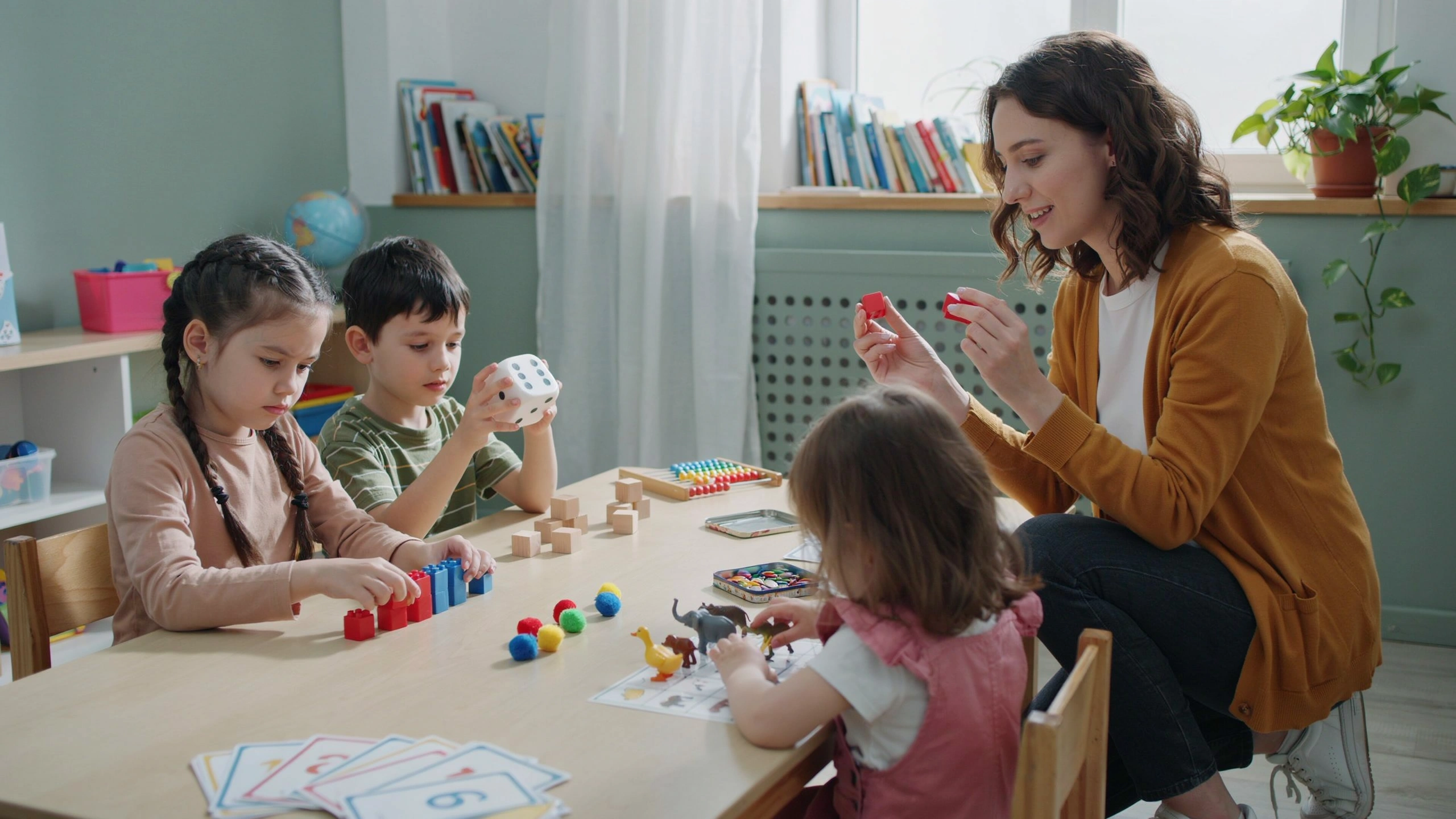
Addition is one of the first mathematical operations children learn, and introducing it through play makes the experience enjoyable and less intimidating. Before children begin solving equations on paper, they benefit from hands-on activities that help them understand how numbers combine to make larger quantities. By using games, toys, and everyday objects, parents and educators can build a strong foundation for future math success.
Whether you’re teaching at home, in preschool, or in kindergarten, these simple addition games encourage children to explore numbers with confidence and curiosity.
Why Play-Based Addition Is Effective
Young children learn best through active exploration rather than memorization. Play-based math activities allow them to see, touch, move, and count objects, helping them understand the meaning behind addition.
Addition games help children:
- Understand the concept of combining groups.
- Improve counting skills.
- Strengthen number recognition.
- Develop logical thinking.
- Build problem-solving abilities.
- Increase confidence in mathematics.
- Prepare for more advanced arithmetic.
When children enjoy learning, they are more likely to stay engaged and remember what they have learned.
1. Toy Addition Game
Gather small toys such as:
- Building blocks
- Toy animals
- Cars
- Dolls
- Buttons
Create simple addition problems.
For example:
- 2 toy cars + 3 toy cars = ?
- 4 blocks + 1 block = ?
Children combine the groups and count the total.
This hands-on activity makes abstract math concepts easier to understand.
2. Roll and Add Dice
Give children two dice.
They roll both dice, count the dots, and add the numbers together.
Older children can record each equation on paper.
This game helps children practice mental addition while having fun.
3. Addition with Building Blocks
Write simple addition problems on cards.
Examples:
- 3 + 2
- 5 + 4
- 6 + 1
Children build one tower for each number and then combine the towers to find the total.
This activity reinforces both counting and addition.
4. Snack Time Addition
Use healthy snacks such as:
- Grapes
- Crackers
- Blueberries
- Pretzels
- Cereal pieces
Ask questions like:
- “If you have 3 grapes and I give you 2 more, how many do you have?”
Children count the snacks before enjoying them.
Learning becomes both educational and rewarding.
5. Number Card Match
Prepare number cards and simple addition cards.
Children solve the equation and match it with the correct answer card.
Example:
4 + 3 → 7
This activity improves number recognition and problem-solving.
6. Hop and Add
Place number cards on the floor.
Call out an addition problem.
Children hop to the first number, then the second number, and finally the correct answer.
For example:
Hop to 2 → Hop to 5 → Hop to 7
Movement keeps children active while reinforcing math skills.
7. Finger Addition Games
Fingers are one of the first and most accessible math tools.
Ask children simple questions such as:
- Show me 3 fingers.
- Now add 2 more.
- How many fingers are showing?
This activity helps children visualize addition without extra materials.
8. Bowling Addition
Set up plastic bottles or toy bowling pins.
Children roll a ball twice.
They count how many pins fell during each roll and add the totals together.
This exciting game combines physical activity with math practice.
9. Story-Based Addition
Turn math into storytelling.
For example:
“Three birds were sitting in a tree. Two more birds flew in. How many birds are there now?”
Children can use drawings or small objects to solve the problem.
Story problems help children understand how addition appears in everyday life.
10. Build an Addition Book
Invite children to create their own addition book.
Each page includes:
- A simple equation.
- A drawing showing the objects.
- The correct answer.
Example:
2 apples + 3 apples = 5 apples
Creating a personal math book reinforces learning and builds confidence.
Tips for Teaching Addition Through Play
Start with small numbers before introducing larger sums.
Use real objects that children can touch and count.
Encourage children to explain how they found the answer.
Ask questions such as:
- What happens if we add one more?
- Can you show another way to make the same number?
- How did you count the objects?
Keep sessions short and enjoyable to maintain attention.
Celebrate effort and creative thinking as much as correct answers.
Common Mistakes to Avoid
Avoid introducing written equations before children understand the concept of combining groups.
Do not rush children through counting.
Allow time to touch each object and count carefully.
Avoid relying only on worksheets.
Hands-on activities provide stronger understanding for young learners.
Remember that mistakes are valuable learning opportunities.
Offer gentle guidance rather than immediate correction.
Conclusion
Simple addition games help children discover that mathematics can be fun, meaningful, and part of everyday life. Whether they are rolling dice, counting snacks, building towers, solving story problems, or creating their own math books, every activity strengthens number sense and builds confidence.
By introducing addition through play, parents and educators create positive learning experiences that prepare children for future mathematical success. With patience, encouragement, and creative activities, young learners develop a strong understanding of addition while enjoying every step of the journey.