
Introduction
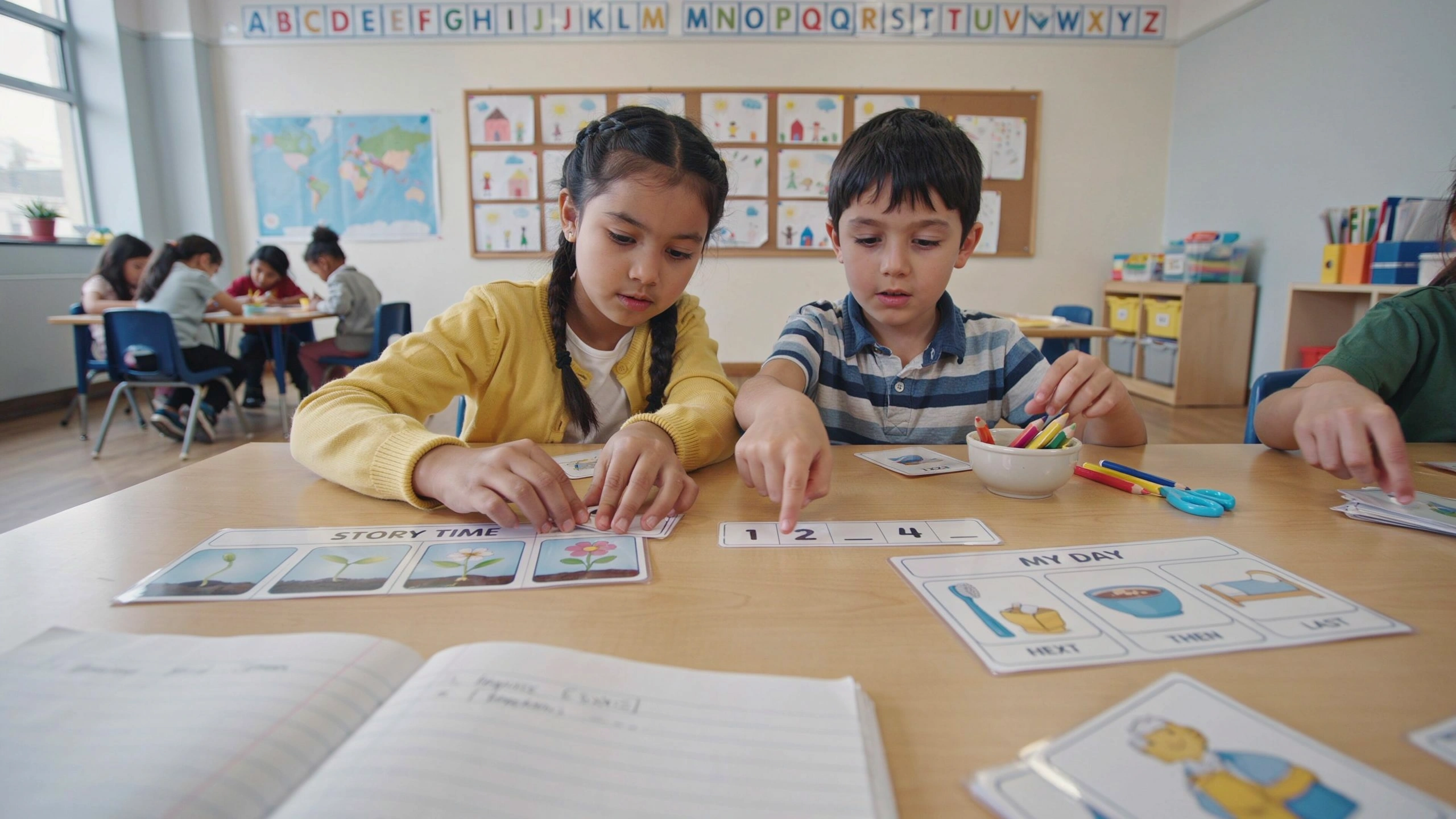
Sequencing is an essential skill that helps children understand the correct order of events, actions, numbers, and ideas. Whether learning to read, solve math problems, follow instructions, or tell stories, children rely on sequencing every day. By practicing sequencing through fun games, they also strengthen logical thinking, memory, and problem-solving skills.
The best sequencing activities don’t feel like lessons. Instead, they encourage children to think, predict, organize, and remember information while enjoying playful challenges. Here are some engaging sequencing games that support learning at home or in the classroom.
Why Sequencing Skills Matter
Understanding sequences helps children:
- Follow multi-step instructions
- Organize their thoughts
- Improve reading comprehension
- Solve mathematical problems
- Develop logical reasoning
- Strengthen working memory
These abilities build a strong foundation for success across many school subjects.
1. Story Picture Sequencing
Give children a set of picture cards that tell a simple story. Ask them to arrange the cards in the correct order.
Afterward, encourage them to explain what happens in each picture.
Skills Developed:
- Logical reasoning
- Storytelling
- Reading readiness
- Communication
2. Daily Routine Order
Ask children to arrange common daily activities into the correct sequence.
Example:
- Wake up
- Brush your teeth
- Eat breakfast
- Go to school
Discuss why each activity belongs in that order.
Skills Developed:
- Sequencing
- Planning
- Organization
- Time awareness
3. Number Sequence Challenge
Create number patterns and ask children to identify the missing number.
Examples:
- 2, 4, 6, 8, __
- 5, 10, 15, __
- 12, 11, 10, __
Increase the difficulty as children improve.
Skills Developed:
- Pattern recognition
- Mathematical reasoning
- Prediction
- Logical thinking
4. Build the Pattern
Use blocks, toys, or household objects to create repeating sequences.
Example:
Red block – Blue block – Red block – Blue block – __
Invite children to continue the pattern or create their own.
Skills Developed:
- Observation
- Pattern recognition
- Creativity
- Memory
5. Follow the Instructions
Give children a series of simple directions.
Example:
- Clap your hands.
- Turn around.
- Jump twice.
- Sit down.
Gradually add more steps as their memory improves.
Skills Developed:
- Working memory
- Listening skills
- Concentration
- Sequencing
6. Cooking Step Challenge
Choose an easy recipe and ask children to place the preparation steps in the correct order.
For example:
- Wash the fruit.
- Cut the fruit.
- Put it in a bowl.
- Mix and serve.
This activity connects sequencing with everyday life.
Skills Developed:
- Organization
- Practical thinking
- Planning
- Responsibility
7. Alphabet Sequencing
Mix several alphabet cards and ask children to arrange them correctly.
Older children can organize words alphabetically.
Skills Developed:
- Letter recognition
- Vocabulary
- Memory
- Logical organization
8. Nature Life Cycles
Teach sequencing using examples from nature.
Examples include:
- Seed → Plant → Flower
- Egg → Caterpillar → Chrysalis → Butterfly
- Tadpole → Frog
Children learn both science and logical order.
Skills Developed:
- Scientific thinking
- Cause and effect
- Observation
- Memory
9. What Happens Next?
Read the beginning of a story or describe a situation.
Example:
“The ice cream is left outside on a hot summer day…”
Ask children what they think will happen next and why.
Skills Developed:
- Prediction
- Cause and effect
- Logical reasoning
- Creativity
10. Create Your Own Sequence
Invite children to invent their own sequences using:
- Numbers
- Shapes
- Colors
- Actions
- Story events
Then challenge friends or family members to complete them.
Creating sequences requires deeper thinking than simply following them.
Skills Developed:
- Creativity
- Planning
- Critical thinking
- Communication
Tips for Parents and Teachers
Help children improve sequencing skills by:
- Starting with simple activities.
- Using visual aids whenever possible.
- Asking children to explain their thinking.
- Practicing regularly through everyday routines.
- Encouraging children to create their own sequencing games.
- Celebrating effort as well as correct answers.
Small, consistent practice leads to lasting improvement.
Everyday Opportunities to Practice Sequencing
Sequencing naturally appears in daily life.
Try asking questions such as:
- What do we do before dinner?
- What happened first in today’s story?
- What comes after Friday?
- Which step should we do next?
These simple conversations reinforce sequencing without formal lessons.
Long-Term Benefits
Children who regularly practice sequencing often develop:
- Better memory
- Stronger logical reasoning
- Improved reading comprehension
- Greater organizational skills
- Better problem-solving abilities
- Increased confidence when completing complex tasks
These skills support learning throughout childhood and beyond.
Conclusion
Sequencing games are an enjoyable way to help children strengthen logical thinking and memory. By arranging stories, predicting outcomes, organizing routines, and recognizing patterns, young learners develop essential cognitive skills that support success in school and everyday life.
Whether playing with picture cards, numbers, everyday activities, or nature examples, every sequencing challenge helps children become more organized, thoughtful, and confident thinkers. With just a few minutes of practice each day, these simple games can make a lasting impact on a child’s learning journey.