
Introduction
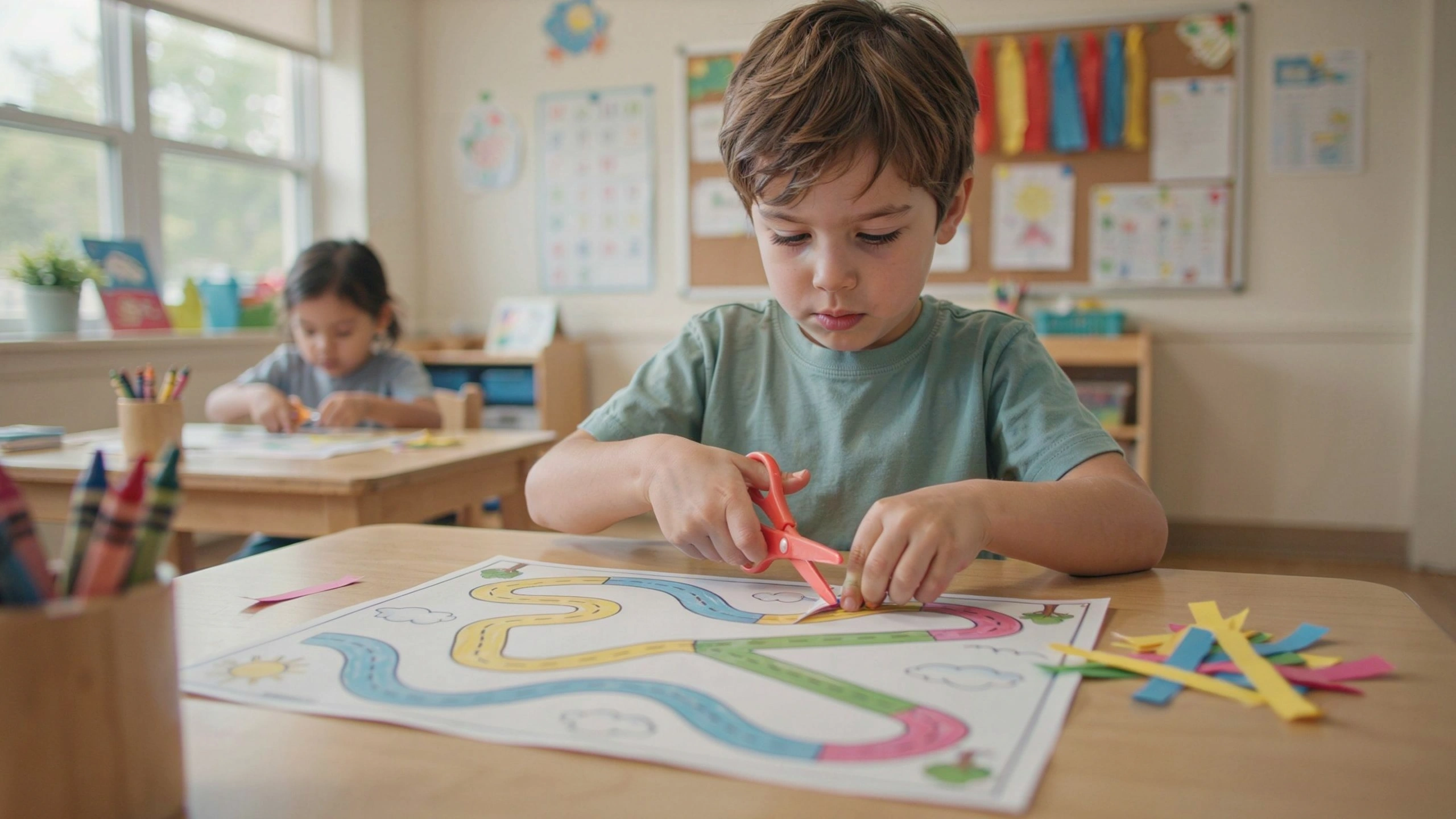
Learning to use scissors is an important milestone in early childhood development. Although cutting and writing may seem like different skills, they both rely on strong hand muscles, coordinated finger movements, and careful hand-eye coordination. One exciting way to develop these abilities is through a Scissor Cutting Obstacle Course.
In this creative activity, children follow different cutting paths, complete fun challenges, and navigate obstacles using child-safe scissors. As they progress through each station, they build the fine motor skills and confidence needed for future handwriting.
This engaging activity is perfect for preschool classrooms, kindergarten centers, homeschooling, and home learning.
Why Cutting Skills Support Handwriting
Using scissors strengthens many of the same muscles children use when holding and controlling a pencil. Cutting also teaches children to coordinate both hands—one guiding the paper while the other operates the scissors.
Practicing cutting activities helps children:
- Strengthen hand and finger muscles.
- Improve bilateral coordination.
- Develop hand-eye coordination.
- Increase wrist stability.
- Build concentration and patience.
- Prepare for better pencil control.
These foundational skills make learning to write easier and more comfortable.
Materials You’ll Need
Gather these simple supplies before starting:
- Child-safe scissors
- Construction paper
- Colored paper strips
- Printable cutting practice worksheets
- Markers
- Stickers for rewards (optional)
- Glue for creating finished crafts (optional)
Always choose scissors designed specifically for young children.
How to Set Up the Obstacle Course
Create several cutting stations, each with a different challenge.
Station 1: Straight Lines
Children cut along wide straight lines to practice basic control.
Station 2: Zigzag Roads
Introduce zigzag lines that require careful turning.
Station 3: Curvy Paths
Practice cutting smooth curved lines to improve wrist movement.
Station 4: Shapes
Cut out circles, squares, triangles, and rectangles.
Station 5: Creative Craft
Use the cut pieces to make a collage, animal, flower, or simple picture.
Children complete each station before moving to the next challenge.
Skills Children Develop
The Scissor Cutting Obstacle Course strengthens many important pre-writing skills.
Fine Motor Strength
Opening and closing scissors builds the muscles needed for writing.
Bilateral Coordination
Children use one hand to cut while the other hand rotates and supports the paper.
Hand-Eye Coordination
Carefully following cutting lines improves visual-motor integration.
Wrist Stability
Turning the paper and controlling the scissors strengthens wrist movements needed for handwriting.
Concentration
Children learn to focus on accuracy and complete tasks step by step.
Creative Obstacle Course Ideas
Keep the activity fresh with different themes.
Jungle Adventure
Cut along vines to help an explorer reach hidden animals.
Space Mission
Follow cutting paths between planets and stars.
Pirate Treasure Hunt
Cut along maps leading to buried treasure.
Underwater Adventure
Cut around fish, sea turtles, and coral reefs.
Dinosaur Trail
Follow footprints and cut around dinosaur shapes.
Changing the theme keeps children excited to practice again.
Tips for Parents and Teachers
Help children succeed with these practical suggestions:
- Begin with wide, simple cutting lines.
- Demonstrate proper scissor grip before starting.
- Encourage children to move the paper rather than twisting the scissors.
- Praise careful effort instead of perfect results.
- Offer regular breaks if hands become tired.
- Always supervise children while using scissors.
Consistency is more important than speed when developing cutting skills.
Extending the Learning Experience
You can combine cutting practice with additional learning activities.
Invite children to:
- Sort the cut shapes by color or size.
- Count the number of shapes they cut.
- Create greeting cards using their paper pieces.
- Build animals or vehicles from basic shapes.
- Spell simple words by cutting out paper letters.
- Decorate a classroom bulletin board with their creations.
These activities connect fine motor development with creativity, literacy, and math.
Benefits Beyond Pre-Writing
The Scissor Cutting Obstacle Course also supports many other developmental areas, including:
- Creativity
- Spatial awareness
- Planning and sequencing
- Problem-solving
- Confidence
- Independence
- Artistic expression
Children enjoy completing each challenge and take pride in their finished projects.
Safety Tips
Follow these safety guidelines for a positive experience:
- Use only child-safe scissors with rounded tips.
- Supervise children throughout the activity.
- Teach children to carry scissors with the blades closed and pointing downward.
- Provide a stable work surface with good lighting.
- Store scissors safely after use.
Teaching safe habits early encourages responsible tool use.
Conclusion
The Scissor Cutting Obstacle Course is a fun and engaging activity that prepares children for handwriting by strengthening fine motor muscles, improving coordination, and developing hand control. Each cutting challenge builds the confidence and physical skills needed for successful writing.
With a few simple materials and a little creativity, parents and teachers can transform ordinary cutting practice into an exciting learning adventure. Through regular participation, children develop stronger hands, better coordination, and the readiness to begin their handwriting journey with confidence.