
Introduction
Before children learn to write letters and sentences, they need to develop strong hand muscles, finger coordination, and precise movements. Activities that involve threading and lacing are excellent for building these foundational skills. One enjoyable and educational activity is Ribbon Lacing Cards.
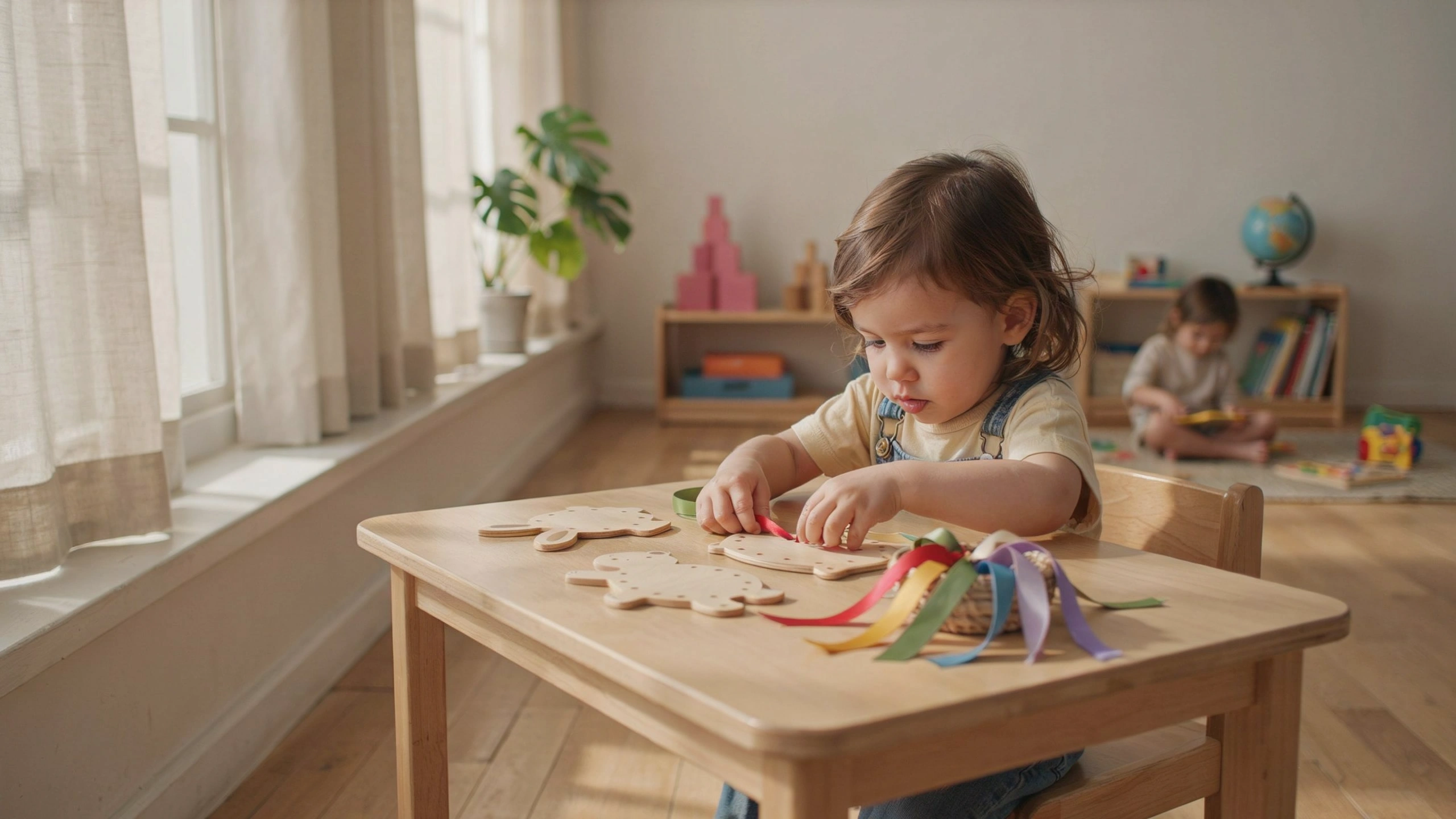
In this hands-on game, children weave colorful ribbons or shoelaces through holes around sturdy cards featuring fun shapes and pictures. As they lace each card, they strengthen the muscles used for handwriting while improving concentration, patience, and hand-eye coordination.
Ribbon Lacing Cards are perfect for preschool classrooms, kindergarten learning centers, homeschooling, and at-home educational play.
Why Lacing Activities Support Pre-Writing Skills
Lacing requires children to use careful, controlled hand movements while coordinating both hands. These actions closely resemble the skills needed to hold and guide a pencil.
Regular lacing activities help children:
- Strengthen hand and finger muscles.
- Improve hand-eye coordination.
- Develop bilateral coordination.
- Increase finger dexterity.
- Build concentration and patience.
- Prepare for better pencil control.
These skills create a strong foundation for successful handwriting.
Materials You’ll Need
This activity requires only a few simple materials:
- Ready-made lacing cards or homemade cardboard cards
- Hole punch
- Colorful ribbons, yarn, or shoelaces with taped ends
- Markers or crayons
- Laminator (optional for durability)
- Storage bag or container
You can create cards featuring animals, fruits, vehicles, letters, numbers, or seasonal themes.
How to Make Ribbon Lacing Cards
Creating your own lacing cards is simple.
- Draw or print a large picture on thick cardstock.
- Cut out the shape carefully.
- Punch evenly spaced holes around the edges.
- Thread a ribbon through the first hole.
- Tie a small knot at one end to keep the ribbon secure.
Your reusable lacing cards are now ready for play.
How to Play
- Give your child a lacing card and a ribbon.
- Demonstrate how to thread the ribbon through one hole at a time.
- Encourage them to continue around the entire shape.
- When finished, remove the ribbon and try a different card.
- Challenge older children to create their own lacing patterns.
Allow children to work at their own pace while enjoying the process.
Skills Children Develop
Ribbon Lacing Cards strengthen several essential pre-writing abilities.
Fine Motor Strength
Pulling and guiding the ribbon strengthens the small muscles in the hands and fingers.
Bilateral Coordination
One hand holds the card steady while the other threads the ribbon through each hole.
Hand-Eye Coordination
Children carefully align the ribbon with each hole, improving visual-motor integration.
Finger Dexterity
Grasping, pushing, and pulling the ribbon encourages independent finger movements.
Concentration
Completing an entire lacing pattern helps children develop focus, persistence, and attention to detail.
Creative Ways to Play
Keep children interested by introducing different challenges.
Rainbow Lacing
Use ribbons in rainbow colors to create bright and colorful designs.
Alphabet Cards
Thread ribbons around uppercase and lowercase letters while saying each letter aloud.
Number Cards
Practice counting by lacing around numbered cards.
Seasonal Themes
Create pumpkins for autumn, snowflakes for winter, flowers for spring, or suns for summer.
Storytelling Activity
After completing a card, encourage children to tell a short story about the picture they laced.
Tips for Parents and Teachers
Help children enjoy the activity with these practical suggestions:
- Begin with large holes and thick ribbons for beginners.
- Demonstrate slow threading techniques.
- Encourage children to use both hands together.
- Praise persistence rather than perfect results.
- Offer a variety of card themes to maintain interest.
- Store cards and ribbons neatly for repeated use.
Regular practice helps children build confidence and improve coordination.
Extending the Learning Experience
Expand the activity with additional educational ideas.
Invite children to:
- Sort cards by category or theme.
- Count the number of holes on each card.
- Identify colors while choosing ribbons.
- Create simple patterns using different ribbon colors.
- Design and decorate their own lacing cards.
- Spell simple words using letter-shaped lacing cards.
These activities combine creativity, early literacy, and math while reinforcing fine motor development.
Benefits Beyond Pre-Writing
Ribbon Lacing Cards also support many other developmental skills, including:
- Problem-solving
- Visual perception
- Planning and sequencing
- Creativity
- Independence
- Confidence
- Patience
Because children enjoy completing colorful designs, they remain engaged while strengthening important learning skills.
Safety Tips
For a safe and enjoyable experience:
- Use child-friendly ribbons without sharp ends.
- Supervise young children during the activity.
- Avoid ribbons that are excessively long to reduce tangling.
- Inspect homemade cards for rough edges.
- Store materials safely after use.
A safe learning environment helps children explore with confidence.
Conclusion
The Ribbon Lacing Cards activity is a simple, affordable, and highly effective way to prepare children for handwriting. By threading colorful ribbons through lacing cards, children strengthen their fingers, improve coordination, and develop the fine motor skills needed for writing.
Whether used at home or in the classroom, this enjoyable activity turns everyday play into meaningful learning. With regular practice, children gain the confidence, control, and hand strength that create a strong foundation for successful handwriting and lifelong learning.