
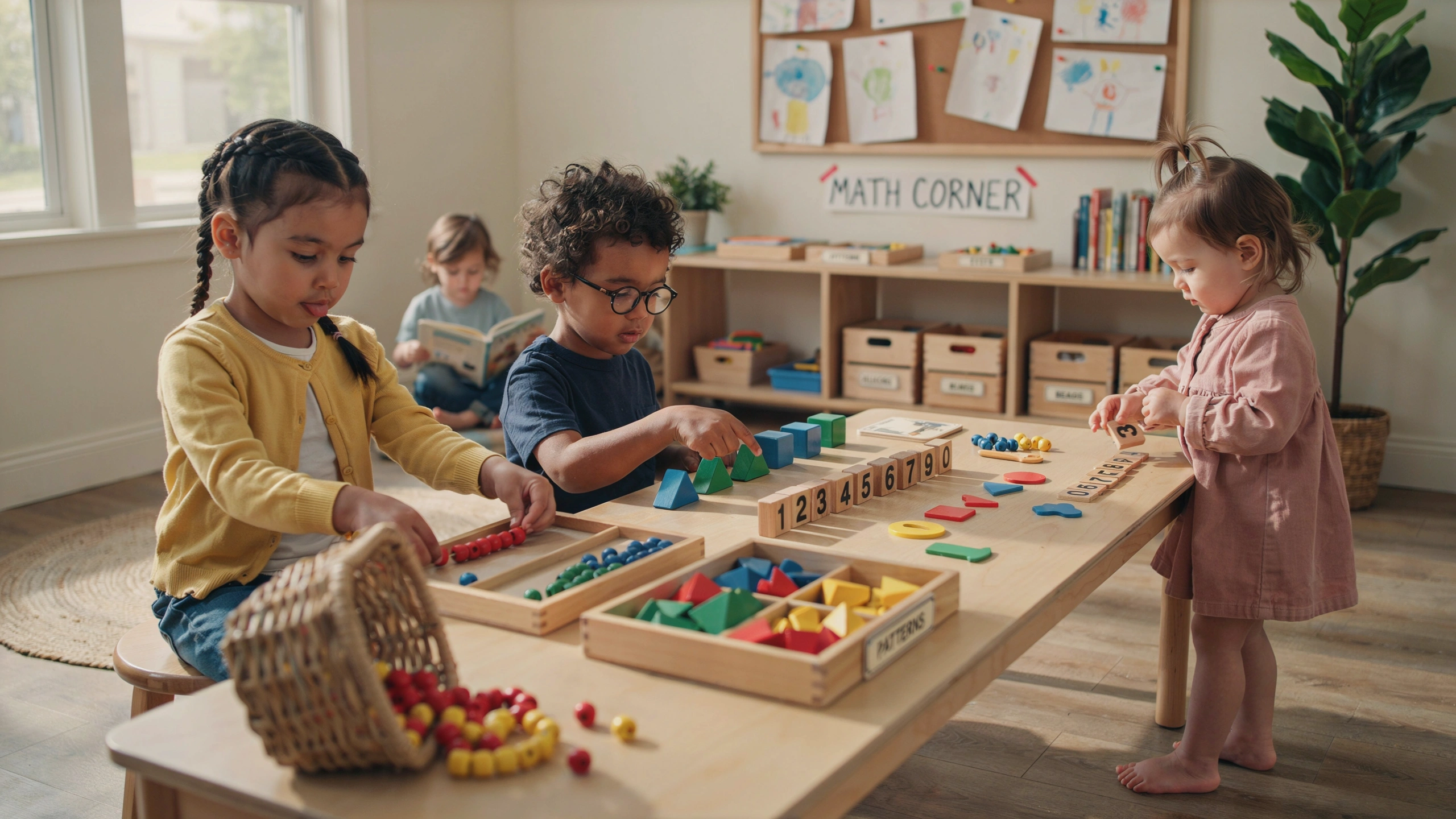
Introduction
Pattern recognition is one of the most important building blocks of logical thinking and problem-solving. Every day, children use pattern recognition to understand language, solve math problems, predict outcomes, and make sense of the world around them. By learning to identify repeating sequences, relationships, and structures, children become more confident thinkers and better problem solvers.
The best part is that pattern recognition doesn’t have to feel like a lesson. Through playful activities and everyday games, children can strengthen this essential skill while having fun. Here are some engaging pattern recognition activities that help young learners develop stronger reasoning and critical thinking abilities.
Why Pattern Recognition Is Important
Patterns are everywhere—in numbers, letters, music, nature, shapes, colors, and daily routines. Recognizing these patterns helps children:
- Solve problems more efficiently
- Predict what comes next
- Develop logical reasoning
- Improve mathematical thinking
- Strengthen memory
- Build observation skills
Pattern recognition also lays the foundation for coding, science, and reading comprehension.
1. Color Sequence Games
Create simple color patterns and ask children to continue the sequence.
Examples:
- Red – Blue – Red – Blue – ?
- Yellow – Green – Yellow – Green – ?
As children improve, introduce more complex patterns.
Skills Developed:
- Pattern recognition
- Sequencing
- Concentration
- Logical reasoning
2. Shape Pattern Challenges
Arrange shapes in repeating sequences.
Example:
Circle – Square – Triangle – Circle – Square – ?
Children identify the missing shape and explain the rule.
Skills Developed:
- Visual reasoning
- Observation
- Spatial awareness
- Critical thinking
3. Number Pattern Activities
Introduce simple number sequences that encourage logical thinking.
Examples:
- 2, 4, 6, 8…
- 5, 10, 15, 20…
- 1, 3, 5, 7…
Older children can explore more challenging sequences.
Skills Developed:
- Mathematical reasoning
- Prediction
- Logical analysis
- Problem-solving
4. Nature Pattern Hunt
Take a walk outdoors and encourage children to discover repeating patterns in nature.
Look for:
- Leaf shapes
- Flower petals
- Tree bark
- Shell designs
- Animal markings
This activity combines science with observation.
Skills Developed:
- Scientific observation
- Curiosity
- Visual analysis
- Pattern recognition
5. Movement Patterns
Create movement sequences for children to copy.
Examples:
- Clap – Jump – Clap – Jump
- Spin – Stomp – Spin – Stomp
Invite children to invent their own movement patterns.
Skills Developed:
- Memory
- Coordination
- Sequencing
- Focus
6. Sound and Rhythm Patterns
Clap, tap, or use simple instruments to create rhythmic patterns.
Children repeat the rhythm and predict what comes next.
This activity strengthens listening and concentration.
Skills Developed:
- Auditory memory
- Listening skills
- Pattern recognition
- Timing
7. Story Sequencing
Read or tell a short story, then ask children to arrange the events in the correct order.
Discuss why each event belongs in that sequence.
Skills Developed:
- Cause and effect
- Reading comprehension
- Logical reasoning
- Organization
8. Daily Routine Patterns
Help children recognize the natural patterns in everyday life.
Examples include:
- Wake up → Brush teeth → Eat breakfast → Go to school
- Wash hands → Eat lunch → Clean up
Understanding routines helps children predict and organize daily activities.
Skills Developed:
- Sequencing
- Planning
- Independence
- Time management
9. Guess the Rule
Create a hidden rule and ask children to identify it.
Example:
Apple – Banana – Orange – Pear
The rule could be: “All are fruits.”
Encourage children to create their own pattern rules for others to solve.
Skills Developed:
- Classification
- Deductive reasoning
- Flexible thinking
- Communication
10. Build Repeating Structures
Challenge children to build repeating designs using blocks or other household items.
For example:
- Small block – Large block – Small block – Large block
Then ask them to extend the structure.
Skills Developed:
- Spatial reasoning
- Creativity
- Planning
- Pattern analysis
Tips for Encouraging Pattern Recognition
Help children get the most from these activities by following a few simple strategies:
- Start with simple patterns before increasing the difficulty.
- Ask children to explain how they found the rule.
- Encourage them to create their own patterns.
- Celebrate effort and logical thinking.
- Include pattern games in everyday routines and conversations.
The goal is to make learning interactive and enjoyable rather than focusing only on correct answers.
How Pattern Recognition Supports School Success
Children who regularly practice recognizing patterns often find it easier to learn in many subjects, including:
Mathematics
Understanding sequences, multiplication patterns, and problem-solving strategies.
Reading
Recognizing letter combinations, spelling rules, and sentence structures.
Science
Identifying relationships, cycles, and natural systems.
Coding
Understanding algorithms, loops, and logical sequences.
These connections show why pattern recognition is considered a foundational thinking skill.
Conclusion
Pattern recognition activities help children develop the logical thinking skills they need for lifelong learning. By noticing relationships, predicting outcomes, and identifying repeating sequences, children become more confident problem solvers and independent thinkers.
Whether exploring patterns in nature, creating rhythmic sequences, solving number puzzles, or building colorful designs, every activity strengthens observation, reasoning, and creativity. With regular practice, these simple games can make a lasting impact on a child’s academic success and everyday decision-making.