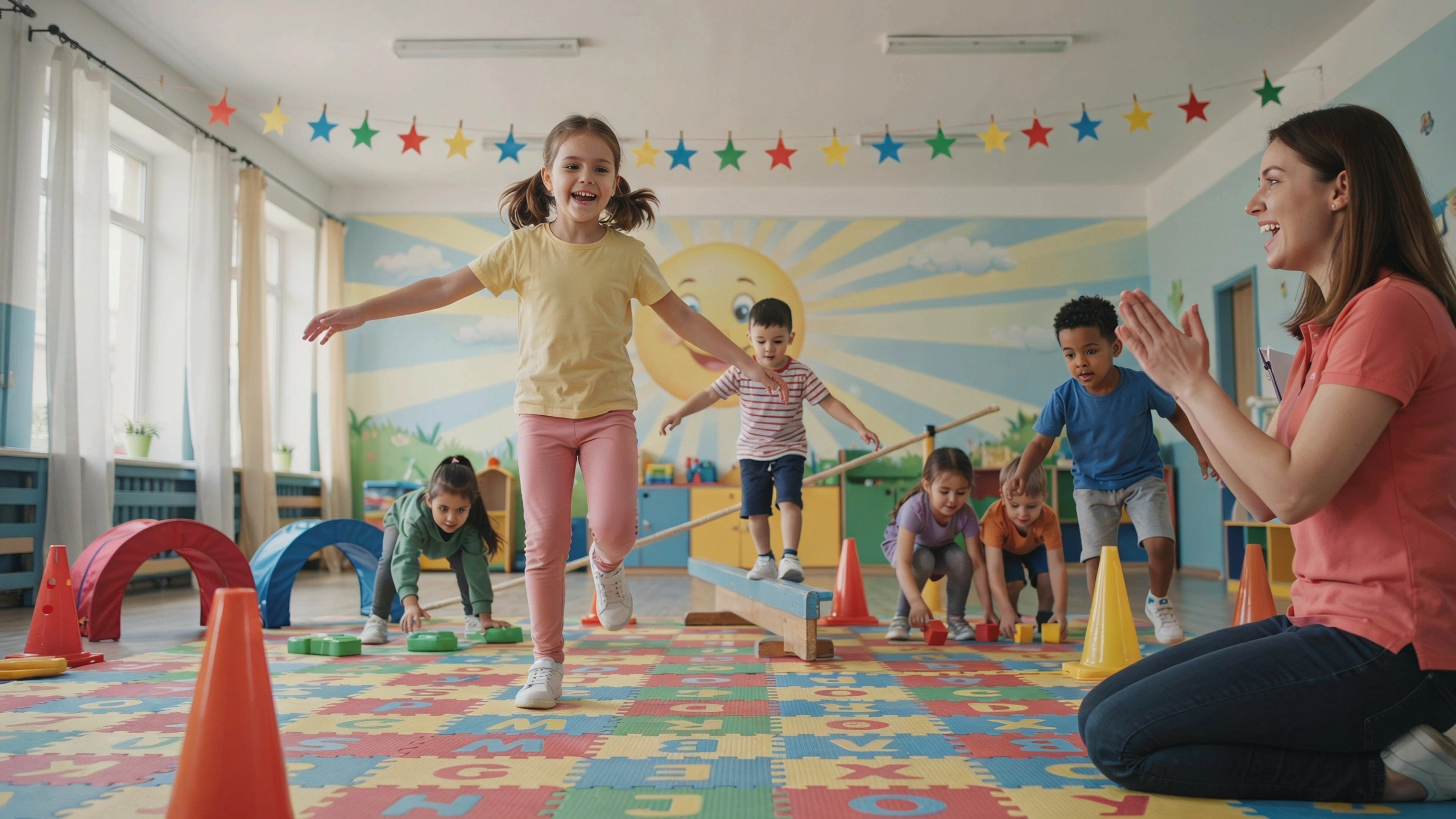
Children learn best when they are actively engaged. Movement-based memory games combine physical activity with cognitive challenges, allowing children to strengthen their memory, attention, and concentration while staying active. These games are especially effective because they engage both the body and the brain, making learning more enjoyable and memorable.
Whether played at home, in the classroom, or outdoors, movement games encourage children to listen carefully, remember sequences, and follow instructions—all while developing healthy motor skills.
In this article, you’ll discover exciting movement-based memory games that keep kids active, focused, and eager to learn.
Why Combine Movement and Memory?
Research has shown that physical activity supports brain development by increasing blood flow and helping children stay alert. When movement is combined with memory tasks, children are more likely to stay engaged and retain information.
Movement-based games help develop:
- Working memory
- Attention span
- Listening skills
- Coordination
- Balance
- Sequencing
- Self-control
- Problem-solving
These activities also provide a healthy break from sitting for long periods.
Benefits of Active Memory Games
Movement games encourage children to:
- Listen carefully before acting.
- Remember sequences of actions.
- Stay focused while moving.
- Improve body coordination.
- Build confidence through physical success.
- Develop teamwork and communication skills.
Because children naturally enjoy movement, these games create positive learning experiences.
1. Action Memory Challenge
Call out a sequence of movements.
For example:
- Jump twice.
- Spin around.
- Touch your toes.
- Clap three times.
Children repeat the actions in the correct order.
Increase the number of movements as their memory improves.
2. Follow the Leader
Choose one child to be the leader while everyone else copies the movements.
The leader might:
- Hop like a rabbit.
- Walk backward.
- Stretch high.
- Tiptoe quietly.
- March in place.
Children must pay close attention to remember each movement.
3. Simon Says with Sequences
Instead of one instruction, combine several.
Example:
- Simon says touch your head.
- Clap twice.
- Jump once.
- Sit down.
Children complete every movement in sequence while remembering the rules.
4. Obstacle Course Memory
Create a simple obstacle course using pillows, cones, or chairs.
Children memorize the route before completing it.
Example:
- Crawl under the chair.
- Jump over the pillow.
- Walk around the cone.
- Toss the beanbag into the basket.
This activity develops both physical coordination and working memory.
5. Animal Movement Game
Call out different animals and ask children to move like them.
Examples include:
- Hop like a frog.
- Waddle like a penguin.
- Gallop like a horse.
- Slither like a snake.
- Fly like a bird.
Later, ask children to repeat the entire animal sequence from memory.
6. Dance Pattern Challenge
Create a short dance routine with simple movements.
For example:
- Step right.
- Clap.
- Turn around.
- Jump.
Children watch once before performing the routine themselves.
Music makes this activity even more engaging.
7. Color Movement Hunt
Place colored cards around the room.
Call out a sequence such as:
- Blue
- Red
- Yellow
- Green
Children run to each color in the correct order.
This activity combines color recognition with memory practice.
8. Number Hop Game
Place number cards on the floor.
Say a number sequence.
For example:
3 → 6 → 2 → 5
Children hop onto each number in order.
Older children can solve simple math problems before hopping.
9. Freeze and Remember
Play music while children dance freely.
When the music stops, give three or four movement instructions.
For example:
- Touch your shoulders.
- Turn around.
- Sit down.
Children complete the sequence before the music starts again.
10. Treasure Hunt Relay
Hide several objects around the play area.
Children remember clues and locations while moving between stations.
Working in teams encourages cooperation, communication, and memory recall.
Ways to Increase the Challenge
As children gain confidence, make the games more demanding by:
- Adding longer movement sequences.
- Increasing speed.
- Mixing physical and verbal instructions.
- Including backward sequences.
- Introducing distractions.
- Allowing children to create movement routines for others.
These challenges strengthen both memory and mental flexibility.
Tips for Parents and Teachers
To make movement memory games successful:
- Choose a safe play area.
- Keep instructions clear and simple.
- Begin with short sequences.
- Encourage effort instead of perfection.
- Include plenty of praise and positive feedback.
- Rotate activities to maintain excitement.
Children stay motivated when every game feels like an adventure.
Skills Developed Through Movement Games
These active learning experiences strengthen many areas of development, including:
- Working memory
- Listening comprehension
- Concentration
- Gross motor coordination
- Spatial awareness
- Balance
- Self-confidence
- Teamwork
Together, these skills support both physical health and academic success.
Everyday Opportunities for Active Learning
Movement and memory can be combined during everyday routines.
Try activities such as:
- Remembering exercise sequences during morning stretches.
- Following movement instructions while cleaning up toys.
- Playing memory races in the backyard.
- Acting out favorite story characters.
- Creating family dance routines.
- Practicing yoga poses in sequence.
These activities transform ordinary moments into valuable learning experiences.
Final Thoughts
Movement-based memory games are an excellent way to help children stay active while developing important cognitive skills. By combining physical exercise with memory challenges, children improve attention, working memory, coordination, and problem-solving in a fun and engaging way.
Whether indoors or outdoors, these activities encourage children to learn through movement, making every jump, hop, and dance step an opportunity for brain development. With regular practice, movement-based games become a powerful tool for building healthier bodies, sharper minds, and more confident learners.