
Introduction
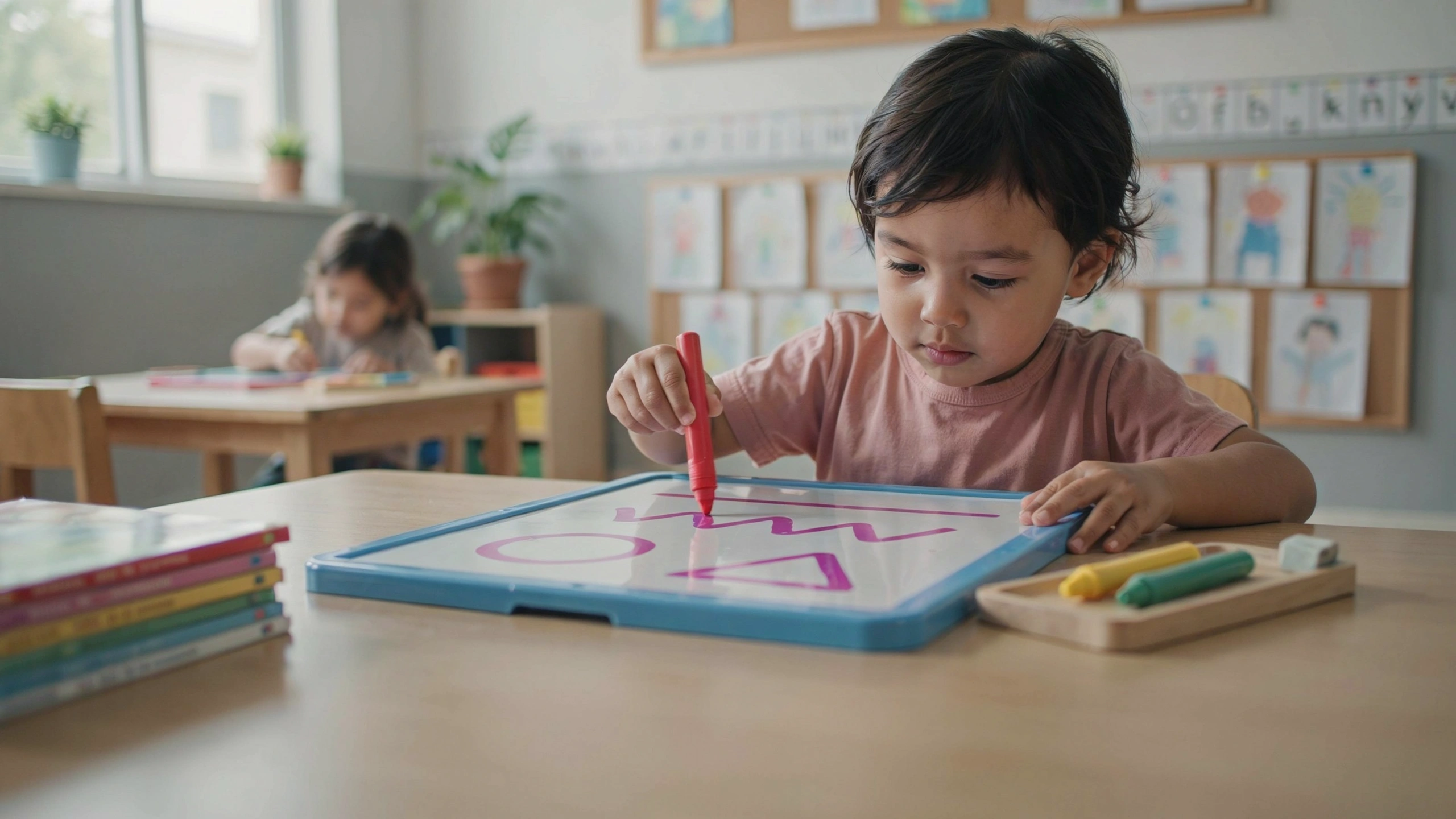
Helping children prepare for handwriting doesn’t always require paper and pencils. In fact, reusable drawing tools can make early writing practice even more exciting. One of the best activities for developing pre-writing skills is the Magnetic Drawing Board Line Challenge.
Using a magnetic drawing board, children practice drawing lines, shapes, and simple patterns over and over again. Because mistakes can be erased instantly, children feel free to experiment, build confidence, and improve their pencil-like movements without frustration.
This activity is ideal for preschoolers, kindergarten learners, homeschooling families, and early childhood classrooms.
Why Reusable Drawing Activities Are Beneficial
Young children learn through repetition. A magnetic drawing board allows them to practice the same movements multiple times without wasting paper or worrying about making mistakes.
Regular practice on a magnetic board helps children:
- Develop fine motor control.
- Improve pencil readiness.
- Strengthen hand and wrist muscles.
- Build hand-eye coordination.
- Increase confidence through repetition.
- Encourage independent learning.
The ability to erase and start again makes learning feel fun instead of stressful.
Materials You’ll Need
Prepare these simple materials:
- Magnetic drawing board
- Magnetic stylus or pen
- Line pattern cards (optional)
- Shape flashcards (optional)
- Alphabet cards (optional)
- Number cards (optional)
Choose a drawing board with a comfortable stylus that fits small hands.
How to Play
- Give your child the magnetic drawing board.
- Demonstrate how to hold the stylus correctly.
- Draw a simple line or shape.
- Ask your child to copy your drawing.
- Erase the board using the built-in slider.
- Repeat with new patterns, shapes, or letters.
As children improve, gradually introduce more detailed designs.
Skills Children Develop
The Magnetic Drawing Board Line Challenge strengthens many important pre-writing skills.
Fine Motor Control
Holding and guiding the stylus improves the finger movements needed for handwriting.
Pencil Grip Preparation
The magnetic pen encourages children to practice a proper writing grip.
Hand-Eye Coordination
Children carefully copy lines and shapes while watching their movements.
Wrist Stability
Repeated drawing strengthens wrist control, helping children create smoother writing strokes.
Visual Memory
Copying patterns from cards encourages children to observe, remember, and reproduce visual information.
Creative Challenge Ideas
Keep the activity engaging with different games.
Line Pattern Practice
Draw straight, curved, zigzag, and wavy lines for children to copy.
Shape Builder
Challenge children to draw circles, squares, triangles, rectangles, and stars.
Alphabet Challenge
Practice uppercase and lowercase letters one at a time.
Number Drawing
Copy numbers from 0 to 20 while saying them aloud.
Mystery Drawing
Draw part of a picture and ask your child to complete it.
Tips for Parents and Teachers
Help children enjoy the activity with these practical ideas:
- Begin with simple lines before introducing letters.
- Demonstrate slow, controlled movements.
- Encourage a relaxed pencil grip.
- Praise effort and improvement.
- Allow children to erase mistakes without criticism.
- Keep sessions short and enjoyable.
Consistent practice builds confidence and stronger writing habits.
Extending the Learning Experience
You can easily expand the activity by encouraging children to:
- Copy simple pictures.
- Trace imaginary roads and mazes.
- Draw patterns from memory.
- Practice writing their names.
- Create simple stories through pictures.
- Play drawing-and-guessing games with friends or family.
These activities strengthen creativity while continuing to develop pre-writing skills.
Benefits Beyond Pre-Writing
The Magnetic Drawing Board Line Challenge also supports many other areas of development, including:
- Creativity
- Visual perception
- Problem-solving
- Memory
- Concentration
- Independent learning
- Self-confidence
Children enjoy experimenting freely because every drawing can be erased and recreated.
Safety Tips
For a safe learning experience:
- Use a magnetic drawing board designed for young children.
- Keep the stylus attached to the board whenever possible.
- Supervise younger children during play.
- Clean the drawing surface regularly.
- Store the board in a safe place after use.
A well-maintained drawing board provides years of educational fun.
Conclusion
The Magnetic Drawing Board Line Challenge is an enjoyable and reusable activity that prepares children for handwriting by strengthening fine motor control, pencil grip, and hand-eye coordination. Through repeated practice with lines, shapes, and letters, children develop the confidence and muscle memory needed for successful writing.
Whether used at home, in preschool, or in the classroom, this simple learning tool offers endless opportunities for creative exploration and skill development. With regular practice, children build a strong foundation for handwriting while discovering that learning can be both fun and rewarding.