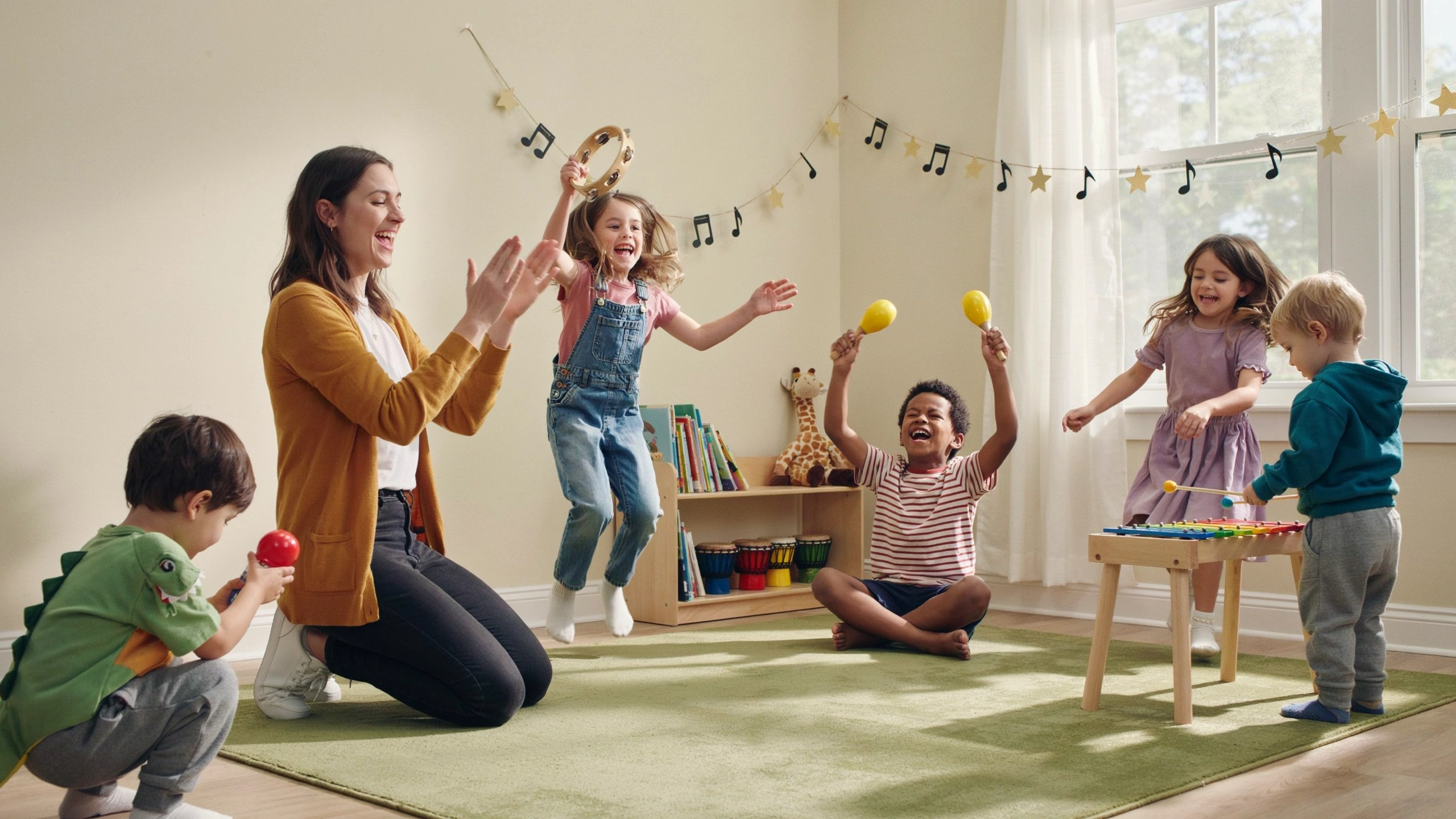
For young children, learning the alphabet is much more enjoyable when it involves singing, dancing, and moving. Music naturally captures children’s attention, while movement helps them stay engaged and remember what they learn. Combining alphabet instruction with songs and physical activities creates a joyful learning experience that supports early literacy and overall development.
Whether at home, in preschool, or in kindergarten, music-based alphabet activities encourage children to learn through play while building confidence and a lifelong love of learning.
Why Music Helps Children Learn the Alphabet
Research shows that music activates multiple areas of the brain, making it easier for children to remember new information. Rhythm, repetition, and melody strengthen memory while movement helps reinforce learning through physical activity.
Learning the alphabet through music helps children:
- Recognize uppercase and lowercase letters.
- Remember the alphabetical sequence.
- Connect letters with their sounds.
- Improve listening skills.
- Strengthen memory and concentration.
- Develop coordination and balance.
- Build confidence through active participation.
Most importantly, children associate learning with fun rather than pressure.
1. Sing the Classic Alphabet Song
The traditional ABC song remains one of the most effective ways to introduce the alphabet.
To make it even more engaging:
- Point to each letter on an alphabet chart while singing.
- Clap along with the rhythm.
- Pause occasionally and let children sing the next few letters.
- Sing slowly at first before increasing the speed.
Repeating the song daily helps children become familiar with the order of the alphabet.
2. Dance with Alphabet Actions
Assign a simple movement to every letter.
For example:
- A — Stretch your arms high.
- B — Bounce like a ball.
- C — Crawl like a cat.
- D — Dance in a circle.
- E — Flap your arms like an eagle.
- F — Freeze in place.
As children hear each letter, they perform the matching movement.
This activity combines physical exercise with letter recognition.
3. Letter Sound Songs
Instead of focusing only on letter names, sing songs that emphasize letter sounds.
For example:
- B says /b/
- M says /m/
- S says /s/
Children repeat each sound while thinking of familiar words that begin with the letter.
This builds early phonics awareness and prepares children for reading.
4. Alphabet Instrument Parade
Give children simple musical instruments such as:
- Tambourines
- Maracas
- Drums
- Bells
- Rhythm sticks
As you sing the alphabet song, children play their instruments whenever they hear a chosen letter.
For example, they may shake their maracas only when the letter “M” is sung.
This activity strengthens listening and attention skills.
5. Alphabet Freeze Dance
Play lively music while children dance freely.
Pause the music unexpectedly and hold up a letter card.
Children must:
- Name the letter.
- Say its sound.
- Think of a word beginning with that letter.
Then the music starts again.
Freeze dance combines movement, excitement, and literacy practice.
6. Musical Alphabet Circle
Place alphabet cards in a large circle on the floor.
Play music while children walk around the circle.
When the music stops, each child stands on the nearest letter and identifies it.
Older children can also:
- Say the letter sound.
- Name an object beginning with the letter.
- Identify whether it is a vowel or consonant.
7. Action Songs for Each Letter
Create simple songs that describe actions beginning with each letter.
Examples include:
- Jump like a kangaroo for K.
- March like a monkey for M.
- Swim like a shark for S.
- Waddle like a walrus for W.
Children quickly connect letters with vocabulary and movement.
8. Rhythm and Clapping Alphabet Game
Say each letter while clapping a simple rhythm.
Children repeat both the letter and the rhythm.
Try different patterns such as:
- One clap
- Two claps
- Clap and stomp
- Clap, stomp, and snap
The combination of rhythm and repetition strengthens memory.
9. Alphabet Yoga
Create simple yoga poses inspired by alphabet letters or animals.
For example:
- T — Tree Pose
- C — Curved Cat Stretch
- V — Wide Standing Pose
- M — Mountain Pose
While holding each pose, discuss the featured letter and words that begin with it.
This calming activity supports both physical and cognitive development.
10. Create Your Own Alphabet Song
Invite children to invent their own alphabet song.
They can:
- Choose a favorite melody.
- Add movements.
- Include animal sounds.
- Use rhyming words.
- Sing about favorite objects beginning with each letter.
Creating original songs encourages creativity, language development, and self-expression.
Tips for Successful Music-Based Alphabet Learning
Keep activities energetic and positive.
Repeat favorite songs regularly because repetition helps children remember.
Encourage every child to participate without worrying about singing perfectly.
Use visual aids such as alphabet charts and letter cards alongside music.
Mix quiet songs with active movement games to maintain children’s attention.
Celebrate enthusiasm and effort more than accuracy.
Common Mistakes to Avoid
Avoid singing too quickly, especially when introducing new letters.
Do not focus only on memorizing the alphabet song.
Children should also recognize individual letters and understand their sounds.
Avoid long learning sessions.
Short, enjoyable activities of 10 to 15 minutes are usually most effective for preschoolers.
Remember that every child learns at a different pace.
Conclusion
Music, songs, and movement transform alphabet learning into an exciting adventure filled with joy, creativity, and exploration. Whether children are singing the ABC song, dancing during freeze games, clapping rhythms, or creating their own musical alphabet, every activity strengthens letter recognition while supporting language, memory, and physical development.
By making learning active and enjoyable, parents and educators help children develop a strong literacy foundation that will support future reading and writing success. With music as a teaching tool, the alphabet becomes more than a sequence of letters—it becomes an unforgettable experience that children look forward to every day.