Introduction
Brain teasers are one of the most enjoyable ways to help children develop critical thinking skills. Unlike simple questions with obvious answers, brain teasers encourage young learners to slow down, analyze information, and think creatively. They challenge children to look beyond the first solution that comes to mind and consider different possibilities.
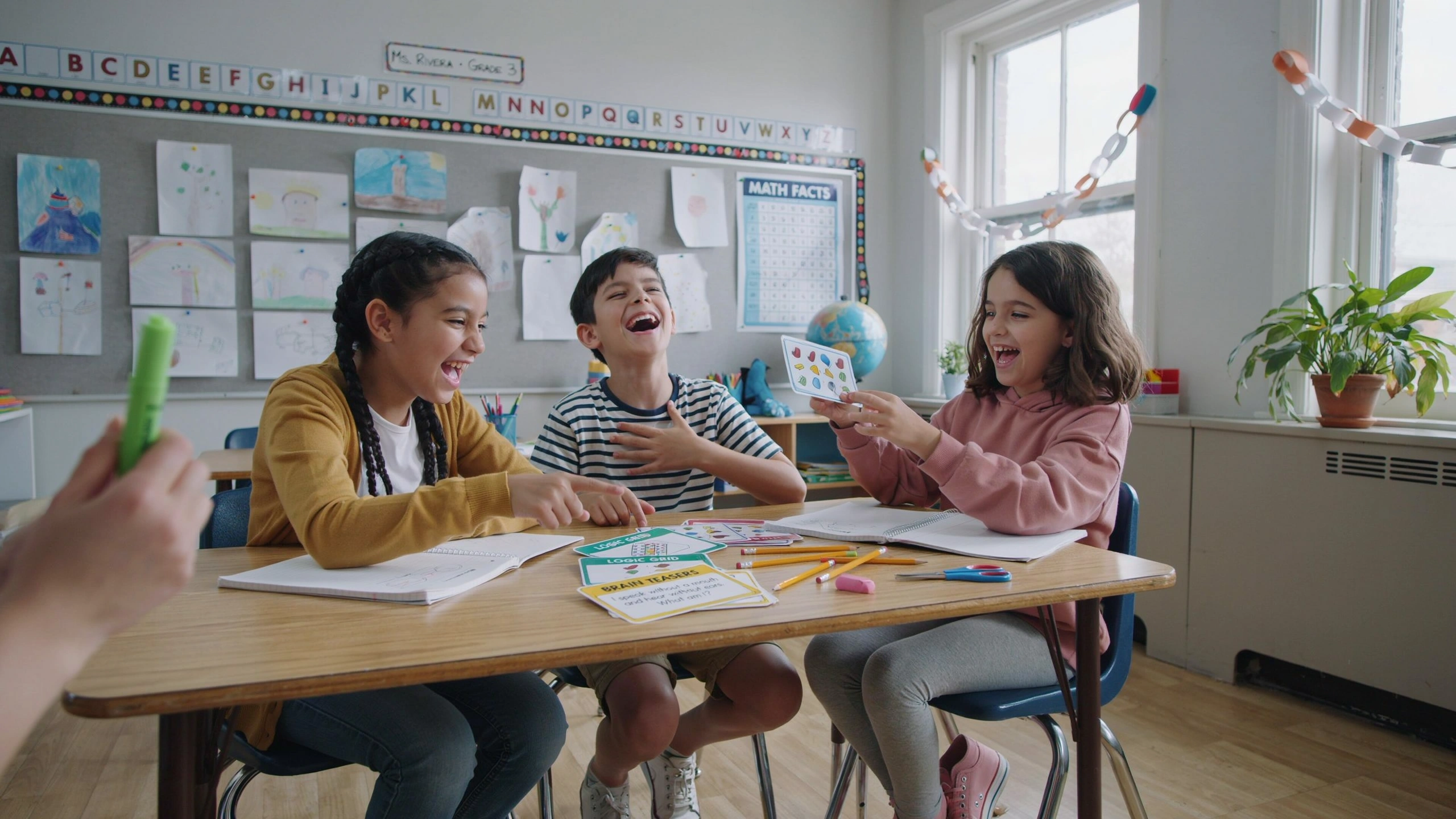
Whether used at home, in the classroom, or during family game nights, brain teasers can improve reasoning, concentration, and confidence while making learning feel like play. Here are some exciting brain teaser activities and ideas that help children become better thinkers.
Why Brain Teasers Are Important
Brain teasers encourage children to use higher-order thinking skills instead of memorizing facts. They learn to observe details, identify patterns, evaluate clues, and solve problems independently.
Regular practice helps children become:
- Better problem solvers
- More patient learners
- Stronger decision-makers
- More creative thinkers
- More confident when facing challenges
1. Classic Riddles
Simple riddles encourage children to think carefully before answering.
Example:
“What has hands but cannot clap?”
Answer: A clock.
Riddles improve logical reasoning while expanding vocabulary.
Skills Developed:
- Deductive reasoning
- Language skills
- Creativity
- Focus
2. Picture Brain Teasers
Show children pictures with hidden objects or unusual details and ask them to identify what’s missing or different.
These visual puzzles encourage careful observation.
Skills Developed:
- Visual analysis
- Attention to detail
- Concentration
- Pattern recognition
3. “What Comes Next?” Challenges
Present sequences of shapes, colors, numbers, or objects and ask children to predict the next item.
Example:
🔴 🔵 🔴 🔵 🔴 ?
Answer: 🔵
Skills Developed:
- Pattern recognition
- Logical reasoning
- Prediction
- Observation
4. Odd One Out Games
Display four or five objects and ask children which one doesn’t belong—and most importantly, explain why.
There can sometimes be more than one reasonable answer, encouraging flexible thinking.
Skills Developed:
- Classification
- Critical thinking
- Communication
- Reasoning
5. Maze Brain Challenges
Mazes require children to plan ahead instead of making random choices.
Encourage them to trace the path mentally before drawing.
Skills Developed:
- Planning
- Decision-making
- Focus
- Perseverance
6. Logic Story Problems
Tell short stories with clues that children must use to solve a mystery.
Example:
“Emma has a cat, a bird, and a fish. The bird isn’t yellow, and the fish isn’t blue. What color is the cat if one pet is yellow, one is blue, and one is white?”
Children use deduction to reach the correct answer.
Skills Developed:
- Logical analysis
- Deductive reasoning
- Problem-solving
- Reading comprehension
7. Spot the Mistake
Show children funny pictures with impossible or incorrect details.
Examples include:
- A fish flying in the sky
- A clock with letters instead of numbers
- A tree growing upside down
Skills Developed:
- Observation
- Critical thinking
- Visual reasoning
- Attention
8. Word Brain Teasers
Play games that involve rearranging letters or discovering hidden words.
Activities include:
- Word scrambles
- Anagrams
- Word ladders
- Mystery words
Skills Developed:
- Vocabulary
- Language reasoning
- Memory
- Flexible thinking
9. Math Brain Teasers
Simple number puzzles teach children to think logically rather than simply calculate.
Example:
“I am an odd number. Remove one letter and I become even. What number am I?”
Answer: Seven.
Skills Developed:
- Mathematical reasoning
- Creativity
- Logic
- Problem-solving
10. Build Your Own Brain Teasers
Invite children to invent their own riddles, puzzles, or mystery questions for friends and family.
Creating puzzles requires even more critical thinking than solving them.
Skills Developed:
- Creativity
- Logical thinking
- Communication
- Confidence
Tips for Making Brain Teasers More Fun
Children learn best when challenges are enjoyable and age-appropriate.
Try these ideas:
- Start with easy puzzles and gradually increase difficulty.
- Give children time to think before offering hints.
- Encourage multiple possible answers when appropriate.
- Celebrate creative thinking, not just correct answers.
- Turn brain teasers into family competitions or classroom games.
Everyday Opportunities for Brain Teasers
You don’t need special materials to practice critical thinking.
Try asking brain teaser questions:
- During car rides
- At the dinner table
- Before bedtime
- While waiting in line
- During classroom transitions
- On family walks
A few minutes each day can make a big difference.
Benefits Beyond the Classroom
Regular brain teaser activities help children develop skills they will use throughout life, including:
- Better decision-making
- Stronger concentration
- Improved memory
- Creative problem-solving
- Greater confidence
- Persistence when facing challenges
These abilities support success in school, relationships, and future careers.
Conclusion
Brain teasers transform learning into an exciting adventure. Every riddle, puzzle, sequence, and mystery encourages children to think carefully, explore different ideas, and solve problems independently. As they practice regularly, young learners become more confident, curious, and resilient thinkers.
By including fun brain teasers in everyday routines, parents and teachers can help children develop critical thinking skills that will benefit them for years to come—all while having plenty of fun along the way.