
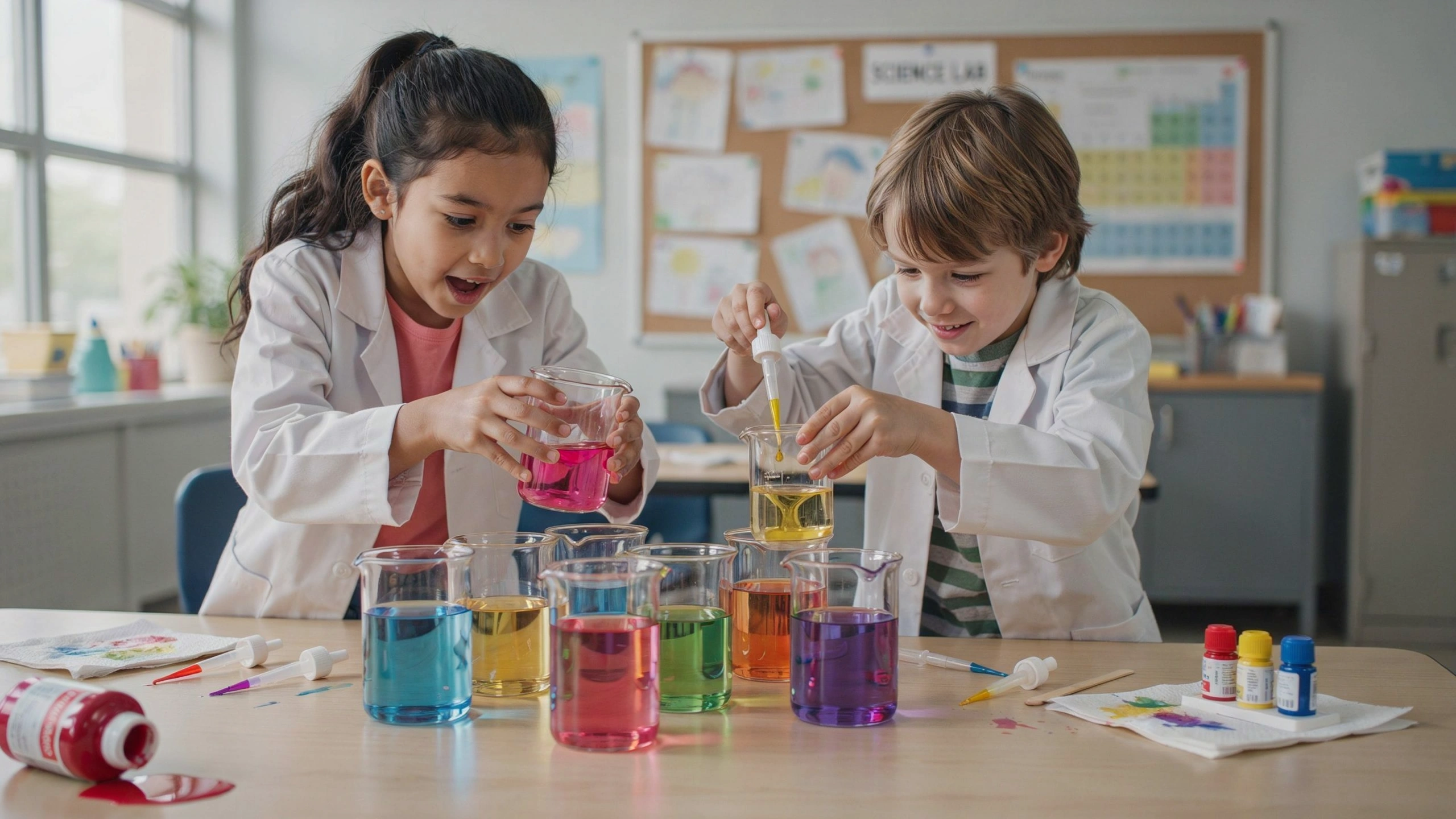
Colors are everywhere in the world around us, making them a perfect way to introduce children to science. From mixing paints to exploring how light works, color experiments allow young learners to investigate concepts like observation, reactions, and light while enjoying creative activities.
These simple science experiments transform everyday colors into exciting discoveries. They encourage children to ask questions, make predictions, and explore how the world works.
Why Color Science Activities Are Great for Kids
Color experiments combine creativity and science, helping children learn through exploration.
Benefits include:
- Developing observation skills
- Understanding basic scientific concepts
- Encouraging creativity and imagination
- Improving problem-solving abilities
- Learning about cause and effect
- Building confidence through experimentation
Color activities are suitable for preschoolers and elementary-aged children because they are visual, interactive, and easy to understand.
Safety Tips Before Starting
Before beginning:
- Use child-safe materials.
- Protect clothing and surfaces from stains.
- Supervise young children.
- Avoid contact with eyes when using colored materials.
- Wash hands after activities.
A safe environment helps children focus on discovery.
Activity 1: Color Mixing Magic
Materials
- Red, blue, and yellow food coloring
- Clear cups
- Water
- Droppers
Instructions
- Fill cups with water.
- Add different primary colors.
- Mix two colors together.
- Observe the new colors created.
What Children Learn
They discover that:
- Red + blue creates purple.
- Blue + yellow creates green.
- Red + yellow creates orange.
Science Behind It
Primary colors combine to create secondary colors. The colors we see depend on how light interacts with different materials.
Activity 2: Walking Water Rainbow
Materials
- Seven clear cups
- Paper towels
- Water
- Food coloring
Instructions
- Fill alternating cups with colored water.
- Place paper towel strips between cups.
- Wait and observe as colors travel.
What Happens?
The colors slowly move through the paper towels and mix together.
Science Behind It
Water moves through tiny spaces in paper fibers through capillary action. This is similar to how plants transport water from roots to leaves.
Activity 3: Rainbow in a Glass
Materials
- Honey
- Dish soap
- Colored water
- Vegetable oil
- Clear glass
Instructions
- Add liquids slowly into the glass.
- Observe how each layer stays separate.
- Add different colors to create a rainbow effect.
Science Behind It
Different liquids have different densities. Denser liquids sink, while lighter liquids float above them.
Activity 4: Color-Changing Cabbage Experiment
Materials
- Purple cabbage
- Hot water
- Clear cups
- Lemon juice
- Baking soda
Instructions
- Make purple cabbage water by soaking cabbage in hot water.
- Pour it into different cups.
- Add lemon juice to one cup.
- Add baking soda to another.
- Observe the color changes.
Science Behind It
Purple cabbage contains natural pigments called anthocyanins that change color when they react with acidic or basic substances.
Activity 5: Invisible Colors in a Marker
Materials
- Black washable markers
- Coffee filter paper
- Water
- Cup
Instructions
- Draw a black line on the filter paper.
- Place the bottom edge in water.
- Watch the colors separate.
What Happens?
The black ink separates into different hidden colors.
Science Behind It
Different pigments travel at different speeds through the paper, a process called chromatography.
Activity 6: Colorful Ice Exploration
Materials
- Ice cubes
- Food coloring
- Salt
- Tray
Instructions
- Freeze colored water into ice cubes.
- Place ice cubes on a tray.
- Sprinkle salt over them.
- Observe the patterns.
Science Behind It
Salt lowers the freezing point of water, causing ice to melt and create interesting pathways.
Activity 7: Explore Light and Colors
Materials
- Flashlight
- Transparent colored objects
- White paper
Instructions
- Shine a flashlight through colored materials.
- Observe the color on the paper.
- Compare different colors.
Science Behind It
Objects appear colored because they absorb some wavelengths of light and reflect others into our eyes.
Questions to Encourage Scientific Thinking
Ask children:
- What colors can you create?
- Why did the colors change?
- Which experiment surprised you most?
- What happens if we add more color?
- Can you predict the result before mixing?
These questions help children develop scientific reasoning.
Skills Children Develop
Color science activities help children build:
- Observation skills
- Creativity
- Prediction abilities
- Critical thinking
- Fine motor skills
- Scientific vocabulary
- Problem-solving skills
These early skills support future learning in science, art, and mathematics.
Extend the Learning
Children can continue exploring colors by:
- Creating a color journal.
- Making natural dyes from plants.
- Studying rainbows and light.
- Creating artwork based on scientific discoveries.
- Testing different materials for color changes.
- Learning about colors in nature.
Final Thoughts
Color experiments show children that science can be beautiful, creative, and exciting. With simple materials, young learners can explore chemistry, physics, and natural processes while having fun.
Every color change tells a story about how the world works. By encouraging children to experiment, observe, and ask questions, parents and educators can help develop curiosity and a lifelong love of discovery.