
Introduction
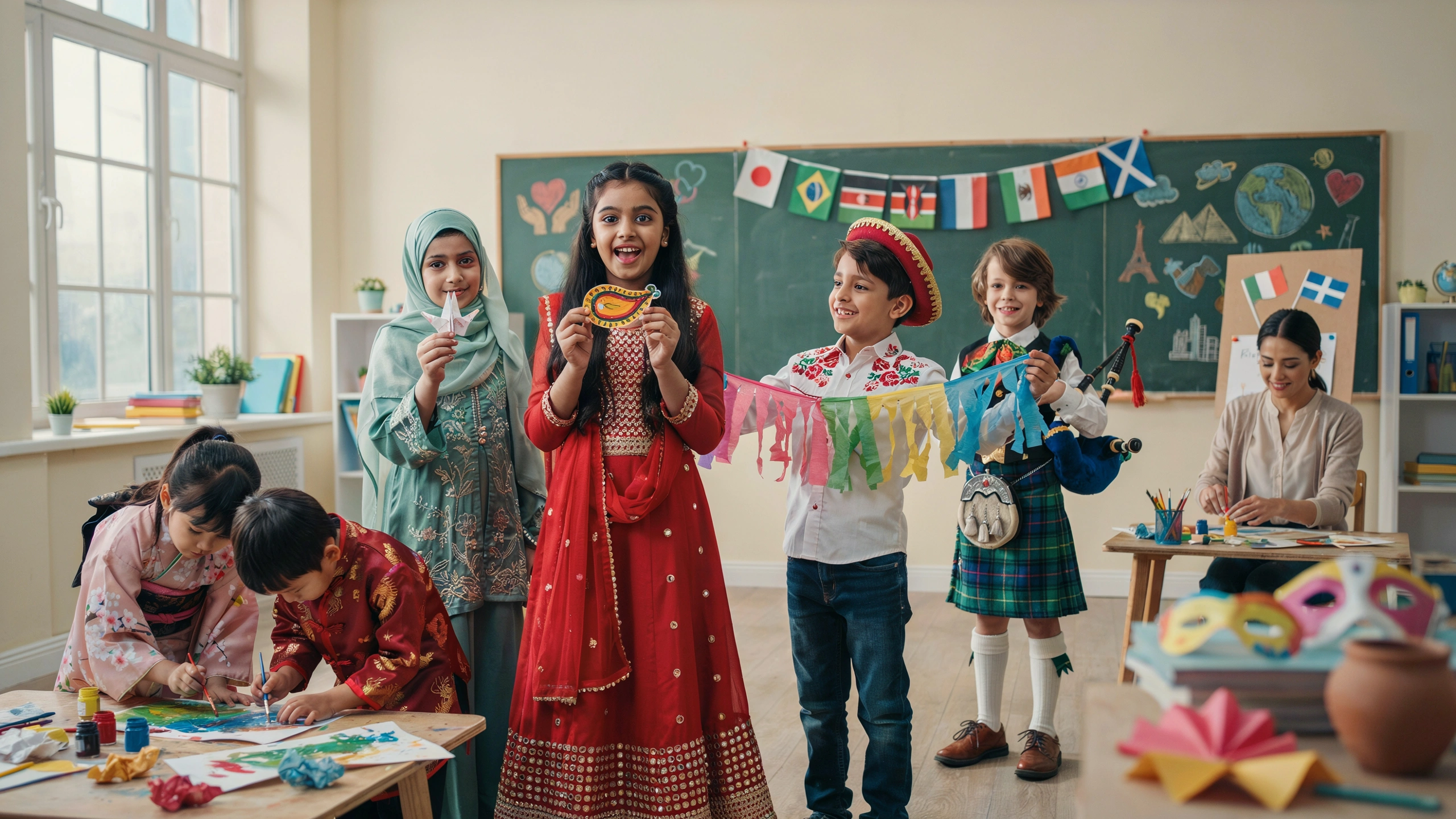
Today’s classrooms are vibrant communities where students bring unique languages, traditions, beliefs, experiences, and perspectives. This diversity is one of education’s greatest strengths. When teachers intentionally celebrate cultural diversity, they create learning environments where every student feels respected, valued, and included.
Celebrating diversity goes far beyond organizing occasional cultural festivals or displaying world maps on classroom walls. It involves embedding respect, inclusion, curiosity, and intercultural understanding into everyday teaching practices. Students who learn in culturally responsive classrooms develop stronger social skills, greater empathy, improved academic engagement, and a deeper appreciation for the richness of human diversity.
In a world where people increasingly collaborate across cultures, celebrating diversity in the classroom prepares students to become thoughtful global citizens who value inclusion and mutual respect.
What Is Cultural Diversity?
Cultural diversity refers to the variety of cultures, languages, traditions, beliefs, customs, and lifestyles that exist within a community or society. Every student brings a unique cultural identity shaped by family, heritage, language, religion, geography, and personal experiences.
Recognizing this diversity means acknowledging that every culture contributes valuable perspectives to classroom learning.
Rather than viewing differences as obstacles, culturally responsive educators see diversity as an opportunity to enrich education for everyone.
Why Celebrating Diversity Matters
It Creates Inclusive Learning Environments
Students perform better academically and socially when they feel accepted and respected. Inclusive classrooms encourage participation, reduce feelings of isolation, and strengthen students’ sense of belonging.
It Promotes Respect
Regular exposure to different cultures teaches children to appreciate diversity rather than fear it. Students learn to value similarities while respecting differences.
It Develops Empathy
Exploring different traditions and life experiences encourages students to understand perspectives other than their own. This empathy helps reduce prejudice and supports positive relationships.
It Improves Communication Skills
Interacting with classmates from different backgrounds helps students become more effective listeners, speakers, and collaborators.
It Prepares Students for a Global Society
Future workplaces and communities will continue to become more multicultural. Students who develop intercultural competence are better prepared to communicate, collaborate, and lead in diverse environments.
Creating a Culturally Responsive Classroom
Teachers can foster inclusion through intentional daily practices.
Learn About Students’ Backgrounds
Take time to understand students’ languages, family traditions, interests, and experiences. Simple conversations and family questionnaires can provide valuable insights that strengthen teacher-student relationships.
Use Diverse Learning Materials
Select books, videos, photographs, and classroom resources that represent a wide range of cultures, ethnicities, languages, family structures, and perspectives.
When students see themselves reflected in classroom materials, they feel recognized and valued.
Encourage Respectful Dialogue
Establish classroom norms that promote active listening, kindness, curiosity, and respectful disagreement.
Students should feel comfortable asking questions and sharing their experiences without fear of judgment.
Practical Activities for Celebrating Cultural Diversity
1. International Culture Week
Invite students to explore a different country each day through music, art, clothing, food, literature, geography, and traditions.
2. Cultural Show-and-Tell
Students bring meaningful objects, photographs, recipes, traditional clothing, or family stories to share with classmates.
3. World Literature Circle
Read children’s books written by authors from different countries and discuss cultural similarities and differences.
4. Multilingual Greetings
Begin each school day by greeting students in different languages. This simple activity promotes curiosity and respect for linguistic diversity.
5. Global Music Day
Introduce traditional music from different regions of the world. Students can compare rhythms, instruments, and cultural meanings.
6. International Recipe Project
Students research traditional meals from different countries and create illustrated recipe books or classroom cookbooks.
7. Cultural Interview Assignments
Students interview family members or community members about traditions, celebrations, languages, or migration stories.
8. World Map Connections
Display a large classroom world map where students identify places connected to their families, favorite books, historical events, or classroom projects.
Integrating Diversity Across Subjects
Cultural diversity should become part of everyday learning rather than an occasional event.
Language Arts
Read stories from multiple cultures, compare folktales, and encourage students to write narratives inspired by their family traditions.
Mathematics
Explore how different civilizations contributed to mathematics, including number systems, geometry, and measurement.
Science
Highlight scientific discoveries made by researchers from diverse countries and cultures throughout history.
Social Studies
Study world civilizations, migration, human rights, geography, and international cooperation from multiple perspectives.
Art
Explore artistic traditions from different cultures through painting, sculpture, weaving, calligraphy, and architecture.
The Role of Technology
Technology makes cultural exploration more accessible than ever.
Teachers can:
- Organize virtual exchanges with classrooms abroad.
- Take students on virtual museum tours.
- Watch educational documentaries about world cultures.
- Invite international guest speakers through video conferencing.
- Collaborate on global classroom projects.
These digital experiences bring authentic cultural learning directly into the classroom.
Encouraging Student Leadership
Students become more engaged when they actively contribute to cultural learning.
Teachers can encourage leadership by allowing students to:
- Lead cultural presentations.
- Organize international celebration days.
- Recommend multicultural books.
- Teach simple phrases in different languages.
- Share traditional games from their cultures.
- Coordinate collaborative service projects.
Student leadership builds confidence while promoting mutual respect.
Partnering with Families
Families provide valuable cultural knowledge that enriches classroom learning.
Schools can invite parents and caregivers to:
- Read stories in their home languages.
- Demonstrate traditional crafts.
- Share family recipes.
- Introduce cultural celebrations.
- Discuss customs and traditions.
Strong family partnerships strengthen relationships between schools and communities.
Avoiding Common Mistakes
Celebrating diversity requires thoughtful planning.
Teachers should avoid:
- Reinforcing stereotypes.
- Presenting cultures as identical.
- Focusing only on holidays or food.
- Assuming all students represent an entire culture.
- Ignoring cultural differences during everyday teaching.
Authentic cultural learning emphasizes complexity, individuality, and respect.
Measuring Success
A culturally responsive classroom is reflected in students who:
- Participate confidently.
- Show curiosity about others.
- Communicate respectfully.
- Work well in diverse groups.
- Demonstrate empathy.
- Challenge stereotypes.
- Appreciate multiple perspectives.
These outcomes extend far beyond academic achievement.
Long-Term Benefits
Students who regularly experience culturally inclusive classrooms often become adults who:
- Value diversity.
- Communicate effectively across cultures.
- Collaborate in multicultural workplaces.
- Resolve conflicts respectfully.
- Demonstrate ethical leadership.
- Contribute to inclusive communities.
These qualities are increasingly important in today’s interconnected world.
Conclusion
Celebrating cultural diversity in the classroom is not an occasional activity—it is an ongoing commitment to creating an inclusive and respectful learning environment where every student feels valued. Through culturally responsive teaching, diverse learning materials, meaningful discussions, and collaborative activities, educators help children develop empathy, curiosity, and global awareness.
When students learn to appreciate different cultures while recognizing the values that unite humanity, they become more confident learners, stronger communicators, and responsible global citizens. Every classroom has the potential to become a place where diversity is celebrated, differences are respected, and every child has the opportunity to learn from the unique experiences of others.
By embracing cultural diversity every day, teachers prepare students not only for academic success but also for meaningful participation in a multicultural and interconnected world.