
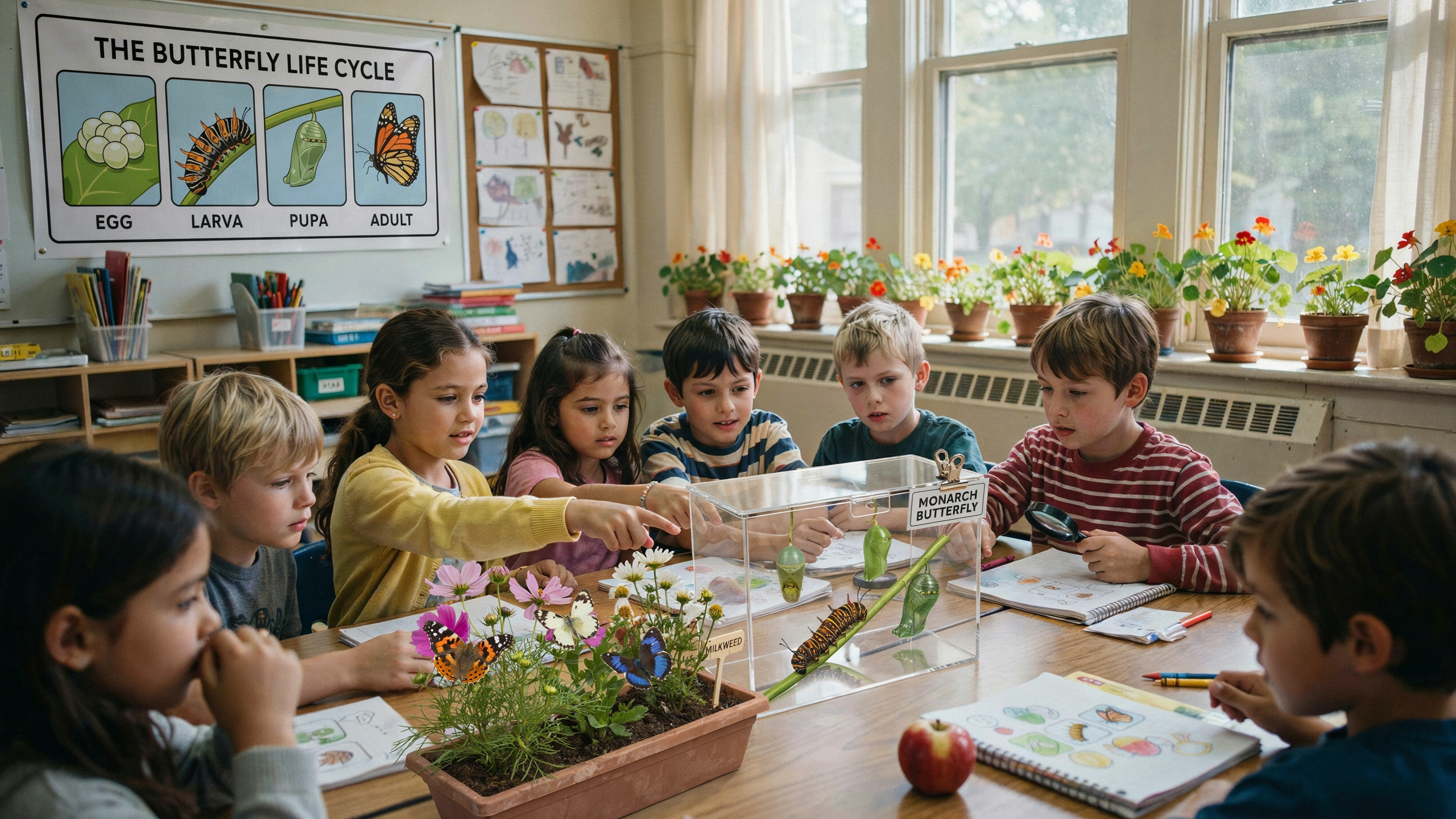
Butterflies are among the most fascinating creatures in nature. Their incredible transformation from a tiny egg to a beautiful butterfly is one of the best ways to introduce children to biology and the wonders of life. Through interactive activities, young learners can explore the butterfly life cycle while developing observation, scientific thinking, and an appreciation for the natural world.
Whether you’re teaching in a classroom, homeschooling, or looking for educational outdoor activities, these hands-on projects make learning about butterflies both fun and memorable.
Why Teach the Butterfly Life Cycle?
The butterfly life cycle is a perfect example of growth and change in nature. It introduces children to biological processes in a simple and engaging way.
Learning about butterflies helps children:
- Understand life cycles
- Develop observation skills
- Learn about insects and pollinators
- Build scientific vocabulary
- Encourage curiosity about nature
- Develop patience through long-term observation
These activities also promote respect for living things and environmental conservation.
What Is a Butterfly Life Cycle?
Butterflies go through a process called complete metamorphosis, which has four stages:
- Egg
- Caterpillar (Larva)
- Chrysalis (Pupa)
- Adult Butterfly
Each stage has a unique purpose in the butterfly’s development.
Stage 1: Egg
A female butterfly lays tiny eggs on the leaves of plants that caterpillars will eat after hatching.
Fun Fact
Some butterfly eggs are smaller than the head of a pin.
Science Focus
Children learn that every butterfly begins its life as an egg.
Stage 2: Caterpillar
After hatching, the caterpillar spends most of its time eating leaves and growing rapidly.
Activity: Caterpillar Measurement
Materials
- Paper caterpillar cutouts
- Ruler
- Pencil
Instructions
- Measure different paper caterpillars.
- Compare their lengths.
- Arrange them from shortest to longest.
Science Behind It
Caterpillars grow quickly by eating large amounts of food before entering the next stage.
Stage 3: Chrysalis
When fully grown, the caterpillar forms a chrysalis, where an amazing transformation takes place.
Activity: Chrysalis Craft
Materials
- Green paper
- String
- Glue
- Markers
Instructions
- Create a paper chrysalis.
- Hang it from a paper branch.
- Label the stage.
Science Behind It
Inside the chrysalis, the caterpillar’s body changes dramatically as it develops into a butterfly.
Stage 4: Adult Butterfly
The adult butterfly emerges with soft wings that expand and dry before it can fly.
Activity: Butterfly Symmetry Art
Materials
- Paper
- Paint
- Folded cardstock
Instructions
- Place paint on one side of folded paper.
- Fold the paper in half.
- Open it to reveal a symmetrical butterfly.
Science Behind It
Butterfly wings are symmetrical, meaning both sides have similar shapes and patterns.
Activity 5: Sequence the Life Cycle
Materials
- Picture cards
- Labels
Instructions
- Mix up the life cycle cards.
- Ask children to place them in the correct order.
- Discuss what happens during each stage.
Science Behind It
Sequencing helps children understand biological processes and the passage of time.
Activity 6: Butterfly Observation Walk
Materials
- Notebook
- Pencil
- Binoculars (optional)
Instructions
Visit a garden or park and look for:
- Butterflies
- Flowers
- Caterpillars
- Host plants
- Nectar plants
Record observations in a journal.
Science Behind It
Butterflies depend on flowering plants for nectar and specific host plants for laying eggs.
Activity 7: Build a Butterfly Garden
Materials
- Flower seeds
- Small pots or garden space
- Soil
- Watering can
Instructions
- Plant nectar-rich flowers.
- Water regularly.
- Observe visiting butterflies.
- Record different species.
Science Behind It
Butterfly-friendly gardens provide food and shelter, supporting local ecosystems and pollinators.
Encourage Scientific Thinking
Ask children:
- Why do butterflies change shape?
- Why do caterpillars eat so much?
- Which stage lasts the longest?
- What would happen if butterflies disappeared?
- Why are flowers important to butterflies?
These questions encourage children to think critically about nature.
Skills Children Develop
Butterfly activities strengthen:
- Observation skills
- Scientific reasoning
- Sequencing
- Classification
- Creativity
- Fine motor coordination
- Environmental awareness
- Communication
These skills support learning in biology and environmental science.
Extend the Learning
Expand the project by:
- Creating a butterfly life cycle wheel.
- Researching different butterfly species.
- Comparing butterflies and moths.
- Learning about migration, including the Monarch butterfly.
- Building a butterfly field guide.
- Photographing butterflies throughout the seasons.
These extension activities deepen children’s understanding of insects and ecosystems.
Why Butterflies Matter
Butterflies are important pollinators that help many plants reproduce. Healthy butterfly populations are often a sign of a healthy environment. Protecting butterflies also helps support birds, bees, and other wildlife that depend on balanced ecosystems.
Children can help butterflies by:
- Planting native flowers.
- Avoiding harmful pesticides.
- Leaving some wild areas for insects.
- Respecting habitats during outdoor adventures.
Final Thoughts
The butterfly life cycle is one of nature’s most remarkable transformations. Through hands-on activities, children can explore biology, develop scientific thinking, and gain a deeper appreciation for the living world.
From tiny eggs to colorful butterflies, every stage offers valuable lessons about growth, change, and the interconnectedness of nature. By observing and caring for these amazing insects, young learners build curiosity, compassion, and a lifelong love of science.