
Introduction
Assessment is an essential part of education because it helps teachers understand what students know, identify areas for improvement, and guide future instruction. However, traditional assessments do not always provide an accurate picture of every student’s abilities. Learners differ in their backgrounds, language proficiency, learning styles, abilities, and ways of expressing knowledge. A single assessment format may unintentionally create barriers that prevent some students from demonstrating what they truly understand.
Inclusive assessment focuses on fairness rather than sameness. It recognizes that while learning goals remain consistent, students may need different ways to access assessments and demonstrate their learning. By adapting classroom assessments, teachers create opportunities for every learner to succeed while maintaining high academic standards.
What Are Inclusive Assessments?
Inclusive assessments are designed to accommodate the diverse needs of all students without lowering expectations. They provide multiple opportunities for learners to demonstrate their knowledge, skills, and understanding.
Inclusive assessment involves:
- Flexible assessment methods.
- Accessible materials.
- Fair accommodations.
- Continuous feedback.
- Recognition of individual strengths.
The goal is to measure learning accurately rather than simply measuring a student’s ability to complete a specific type of test.
Why Assessment Adaptation Matters
Students may struggle with traditional assessments for many reasons unrelated to their understanding of the subject.
Assessment adaptations help:
- Students with disabilities.
- English Language Learners.
- Students with attention difficulties.
- Learners with different learning preferences.
- Students experiencing test anxiety.
When barriers are reduced, assessments become more meaningful and reliable.
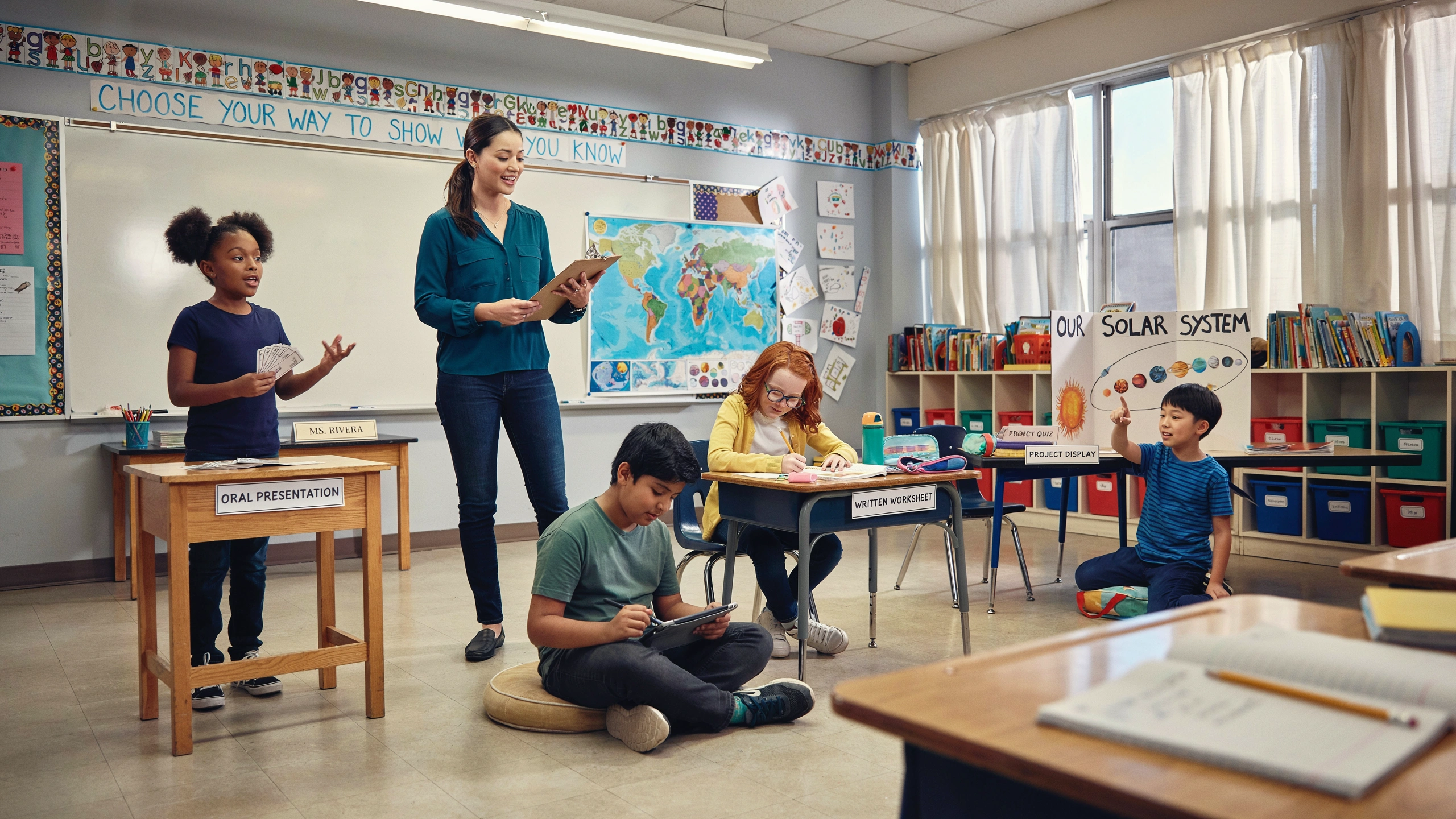
1. Use a Variety of Assessment Methods
No single assessment can measure every aspect of learning.
Teachers can combine:
- Written tests.
- Oral presentations.
- Group projects.
- Portfolios.
- Practical demonstrations.
- Research assignments.
- Classroom discussions.
- Digital projects.
Using multiple assessment methods allows students to demonstrate learning in different ways.
2. Provide Flexible Ways to Demonstrate Learning
Students should have options for showing what they know.
For example, instead of requiring every student to write an essay, teachers might allow students to:
- Create a slideshow.
- Record a video presentation.
- Build a model.
- Design an infographic.
- Conduct an interview.
- Produce a podcast.
Offering choices encourages creativity while maintaining learning objectives.
3. Make Instructions Clear
Confusing instructions can affect assessment results.
Teachers should:
- Use simple, direct language.
- Explain expectations step by step.
- Provide written and verbal instructions.
- Show sample responses when appropriate.
- Check that students understand the task before beginning.
Clear communication helps students focus on demonstrating knowledge rather than interpreting instructions.
4. Offer Reasonable Accommodations
Accommodations help students access assessments without changing learning expectations.
Examples include:
- Extended time.
- Quiet testing environments.
- Large-print materials.
- Audio versions of assessments.
- Assistive technology.
- Frequent breaks.
- Alternative seating arrangements.
These supports allow students to perform at their best.
5. Use Formative Assessment Regularly
Assessment should occur throughout the learning process, not only at the end of a unit.
Formative assessment methods include:
- Exit tickets.
- Classroom questioning.
- Observation.
- Learning journals.
- Peer feedback.
- Quick quizzes.
- Self-assessments.
Frequent assessment helps teachers adjust instruction before learning gaps become larger.
6. Develop Fair Rubrics
Clear assessment criteria help students understand how their work will be evaluated.
Effective rubrics should:
- Focus on learning objectives.
- Use understandable language.
- Describe different levels of performance.
- Be shared before students begin assignments.
Transparent expectations increase fairness and student confidence.
7. Incorporate Technology
Technology can improve both accessibility and engagement during assessments.
Useful digital tools include:
- Online quizzes with immediate feedback.
- Speech-to-text software.
- Text-to-speech programs.
- Interactive assessment platforms.
- Digital portfolios.
- Video recording tools.
Technology offers flexible ways for students to demonstrate their learning.
8. Encourage Student Self-Assessment
Students become more independent learners when they evaluate their own progress.
Teachers can encourage students to reflect by asking:
- What did I do well?
- What challenged me?
- Which strategies helped me succeed?
- What should I improve next time?
Reflection promotes responsibility and lifelong learning skills.
9. Give Constructive Feedback
Assessment should support learning rather than simply assign grades.
Effective feedback is:
- Timely.
- Specific.
- Encouraging.
- Actionable.
- Focused on improvement.
Constructive feedback helps students understand how to grow and achieve future success.
Common Challenges
Teachers may encounter challenges such as:
- Limited planning time.
- Large class sizes.
- Diverse student needs.
- Balancing fairness with curriculum requirements.
- Limited access to technology.
Despite these challenges, small adjustments can greatly improve assessment quality and accessibility.
Benefits of Inclusive Assessment
Adapting assessments benefits everyone in the classroom.
Students experience:
- Increased confidence.
- Reduced anxiety.
- Greater engagement.
- More accurate evaluation of learning.
- Higher motivation.
- Improved academic performance.
- Stronger self-awareness.
Teachers also gain a more complete understanding of student progress and instructional effectiveness.
Conclusion
Inclusive assessment recognizes that students demonstrate learning in different ways. By using varied assessment methods, providing reasonable accommodations, offering flexible options, and delivering meaningful feedback, teachers create fair opportunities for every learner to succeed.
The purpose of assessment is not simply to assign grades but to support learning, identify strengths, and guide future growth. When assessments are thoughtfully adapted to meet diverse learner needs, classrooms become more equitable, inclusive, and responsive. Ultimately, inclusive assessment ensures that every student has the opportunity to show their true potential and continue progressing toward academic success.