
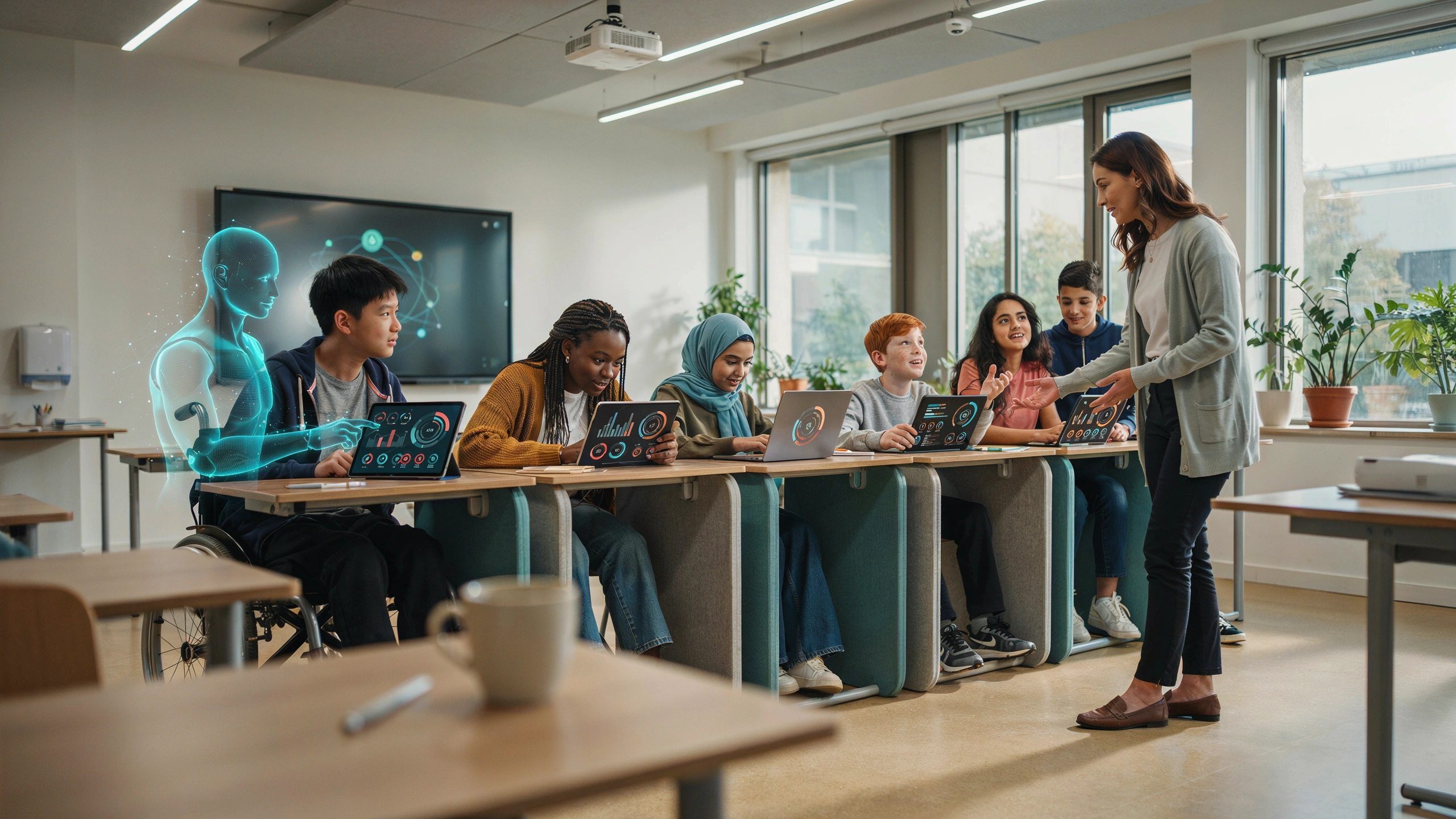
Artificial Intelligence (AI) is transforming nearly every aspect of modern life, from healthcare and transportation to finance and communication. Education is no exception. One of the most promising developments in educational technology is the emergence of Artificial Intelligence (AI) tutors—intelligent digital systems that provide personalized instruction, instant feedback, and adaptive learning experiences tailored to each student’s needs.
Unlike traditional educational software, AI tutors continuously analyze student performance, identify strengths and weaknesses, and adjust lessons in real time. These intelligent learning assistants are helping educators create more individualized learning experiences while supporting students inside and outside the classroom. As AI technology continues to advance, AI tutors are expected to play a significant role in the future of education.
What Are AI Tutors?
AI tutors are computer-based educational systems powered by artificial intelligence and machine learning algorithms. They simulate many of the functions of a human tutor by providing explanations, answering questions, evaluating student progress, and recommending personalized learning activities.
Modern AI tutors can:
- Explain difficult concepts.
- Generate practice exercises.
- Provide instant feedback.
- Recommend additional learning resources.
- Track academic progress.
- Adapt lesson difficulty.
- Answer student questions.
- Identify learning gaps.
Rather than replacing teachers, AI tutors work alongside educators to provide additional learning support.
Why Personalized Learning Matters
Every student learns differently.
Some students understand new concepts quickly, while others need additional explanations and practice. Traditional classroom instruction often makes it difficult for teachers to provide individualized attention to every learner.
AI tutors solve this challenge by creating customized learning experiences based on each student’s:
- Learning pace
- Academic performance
- Strengths
- Weaknesses
- Learning preferences
- Progress over time
This personalization improves learning efficiency while increasing student confidence.
Providing Instant Feedback
One of the greatest advantages of AI tutors is immediate feedback.
Instead of waiting for assignments to be graded, students receive instant explanations after completing activities.
Immediate feedback helps learners:
- Correct mistakes quickly.
- Understand misconceptions.
- Reinforce correct answers.
- Build confidence.
- Improve continuously.
Rapid feedback supports deeper learning while preventing small misunderstandings from becoming larger academic problems.
Supporting Independent Learning
AI tutors encourage students to take greater responsibility for their education.
Students can:
- Study independently.
- Review lessons anytime.
- Ask unlimited questions.
- Practice difficult concepts repeatedly.
- Learn at their own pace.
This flexibility allows learning to continue beyond the classroom while promoting self-directed study habits.
Helping Teachers Save Time
Teachers perform many responsibilities beyond classroom instruction, including grading, lesson planning, assessment, and student support.
AI tutors can automate repetitive tasks such as:
- Grading objective assessments.
- Tracking student progress.
- Identifying learning gaps.
- Recommending practice activities.
- Generating quizzes.
By reducing administrative workload, AI allows teachers to spend more time mentoring students and designing engaging learning experiences.
Improving Student Engagement
AI-powered learning systems often include interactive features that increase student motivation.
Examples include:
- Conversational learning
- Adaptive quizzes
- Gamified exercises
- Personalized recommendations
- Progress tracking
- Achievement badges
Students remain engaged because lessons continuously adapt to their abilities and interests.
Learning becomes more interactive and enjoyable.
Supporting Inclusive Education
AI tutors can improve educational accessibility by supporting students with diverse learning needs.
Many AI systems include:
- Text-to-speech
- Speech recognition
- Language translation
- Personalized reading levels
- Accessibility adjustments
- Adaptive learning pathways
These features help ensure that every learner receives appropriate educational support regardless of ability or background.
Strengthening Learning Analytics
AI tutors collect valuable educational data that helps teachers understand student performance.
Learning analytics may reveal:
- Frequently missed concepts
- Learning progress
- Time spent on activities
- Student engagement
- Knowledge retention
- Assessment performance
Teachers can use these insights to personalize classroom instruction and provide targeted interventions.
Supporting Lifelong Learning
Learning no longer ends with formal education.
AI tutors help individuals continue developing knowledge throughout their careers by supporting:
- Professional certifications
- Language learning
- Technical training
- Career development
- University studies
- Personal enrichment
Because AI tutors are available 24 hours a day, learners can study whenever it is convenient.
Challenges of AI Tutors
Although AI tutors offer many educational advantages, several challenges must be addressed.
Maintaining Human Interaction
Education involves emotional support, mentorship, and relationship building that AI cannot fully replicate.
Teachers remain essential for developing social skills, creativity, empathy, and motivation.
Data Privacy
AI systems collect significant amounts of student information.
Schools must ensure strong cybersecurity measures while protecting student privacy and complying with data protection regulations.
Algorithm Bias
Artificial Intelligence systems may unintentionally reflect biases found in training data.
Developers and educators must monitor AI systems carefully to ensure fairness and equal educational opportunities.
Technology Access
Not every student has reliable internet access or appropriate digital devices.
Educational institutions should work to reduce digital inequality so that AI-supported learning benefits all students.
Best Practices for Using AI Tutors
Schools can maximize the benefits of AI tutors by:
- Using AI to complement rather than replace teachers.
- Providing professional development for educators.
- Monitoring AI recommendations carefully.
- Protecting student data.
- Encouraging critical thinking.
- Combining AI instruction with collaborative classroom activities.
- Regularly evaluating educational outcomes.
Balanced implementation ensures that technology enhances learning while preserving meaningful human interaction.
The Future of AI Tutors
Artificial Intelligence continues to evolve rapidly.
Future AI tutors may include:
- Emotion-aware learning assistants.
- Voice-based conversational tutoring.
- Virtual Reality teaching environments.
- Predictive learning support.
- Real-time multilingual instruction.
- AI-powered project mentoring.
- Fully personalized lifelong learning companions.
These innovations will make education more responsive, flexible, and learner-centered than ever before.
Conclusion
Artificial Intelligence tutors are reshaping education by providing personalized instruction, immediate feedback, adaptive learning pathways, and continuous academic support. By helping students learn at their own pace while reducing teachers’ administrative workload, AI tutors create more efficient and engaging educational experiences.
Although challenges related to privacy, algorithm bias, technology access, and maintaining human interaction remain important considerations, AI tutors have enormous potential to improve education worldwide. As artificial intelligence becomes increasingly sophisticated, these intelligent learning assistants will become valuable partners for teachers and students, helping create a future where education is more personalized, accessible, and effective for everyone.