
Introduction
In a world where nations, cultures, and communities are more interconnected than ever before, schools have an important responsibility that extends beyond teaching academic subjects. They are places where children learn how to communicate, cooperate, resolve conflicts, and respect people whose backgrounds, beliefs, and experiences may differ from their own.
Education has long been recognized as one of the most powerful tools for promoting peace. By helping students develop empathy, critical thinking, intercultural understanding, and respect for human dignity, schools prepare future generations to build more inclusive, cooperative, and peaceful societies.
Peace education is not limited to discussions about war and conflict. It involves teaching the values, attitudes, and skills that enable people to live together harmoniously, solve disagreements constructively, and contribute positively to their communities. Within the framework of global education, schools become laboratories where students practice peaceful citizenship every day.
Understanding Peace Education
Peace education is an approach that helps learners develop the knowledge, skills, values, and behaviors needed to prevent conflict and promote cooperation.
It encourages students to:
- Respect human dignity.
- Appreciate cultural diversity.
- Communicate peacefully.
- Resolve disagreements constructively.
- Promote justice and equality.
- Care for their communities.
- Take responsibility for their actions.
Rather than focusing only on historical conflicts, peace education emphasizes building positive relationships and preventing future conflicts.
Why Schools Play a Central Role
Children spend a significant portion of their lives at school. Every classroom interaction, group project, and playground conversation provides opportunities to practice respect, fairness, and cooperation.
Schools influence not only academic achievement but also social and emotional development. Positive school cultures help students build habits that remain with them throughout adulthood.
When schools intentionally promote peace, they help create citizens who value dialogue instead of violence and cooperation instead of division.
Building a Respectful Classroom Culture
A peaceful classroom begins with mutual respect.
Teachers can establish environments where students:
- Feel safe expressing their opinions.
- Listen actively to others.
- Respect different viewpoints.
- Celebrate diversity.
- Resolve disagreements respectfully.
- Support classmates who need help.
Students who feel valued are more likely to contribute positively to the learning community.
Teaching Conflict Resolution
Conflicts naturally occur whenever people interact. Rather than avoiding disagreements, schools should teach students how to manage them constructively.
Children can learn to:
- Identify emotions.
- Listen before responding.
- Express feelings respectfully.
- Seek compromise.
- Apologize sincerely.
- Forgive others.
- Find solutions that benefit everyone.
These skills strengthen relationships both inside and outside the classroom.
Promoting Cultural Understanding
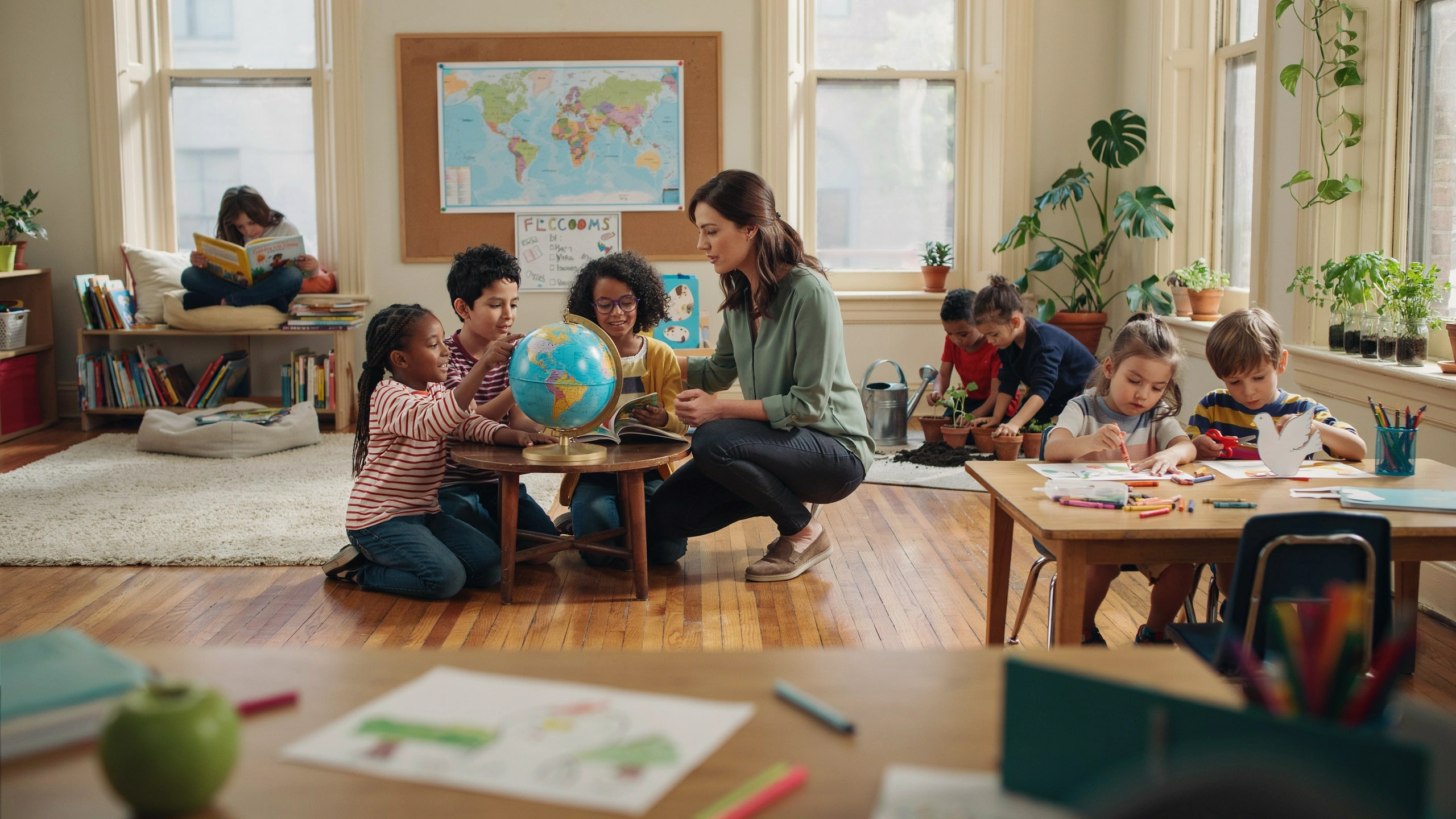
Global education encourages students to explore different cultures, traditions, languages, and beliefs.
Teachers can promote intercultural understanding by:
- Reading international literature.
- Celebrating cultural diversity.
- Organizing virtual exchanges.
- Exploring world geography.
- Inviting guest speakers.
- Discussing international traditions.
As students discover similarities and differences among cultures, they develop greater empathy and respect.
Encouraging Critical Thinking
Peace requires informed decision-making.
Schools help students evaluate information by encouraging them to:
- Analyze multiple perspectives.
- Recognize bias.
- Verify information sources.
- Question stereotypes.
- Reflect before forming opinions.
Critical thinking reduces prejudice and supports constructive dialogue.
Social and Emotional Learning
Peaceful communities depend on emotional intelligence.
Social and emotional learning helps students develop:
- Self-awareness.
- Emotional regulation.
- Empathy.
- Responsible decision-making.
- Relationship skills.
- Cooperation.
These competencies improve classroom behavior while strengthening lifelong interpersonal skills.
Collaborative Learning
Group projects encourage students to work toward shared goals despite differences in opinions or backgrounds.
Collaborative learning teaches students to:
- Share responsibilities.
- Respect diverse ideas.
- Support teammates.
- Solve problems together.
- Celebrate collective success.
These experiences demonstrate that cooperation often produces stronger outcomes than competition alone.
Community Service and Civic Engagement
Service-learning projects allow students to contribute positively to their communities.
Examples include:
- Environmental clean-up campaigns.
- Food collection drives.
- Community gardening.
- Visiting senior citizens.
- Supporting local charities.
- School improvement initiatives.
Community service reinforces compassion, responsibility, and civic participation.
The Role of Technology
Technology can strengthen peace education by connecting students with peers around the world.
Digital tools enable:
- Virtual cultural exchanges.
- International classroom discussions.
- Collaborative global projects.
- Access to diverse perspectives.
- Educational documentaries.
- Interactive learning experiences.
Teachers should also promote respectful digital communication and responsible online citizenship.
The Role of Teachers
Teachers model peaceful behavior every day.
Effective educators:
- Demonstrate fairness.
- Encourage respectful dialogue.
- Address bullying immediately.
- Promote inclusion.
- Celebrate diversity.
- Teach constructive communication.
Students often learn as much from teachers’ actions as from formal lessons.
The Role of Families
Parents reinforce peace education through daily interactions.
Families can:
- Model respectful communication.
- Encourage empathy.
- Resolve disagreements peacefully.
- Discuss current events thoughtfully.
- Celebrate cultural diversity.
- Encourage community involvement.
Strong partnerships between schools and families create consistent messages about respect and cooperation.
Challenges to Peace Education
Schools may face obstacles such as:
- Bullying.
- Cultural misunderstandings.
- Online misinformation.
- Social divisions.
- Limited instructional time.
Despite these challenges, small daily practices can have lasting positive effects on school culture.
Measuring Success
Schools promoting peace often observe:
- Improved classroom behavior.
- Reduced bullying.
- Stronger student relationships.
- Increased empathy.
- Better collaboration.
- Greater respect for diversity.
- Higher levels of student engagement.
These outcomes contribute to both academic and personal growth.
Preparing Peaceful Global Citizens
Students who experience peace education develop qualities that benefit society throughout their lives.
They become adults who are more likely to:
- Resolve conflicts constructively.
- Respect cultural differences.
- Participate in democratic processes.
- Promote inclusion.
- Support human rights.
- Collaborate internationally.
- Lead with compassion and integrity.
These qualities are essential in today’s interconnected world.
Conclusion
Schools play a vital role in promoting peace and global understanding by helping children develop the knowledge, values, and skills needed to build respectful relationships and inclusive communities. Through everyday interactions, collaborative learning, cultural exploration, and thoughtful discussion, educators prepare students to become responsible global citizens who value cooperation over conflict.
Peace is not simply the absence of violence—it is the presence of justice, empathy, dialogue, and mutual respect. Every classroom has the potential to become a place where these values are practiced daily, shaping future generations who are committed to understanding one another and working together for the common good.
By investing in peace education today, schools contribute to a future in which diversity is celebrated, differences are resolved peacefully, and global cooperation becomes the foundation of a more harmonious world.