
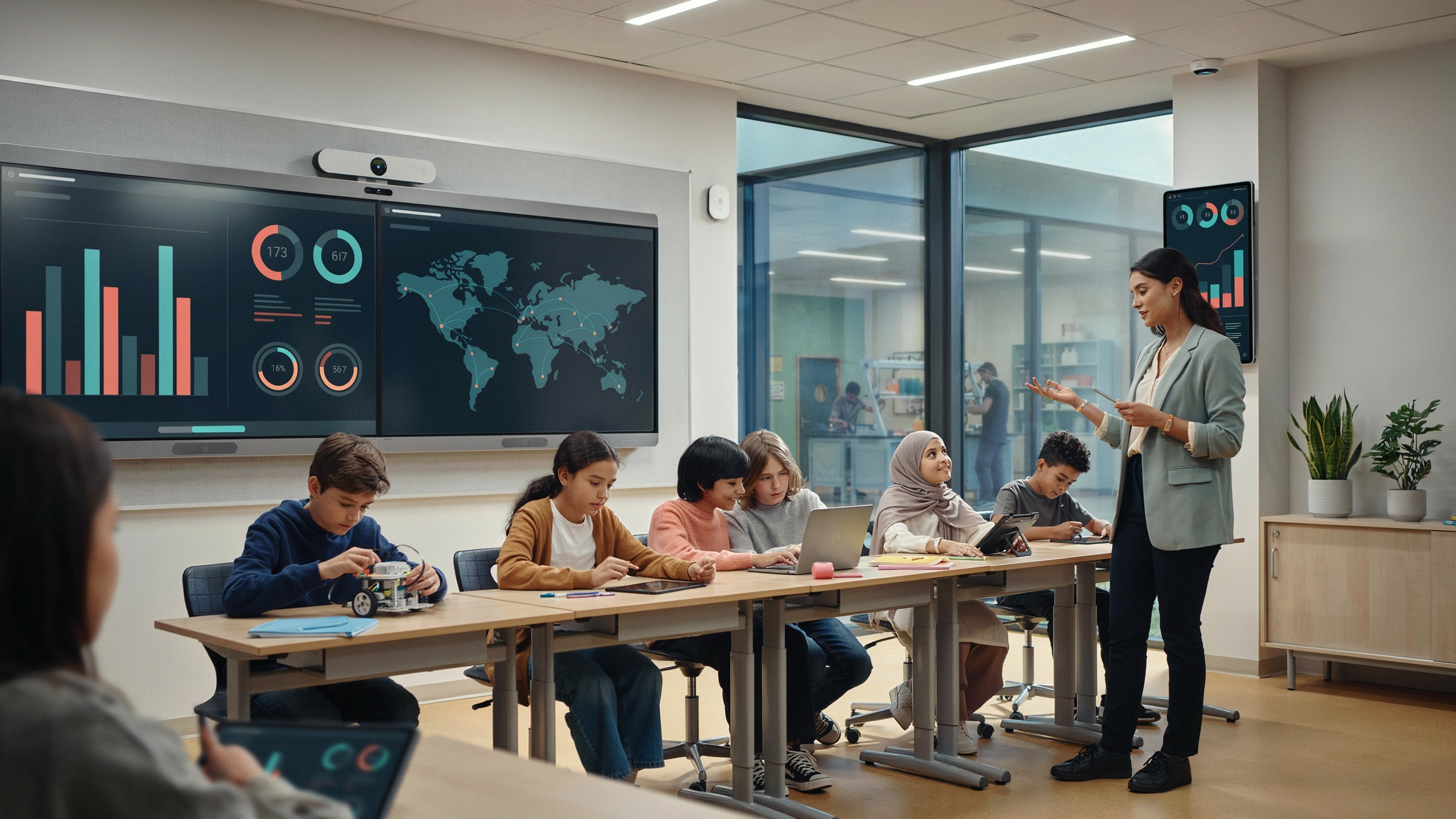
The rapid growth of digital technology has transformed education in remarkable ways. From online learning platforms to artificial intelligence, schools are adopting innovative solutions that improve teaching and learning. Among these emerging technologies, the Internet of Things (IoT) is gaining attention for its ability to create intelligent, connected, and data-driven educational environments.
The Internet of Things refers to a network of physical devices connected to the internet that can collect, exchange, and analyze data. In education, IoT devices help schools improve classroom management, personalize learning, increase campus safety, monitor resources, and create smarter learning environments. As educational institutions continue to embrace digital transformation, IoT is becoming an essential component of the modern classroom.
What Is the Internet of Things (IoT)?
The Internet of Things (IoT) is a system of interconnected devices equipped with sensors, software, and internet connectivity. These devices communicate with one another and exchange information without requiring constant human intervention.
Examples of IoT devices include:
- Smart sensors
- Interactive whiteboards
- Smart lighting systems
- Connected security cameras
- Environmental monitoring devices
- Smart attendance systems
- Wearable technology
- Smart laboratory equipment
Together, these technologies create intelligent learning environments where information flows efficiently between devices, teachers, and administrators.
Why IoT Matters in Education
Schools manage a wide range of activities every day, including teaching, attendance, security, facility management, and student support.
IoT technology helps educational institutions by:
- Automating routine tasks.
- Collecting real-time information.
- Improving resource management.
- Enhancing student safety.
- Supporting personalized learning.
- Increasing operational efficiency.
Rather than replacing educators, IoT provides valuable information that helps teachers and administrators make better decisions.
Smart Classrooms
One of the most visible applications of IoT is the development of smart classrooms.
Connected devices allow teachers to control:
- Interactive displays
- Projectors
- Classroom lighting
- Air conditioning
- Digital learning resources
- Student devices
These technologies create comfortable, efficient learning environments while reducing time spent on technical setup.
Students benefit from more engaging and interactive lessons supported by real-time digital resources.
Personalized Learning Through Data
IoT devices generate valuable learning data that helps educators understand student needs.
For example, connected learning systems can monitor:
- Attendance
- Participation
- Assignment completion
- Learning progress
- Classroom engagement
- Device usage
Teachers can analyze this information to identify students who may need additional support or enrichment.
This data-driven approach enables more personalized instruction and timely intervention.
Improving Campus Safety
Student safety is a top priority for every educational institution.
IoT technologies contribute to safer schools through:
- Smart security cameras
- Connected emergency alert systems
- Digital access control
- Smoke and fire detection sensors
- Smart door locks
- Environmental monitoring devices
These systems provide administrators with real-time information, allowing faster responses during emergencies.
Automated Attendance Systems
Traditional attendance procedures can consume valuable classroom time.
IoT-based attendance systems use technologies such as:
- RFID cards
- Smart ID badges
- Facial recognition (where legally and ethically appropriate)
- Bluetooth devices
- Biometric authentication
Automated attendance improves efficiency while reducing administrative workload.
Teachers can devote more time to instruction and student interaction.
Supporting STEM Education
IoT plays an important role in science, technology, engineering, and mathematics (STEM) education.
Students learn how connected devices operate while exploring concepts such as:
- Sensors
- Automation
- Programming
- Data analysis
- Networking
- Robotics
Hands-on IoT projects encourage creativity, innovation, and problem-solving while preparing students for future careers in technology.
Enhancing Resource Management
Educational institutions manage numerous physical resources, including classrooms, laboratories, libraries, and equipment.
IoT systems help schools monitor:
- Energy consumption
- Classroom occupancy
- Equipment usage
- Water consumption
- Heating and cooling systems
- Maintenance requirements
Efficient resource management reduces operational costs while supporting environmental sustainability.
Supporting Inclusive Education
IoT technologies can improve accessibility for students with diverse learning needs.
Examples include:
- Smart hearing assistance devices
- Environmental controls
- Connected assistive technologies
- Wearable health monitoring devices
- Smart navigation systems
- Voice-controlled classroom tools
These technologies create more inclusive learning environments where every student can participate successfully.
Benefits for Teachers
Teachers benefit from IoT through improved classroom management and access to real-time information.
IoT allows educators to:
- Monitor classroom conditions.
- Track student participation.
- Access learning analytics.
- Automate administrative tasks.
- Improve lesson planning.
- Respond quickly to student needs.
Technology supports teachers rather than replacing their professional judgment.
Challenges of IoT in Education
Although IoT offers many educational advantages, several challenges must be addressed.
Data Privacy
Connected devices collect significant amounts of information.
Schools must ensure compliance with privacy regulations while protecting student data from unauthorized access.
Cybersecurity
Every connected device may become a potential target for cyberattacks.
Strong security measures, software updates, and network monitoring are essential.
Infrastructure Costs
Installing IoT systems requires investment in:
- Devices
- Internet connectivity
- Network infrastructure
- Technical support
- Maintenance
Educational institutions should plan carefully before implementation.
Teacher Training
Teachers need professional development to understand how IoT technologies support instruction and classroom management.
Technology is most effective when educators know how to integrate it meaningfully into teaching.
Best Practices for Implementing IoT
Schools can maximize the benefits of IoT by:
- Developing clear technology strategies.
- Prioritizing cybersecurity.
- Protecting student privacy.
- Providing ongoing teacher training.
- Starting with pilot projects.
- Monitoring outcomes regularly.
- Involving students and families in digital awareness initiatives.
Thoughtful planning ensures sustainable implementation.
The Future of IoT in Education
As technology advances, IoT will become increasingly integrated into education.
Future developments may include:
- AI-powered smart classrooms.
- Predictive learning analytics.
- Intelligent campus management systems.
- Smart laboratory automation.
- Personalized learning environments.
- Connected educational robots.
- Fully integrated digital campuses.
These innovations will create learning environments that are more responsive, efficient, and student-centered.
Conclusion
The Internet of Things is transforming education by connecting classrooms, devices, and educational resources into intelligent learning environments. Through automation, real-time data collection, personalized learning, improved campus safety, and efficient resource management, IoT enhances both teaching and learning while preparing students for a technology-driven future.
Although schools must address challenges related to privacy, cybersecurity, infrastructure, and teacher training, the long-term benefits of IoT are substantial. As connected technologies continue to evolve, IoT will play a central role in creating smarter, safer, and more innovative educational environments that empower students, teachers, and institutions alike.