
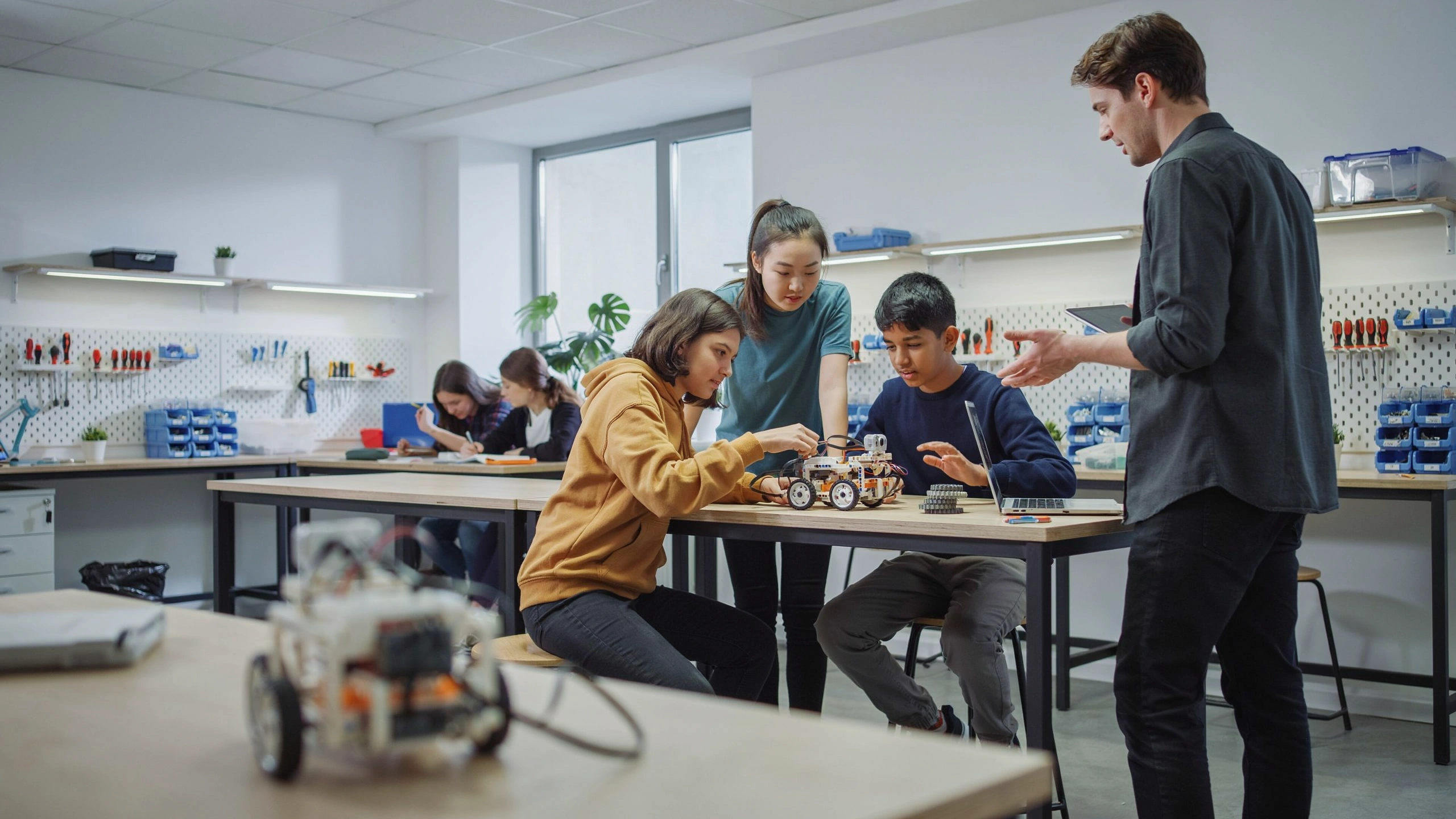
Robotics has become one of the most exciting educational technologies of the 21st century. Once limited to factories and research laboratories, robots are now entering classrooms around the world, giving students hands-on opportunities to explore science, technology, engineering, and mathematics (STEM). Through designing, building, and programming robots, students develop critical thinking, creativity, teamwork, and problem-solving skills while preparing for careers in an increasingly technology-driven world.
Educational robotics transforms abstract STEM concepts into practical learning experiences. Instead of simply reading about engineering or programming, students apply their knowledge to solve real-world challenges, making learning more meaningful, engaging, and memorable.
What Is Educational Robotics?
Educational robotics is the use of programmable robots and robotic kits as learning tools in schools and educational programs. Students build, program, and test robots while learning concepts from multiple subjects, including mathematics, physics, computer science, engineering, and even art.
Robotics activities can range from simple coding exercises for young children to advanced engineering projects for high school and university students.
Common educational robotics platforms include programmable robots, sensor-based kits, and microcontroller systems that allow students to create interactive machines capable of completing specific tasks.
Why Robotics Matters in Education
Technology continues to reshape industries worldwide, creating increasing demand for workers with STEM knowledge and digital skills.
Robotics education prepares students by helping them:
- Understand engineering principles.
- Develop computational thinking.
- Learn programming skills.
- Strengthen mathematical reasoning.
- Apply scientific concepts.
- Improve creativity and innovation.
Rather than memorizing theories, students actively experiment, test ideas, and discover solutions through hands-on learning.
Encouraging Active Learning
One of the greatest strengths of robotics education is its emphasis on active learning.
Students participate directly by:
- Designing robot structures.
- Writing computer programs.
- Connecting electronic components.
- Testing robot movements.
- Solving engineering challenges.
- Improving designs through experimentation.
This practical approach helps students retain knowledge more effectively than passive learning methods.
Strengthening Problem-Solving Skills
Building a robot rarely works perfectly on the first attempt.
Students encounter obstacles that require them to:
- Analyze problems.
- Identify errors.
- Modify designs.
- Test new solutions.
- Evaluate results.
- Repeat the process until the robot functions correctly.
This engineering design cycle teaches resilience, persistence, and critical thinking—skills that are valuable in every academic subject and profession.
Supporting STEM Integration
Robotics naturally combines multiple STEM disciplines into one learning experience.
Science
Students explore topics such as energy, motion, sensors, electricity, and physics while understanding how robots interact with their environment.
Technology
Programming robots introduces students to software development, automation, and digital systems.
Engineering
Students learn how mechanical structures are designed, assembled, and improved through testing and redesign.
Mathematics
Programming robots requires measurements, geometry, algebra, logic, and data analysis.
Because robotics integrates these disciplines simultaneously, students gain a deeper understanding of how STEM subjects connect in real life.
Developing Coding Skills
Programming is an essential component of educational robotics.
Students write instructions that tell robots how to:
- Move.
- Detect obstacles.
- Follow lines.
- Respond to sensors.
- Complete specific missions.
- Interact with their environment.
Coding becomes more meaningful because students immediately observe the results of their programs in the robot’s behavior.
This instant feedback increases motivation and reinforces programming concepts.
Encouraging Creativity and Innovation
Robotics challenges students to think creatively while solving open-ended problems.
Rather than producing identical projects, learners often design unique robots capable of completing the same task in different ways.
Creativity appears in:
- Robot design.
- Programming strategies.
- Engineering solutions.
- Project presentations.
- Team collaboration.
Innovation becomes an essential part of the learning process.
Promoting Teamwork and Communication
Most robotics activities are completed in teams.
Students learn to:
- Share responsibilities.
- Communicate ideas clearly.
- Listen to different perspectives.
- Resolve disagreements.
- Present solutions confidently.
These collaborative experiences help develop leadership and interpersonal skills that are highly valued in higher education and the workplace.
Increasing Student Motivation
Robotics makes learning exciting because students immediately see the results of their work.
Watching a robot successfully complete a task provides a strong sense of accomplishment.
Many schools organize robotics competitions where students apply their knowledge in friendly challenges involving:
- Maze navigation.
- Object collection.
- Line-following robots.
- Autonomous vehicles.
- Engineering design contests.
These events encourage continuous learning while building confidence and enthusiasm for STEM subjects.
Preparing Students for Future Careers
Many future careers will involve automation, artificial intelligence, and robotics.
Educational robotics introduces students to fields such as:
- Robotics Engineering
- Artificial Intelligence
- Software Development
- Mechanical Engineering
- Electrical Engineering
- Automation Technology
- Aerospace Engineering
- Manufacturing Technology
Even students who pursue non-technical careers benefit from the analytical thinking developed through robotics education.
Supporting Inclusive Learning
Robotics can engage a wide variety of learners because it combines visual, hands-on, and collaborative learning experiences.
Educational robotics supports:
- Different learning styles.
- Project-based learning.
- Inquiry-based instruction.
- Students with diverse interests.
- Gifted learners.
- Beginners with no previous programming experience.
Many robotics kits are specifically designed for elementary school students, making STEM education accessible from an early age.
Challenges of Implementing Robotics in Schools
Despite its many benefits, educational robotics also presents several challenges.
Equipment Costs
Robotics kits, sensors, computers, and maintenance can require significant financial investment.
Teacher Training
Educators need specialized training to effectively teach robotics, programming, and engineering concepts.
Curriculum Integration
Schools must carefully integrate robotics into existing curricula while ensuring alignment with educational standards.
Technical Support
Robotics equipment occasionally requires maintenance, software updates, and troubleshooting.
Schools should plan for ongoing technical support.
Best Practices for Robotics Education
Successful robotics programs often include:
- Project-based learning.
- Collaborative teamwork.
- Real-world problem-solving.
- Age-appropriate robotics kits.
- Regular programming practice.
- Reflection after each project.
- Opportunities to participate in competitions.
These strategies maximize student engagement while promoting meaningful STEM learning.
The Future of Robotics in Education
Educational robotics continues to evolve alongside emerging technologies.
Future developments may include:
- Artificial Intelligence-powered robots.
- Internet of Things (IoT) integration.
- Collaborative classroom robots.
- Virtual robotics simulations.
- Cloud-based programming environments.
- Autonomous educational assistants.
- Personalized robotics learning platforms.
As robotics becomes more affordable and accessible, it is expected to become a standard component of STEM education worldwide.
Conclusion
Educational robotics is transforming STEM learning by giving students the opportunity to design, build, and program real robotic systems while developing essential academic and life skills. Through hands-on projects, collaborative problem-solving, and creative innovation, robotics helps students connect classroom knowledge with real-world applications.
Although successful implementation requires investment in equipment, teacher training, and curriculum planning, the educational benefits are substantial. By introducing robotics into schools, educators prepare students not only for future careers in science and technology but also for a lifetime of curiosity, creativity, and continuous learning. As technology continues to shape our world, robotics education will remain a powerful tool for inspiring the next generation of innovators.