
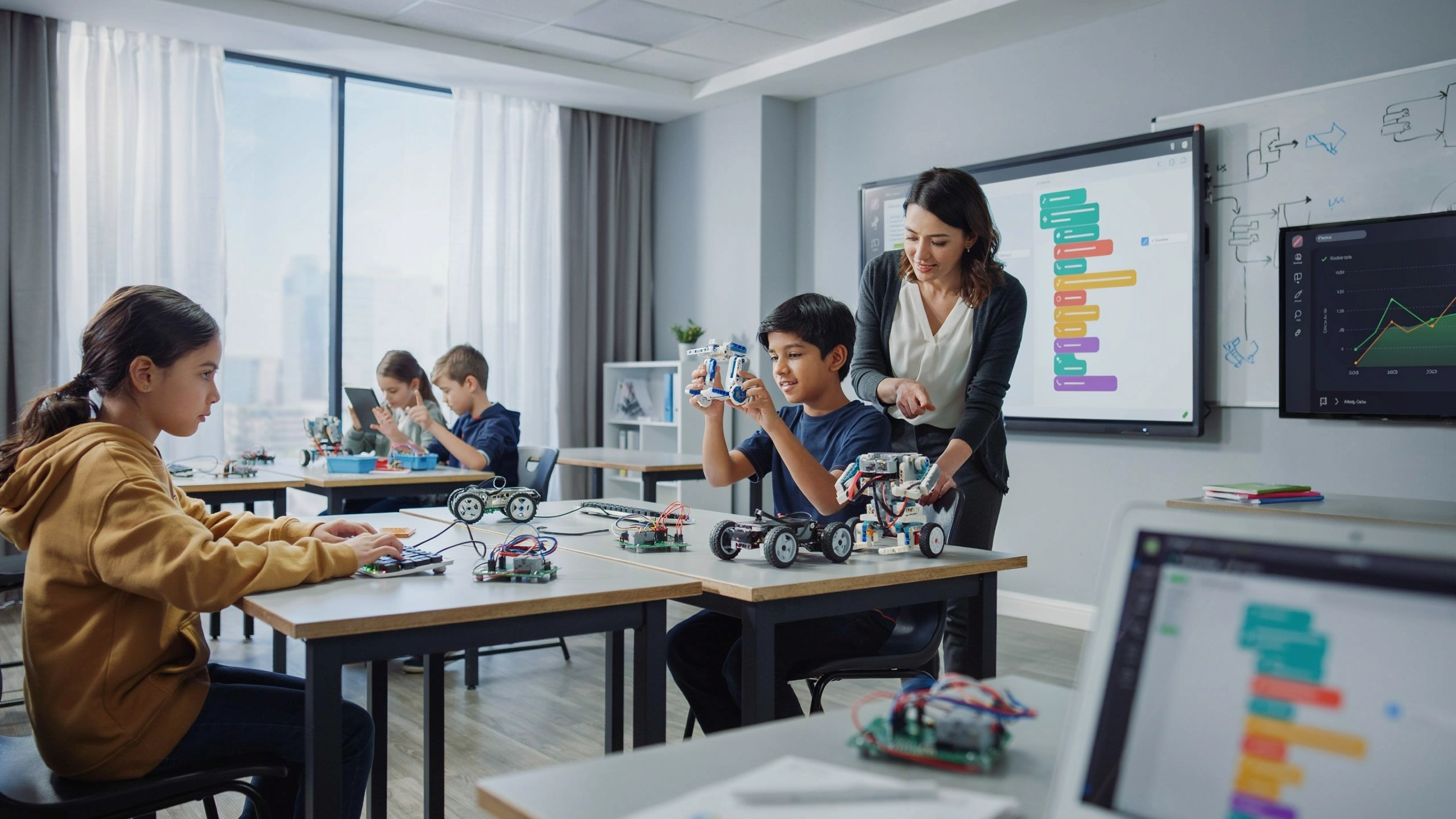
In today’s rapidly evolving digital world, coding has become much more than a technical skill. It is now considered a fundamental literacy alongside reading, writing, and mathematics. From smartphones and websites to artificial intelligence and smart cities, computer programming powers nearly every aspect of modern life. As technology continues to shape industries and societies, teaching coding in schools is becoming essential for preparing students to become future innovators, entrepreneurs, and problem-solvers.
Coding education is not only about teaching students how to write computer programs. It develops logical thinking, creativity, collaboration, resilience, and analytical skills that are valuable in every profession. By introducing coding at an early age, schools can equip students with the knowledge and confidence needed to thrive in the digital economy.
What Is Coding Education?
Coding education refers to teaching students how to create instructions that computers can understand and execute. These instructions, written in programming languages such as Python, JavaScript, Scratch, or Java, enable computers to perform specific tasks.
Coding lessons often begin with visual programming environments that allow young learners to understand programming concepts through drag-and-drop blocks before progressing to text-based programming languages.
Beyond writing code, coding education also introduces concepts such as:
- Algorithms
- Logical reasoning
- Problem-solving
- Computational thinking
- Debugging
- Data structures
- Software design
These foundational skills support learning across multiple disciplines.
Why Coding Matters in the 21st Century
Technology is transforming nearly every industry, including healthcare, finance, agriculture, transportation, education, and entertainment. As automation and artificial intelligence continue to expand, digital skills are becoming increasingly valuable.
Learning to code prepares students for a future where technology is integrated into almost every career. Even professions that are not directly related to software development benefit from employees who understand digital systems and computational thinking.
Coding empowers students to become creators of technology rather than simply consumers of digital products.
Developing Computational Thinking
One of the greatest benefits of coding education is the development of computational thinking.
Computational thinking involves breaking complex problems into smaller, manageable parts and designing logical solutions.
Students learn to:
- Analyze problems systematically.
- Identify patterns.
- Organize information.
- Design step-by-step solutions.
- Test and improve their ideas.
These thinking skills extend far beyond computer science and are valuable in mathematics, science, engineering, business, and everyday decision-making.
Encouraging Creativity and Innovation
Contrary to common misconceptions, coding is a highly creative activity.
Students use programming to build:
- Mobile applications
- Educational games
- Interactive websites
- Robots
- Digital artwork
- Music projects
- Artificial intelligence applications
Rather than following fixed instructions, learners experiment, design, and innovate while solving real-world problems.
Coding encourages students to transform ideas into functional digital solutions.
Building Problem-Solving Skills
Programming teaches persistence and resilience.
Rarely does a computer program work perfectly on the first attempt. Students must identify errors, test solutions, revise their code, and try again.
This debugging process teaches learners to:
- View mistakes as learning opportunities.
- Think critically.
- Develop patience.
- Improve analytical reasoning.
- Persist through challenges.
These habits contribute to lifelong learning and personal growth.
Supporting STEM Education
Coding naturally complements STEM education by connecting science, technology, engineering, and mathematics.
Students apply programming skills to:
- Analyze scientific data.
- Program robots.
- Simulate engineering designs.
- Solve mathematical problems.
- Develop automation systems.
Integrating coding across STEM subjects helps students understand how different disciplines work together to solve complex challenges.
Preparing Students for Future Careers
Many of the fastest-growing careers require programming knowledge or digital literacy.
Examples include:
- Software Developer
- Data Scientist
- Artificial Intelligence Engineer
- Cybersecurity Specialist
- Robotics Engineer
- Web Developer
- Game Designer
- Cloud Computing Specialist
- Machine Learning Engineer
Even careers outside technology increasingly require employees who understand digital tools and automation.
Coding education opens doors to a wide range of future opportunities.
Promoting Collaboration
Modern software development is rarely an individual activity.
Coding projects often involve teamwork, where students:
- Share ideas.
- Divide responsibilities.
- Review each other’s work.
- Solve problems together.
- Present completed projects.
These collaborative experiences strengthen communication, leadership, and interpersonal skills that are valuable in every profession.
Increasing Digital Confidence
Many students use technology every day without understanding how it works.
Coding education helps learners move beyond simply using applications to understanding how software is designed and created.
This deeper knowledge increases confidence and encourages students to explore technology with curiosity rather than hesitation.
Students become active creators who can develop innovative solutions to real-world problems.
Making Coding Accessible to Everyone
Coding is no longer limited to university computer science programs.
Today, students of all ages can begin learning programming through:
- Visual coding platforms
- Educational robots
- Mobile applications
- Online coding courses
- Interactive games
- Classroom programming activities
These resources make coding more accessible, engaging, and inclusive for diverse groups of learners.
Challenges of Teaching Coding
Although coding education offers many benefits, schools may face several challenges.
Limited Resources
Some schools lack sufficient computers, reliable internet access, or programming software.
Teacher Preparation
Teachers often require professional development to confidently teach coding concepts and integrate programming into existing curricula.
Student Confidence
Some students may initially believe programming is too difficult.
Creating supportive learning environments helps build confidence and encourages perseverance.
Curriculum Integration
Schools must balance coding instruction with existing academic requirements while ensuring meaningful connections across subjects.
Best Practices for Teaching Coding
Successful coding education programs often include:
- Starting with age-appropriate activities.
- Encouraging creativity and experimentation.
- Using project-based learning.
- Promoting teamwork.
- Connecting programming to real-world problems.
- Celebrating progress rather than perfection.
- Encouraging continuous practice.
These approaches make programming enjoyable while developing deep understanding.
The Future of Coding Education
As technology continues to evolve, coding education will expand beyond traditional programming.
Future learning may include:
- Artificial Intelligence development
- Machine learning fundamentals
- Robotics programming
- Internet of Things (IoT) applications
- Quantum computing concepts
- Virtual and Augmented Reality development
- Ethical Artificial Intelligence design
Preparing students for these emerging technologies will help them succeed in tomorrow’s workforce.
Conclusion
Coding education is becoming an essential component of modern learning because it equips students with far more than technical programming skills. Through coding, learners develop computational thinking, creativity, collaboration, resilience, and problem-solving abilities that prepare them for success in both higher education and future careers.
As schools continue to embrace digital transformation, coding should be viewed as a core educational skill that empowers students to become innovators rather than simply users of technology. By investing in coding education today, educators help build a generation capable of creating the technological solutions that will shape the future of society.