Introduction
Every child deserves to grow up in a safe environment where they are respected, valued, and given opportunities to learn and thrive. These basic principles are at the heart of human rights—fundamental rights and freedoms that belong to every person, regardless of age, nationality, gender, language, religion, or background.
Teaching children about human rights is not simply about introducing legal concepts or historical documents. It is about helping young people understand the importance of dignity, equality, respect, fairness, and responsibility in their daily lives. Through age-appropriate lessons and real-world examples, educators and parents can encourage children to recognize the rights of others while understanding their own responsibilities as members of society.
Human rights education is a key element of global education because it prepares students to become compassionate, informed, and active citizens who contribute to peaceful and inclusive communities.
What Are Human Rights?
Human rights are the basic rights and freedoms that belong to every human being simply because they are human. These rights are universal, meaning they apply to everyone everywhere in the world without discrimination.
Examples of fundamental human rights include:
- The right to life and safety.
- The right to education.
- The right to healthcare.
- The right to freedom of thought and expression.
- The right to equality.
- The right to privacy.
- The right to participate in cultural life.
- The right to live free from discrimination.
Children can understand these ideas when they are connected to everyday experiences such as kindness, fairness, sharing, and respect.
Why Human Rights Education Matters
It Promotes Respect
Learning about human rights helps children understand that every person deserves dignity and respect. They learn to value differences and appreciate that all people should be treated fairly.
It Encourages Empathy
By exploring the experiences of people from different backgrounds, students develop compassion and become more sensitive to the challenges others may face.
It Prevents Bullying and Discrimination
Human rights education encourages inclusion and teaches children to reject bullying, prejudice, and unfair treatment. Students learn that their words and actions can affect others positively or negatively.
It Builds Responsible Citizens
Children discover that rights come with responsibilities. Respecting the rights of others means acting honestly, listening respectfully, following rules, and helping create safe communities.
It Strengthens Democracy
Understanding fairness, participation, and equality helps prepare students to become active citizens who contribute positively to society throughout their lives.
Teaching Human Rights Through Everyday Experiences
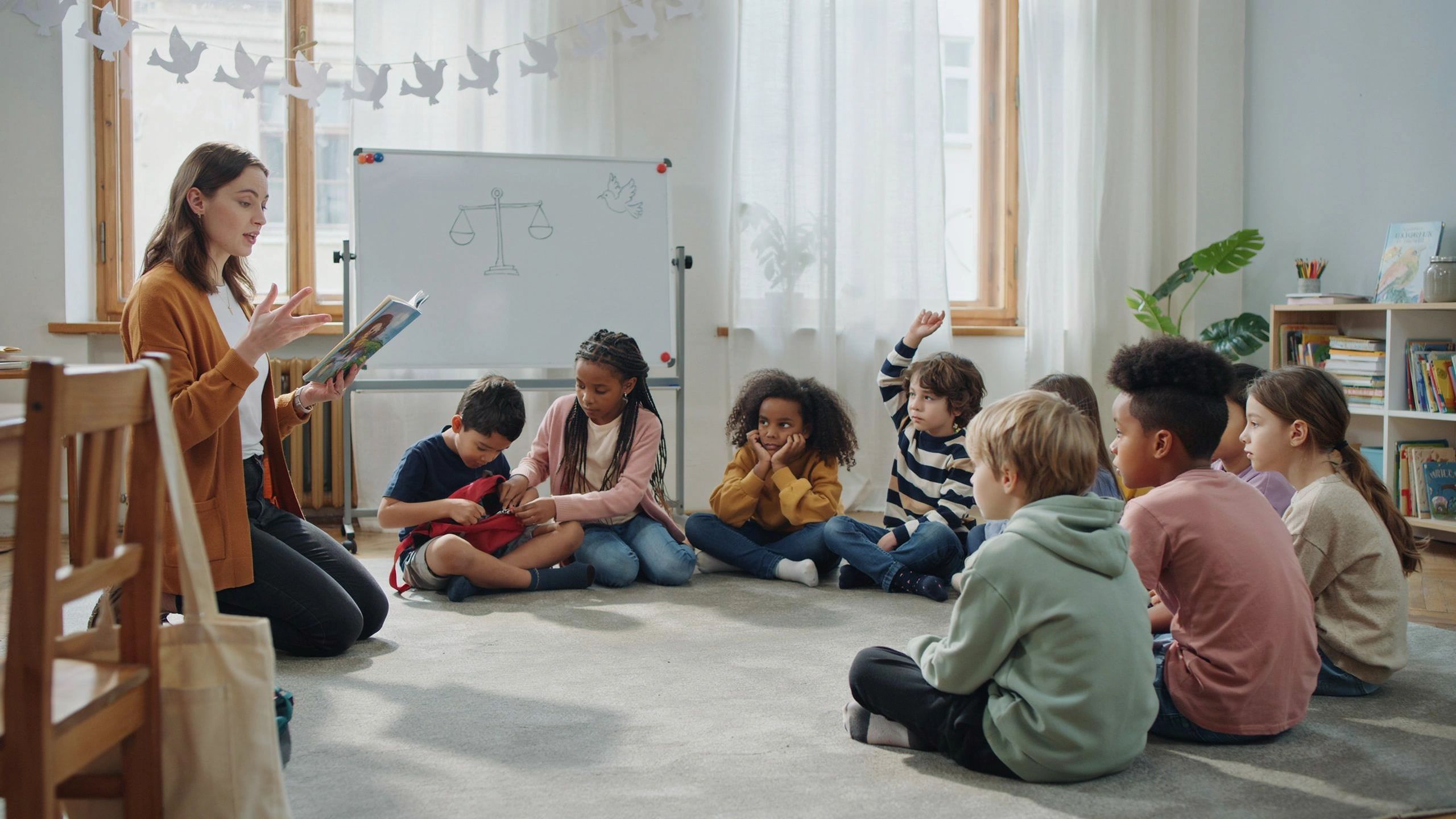
Human rights education does not require separate lessons every day. Instead, teachers can naturally integrate these values into classroom routines.
Classroom Rules
When students help create classroom expectations based on kindness, respect, and fairness, they begin practicing human rights principles in everyday situations.
Cooperative Learning
Group activities encourage students to listen, share responsibilities, appreciate different opinions, and resolve disagreements peacefully.
Literature
Stories often explore themes of justice, courage, friendship, discrimination, and inclusion. Discussing characters’ choices helps children understand fairness and empathy.
Classroom Discussions
Teachers can ask thoughtful questions such as:
- What does fairness look like?
- How can we include everyone?
- Why is it important to respect different opinions?
- How can we solve conflicts peacefully?
These conversations help children connect human rights to real life.
Integrating Human Rights Across Subjects
Language Arts
Students read biographies, novels, and stories that explore courage, equality, inclusion, and justice while practicing reading and writing skills.
History
Historical events provide opportunities to examine how societies have worked to expand rights, promote equality, and overcome discrimination.
Social Studies
Students explore citizenship, community responsibilities, democratic participation, and cultural diversity.
Art
Creative projects allow children to express ideas about peace, kindness, inclusion, and respect through drawing, painting, photography, or digital media.
Science
Scientific discussions about public health, environmental protection, and access to clean water demonstrate how science contributes to improving human well-being.
Creating a Rights-Respecting Classroom
Teachers can build classroom cultures that reflect human rights principles by:
- Treating every student fairly.
- Encouraging respectful communication.
- Valuing diverse perspectives.
- Addressing bullying immediately.
- Providing equal learning opportunities.
- Promoting student participation in decision-making.
Students learn as much from classroom culture as they do from formal lessons.
Practical Activities
Teachers can introduce human rights through engaging classroom activities.
Kindness Challenge
Students perform daily acts of kindness and reflect on how their actions affect others.
Classroom Constitution
Together, students create a list of rights and responsibilities that guide classroom behavior.
Community Service
Service-learning projects help children understand how helping others strengthens communities.
Role-Playing
Students act out situations involving fairness, inclusion, conflict resolution, and cooperation to practice respectful decision-making.
Human Rights Poster Campaign
Groups design posters promoting values such as equality, kindness, respect, and inclusion.
The Role of Families
Parents reinforce human rights education through everyday interactions.
Families can:
- Encourage respectful conversations.
- Model fairness and honesty.
- Discuss current events in age-appropriate ways.
- Teach children to appreciate diversity.
- Encourage helping neighbors and community members.
- Resolve conflicts peacefully at home.
Children develop many lifelong values by observing the adults around them.
The Role of Technology
Digital tools provide opportunities to explore human rights through:
- Educational documentaries.
- Virtual museum tours.
- Interactive history resources.
- International classroom collaborations.
- Digital storytelling projects.
- Online discussions about global citizenship.
Technology also creates opportunities to teach digital rights, online safety, and respectful online communication.
Challenges in Human Rights Education
Educators may encounter challenges such as:
- Addressing sensitive topics.
- Adapting discussions to different age groups.
- Correcting misinformation.
- Balancing diverse viewpoints respectfully.
- Encouraging open dialogue while maintaining classroom safety.
Thoughtful planning and age-appropriate instruction help teachers navigate these challenges effectively.
Long-Term Benefits
Children who receive human rights education often become adults who:
- Respect diversity.
- Stand against discrimination.
- Resolve conflicts peacefully.
- Participate actively in their communities.
- Protect the rights of others.
- Demonstrate ethical leadership.
- Promote inclusion and cooperation.
These qualities strengthen families, schools, workplaces, and society.
Preparing Children for Global Citizenship
Human rights education naturally supports global citizenship.
Students learn that although cultures, languages, and traditions differ, every person deserves dignity, opportunity, and respect. They recognize that global cooperation depends on understanding, fairness, and shared responsibility.
These lessons prepare children to contribute positively in increasingly diverse communities and international environments.
Conclusion
Teaching children about human rights through everyday lessons helps transform abstract principles into meaningful daily actions. By emphasizing kindness, fairness, equality, respect, and responsibility, educators and parents nurture children who value both their own rights and the rights of others.
Human rights education is not limited to textbooks or special events. It is reflected in classroom discussions, family conversations, cooperative activities, and the way adults model respectful behavior. Every positive interaction becomes an opportunity to strengthen empathy and build character.
As children grow into informed, compassionate, and responsible citizens, they become better equipped to create inclusive communities where everyone is treated with dignity and respect. Through everyday lessons, schools and families lay the foundation for a more peaceful, just, and caring world.