
Introduction
Sustainability has become one of the defining priorities of the 21st century. Climate change, pollution, biodiversity loss, deforestation, and the depletion of natural resources are challenges that affect every nation. While governments, businesses, and organizations play crucial roles in addressing these issues, education remains one of the most powerful tools for creating lasting change.
Schools have a unique opportunity to help children understand the relationship between human activities and the environment. More importantly, they can empower students to adopt sustainable habits that benefit both their local communities and the planet. By teaching sustainability from an early age, educators and parents help raise environmentally responsible global citizens who understand that even small daily actions can have a meaningful impact.
Sustainability education is not about creating fear—it is about inspiring hope, responsibility, and positive action.
What Is Sustainability?
Sustainability means meeting the needs of the present without compromising the ability of future generations to meet their own needs. It encourages people to use natural resources wisely, protect ecosystems, reduce waste, and promote social and economic well-being.
Sustainability is often described through three interconnected pillars:
- Environmental Sustainability: Protecting ecosystems, conserving resources, and reducing pollution.
- Social Sustainability: Promoting equality, inclusion, health, education, and human well-being.
- Economic Sustainability: Supporting responsible economic growth while protecting people and the environment.
Teaching children about these three pillars helps them understand that sustainable development requires balanced decision-making.
Why Sustainability Education Matters
1. It Builds Environmental Awareness
Children who learn about ecosystems, wildlife, forests, oceans, and climate develop a deeper appreciation for nature. They begin to understand how daily choices affect the environment.
2. It Encourages Responsible Habits
Simple habits such as recycling, saving water, reducing food waste, and conserving electricity become lifelong behaviors when introduced early.
3. It Develops Critical Thinking
Environmental challenges rarely have simple solutions. Sustainability education encourages students to investigate problems, evaluate evidence, and consider multiple approaches to solving them.
4. It Inspires Action
Rather than feeling overwhelmed by environmental issues, children learn that their individual and collective actions can contribute to meaningful change.
5. It Prepares Future Leaders
Tomorrow’s scientists, engineers, policymakers, entrepreneurs, and educators will need to develop innovative solutions for global environmental challenges. Sustainability education lays the foundation for these future careers.
Integrating Sustainability Across the Curriculum
Sustainability should not be limited to science classes. It can be incorporated into every subject.
Science
Students explore ecosystems, renewable energy, biodiversity, weather patterns, and conservation through experiments and field investigations.
Geography
Lessons examine natural resources, population growth, urban development, and the relationship between humans and the environment.
Mathematics
Students analyze environmental data such as rainfall, recycling rates, carbon emissions, and energy consumption.
Language Arts
Books, articles, and persuasive writing assignments encourage students to explore environmental themes while strengthening literacy skills.
Art
Creative projects using recycled materials help students express environmental ideas while promoting resource conservation.
Social Studies
Students investigate environmental policies, international cooperation, sustainable development, and community initiatives.
Sustainable Habits Children Can Practice
Children can make meaningful contributions through everyday actions, including:
- Turning off lights when leaving a room.
- Conserving water while brushing their teeth.
- Recycling paper, plastic, and metal.
- Using reusable water bottles and lunch containers.
- Reducing food waste.
- Planting trees and flowers.
- Walking or cycling when possible.
- Respecting wildlife and natural habitats.
These habits help children understand that sustainability begins with individual responsibility.
Outdoor Learning
Nature provides one of the best classrooms for sustainability education.
Outdoor experiences may include:
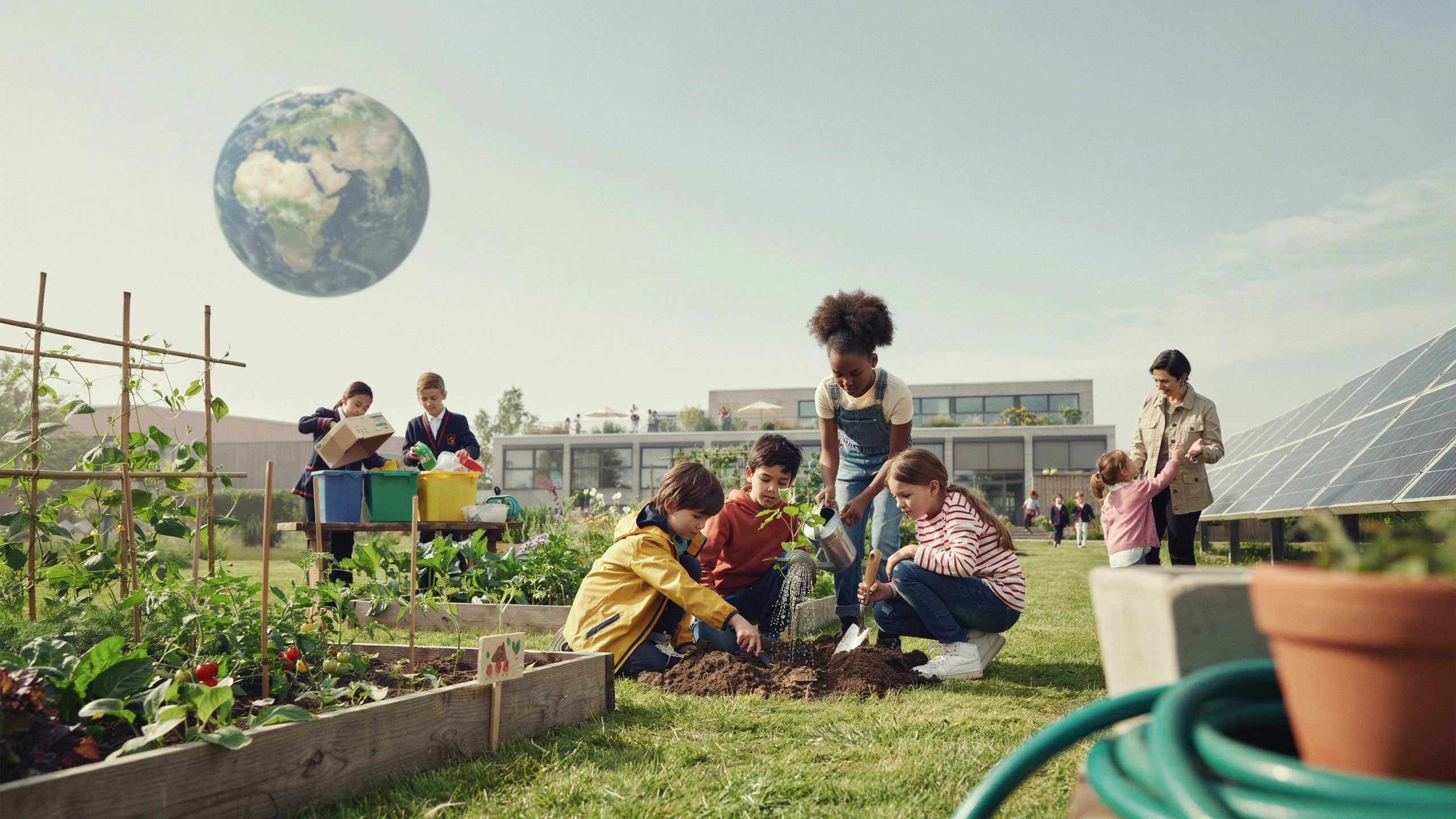
- School gardens.
- Nature walks.
- Wildlife observation.
- Tree planting activities.
- Community clean-up events.
- Composting projects.
- Birdwatching.
- Environmental field studies.
Direct interaction with nature strengthens children’s emotional connection to the environment.
The Role of Technology
Technology can enhance sustainability education through:
- Interactive climate simulations.
- Environmental monitoring apps.
- Virtual field trips to national parks.
- Online collaboration with schools worldwide.
- Digital mapping tools.
- Citizen science projects.
Technology allows students to investigate environmental issues using real-world data while connecting with global conservation efforts.
The Role of Teachers
Teachers play a vital role in making sustainability meaningful.
Effective educators:
- Connect lessons to local environmental issues.
- Encourage inquiry-based learning.
- Promote hands-on activities.
- Model environmentally responsible behaviors.
- Inspire optimism and problem-solving.
Students are more likely to adopt sustainable habits when they see adults practicing them consistently.
The Role of Parents
Families reinforce environmental learning at home.
Parents can:
- Recycle together.
- Plant vegetables or flowers.
- Reduce plastic use.
- Conserve water and electricity.
- Spend time outdoors.
- Discuss environmental news positively.
- Support community conservation projects.
Children often adopt lifelong habits through everyday family routines.
Project-Based Sustainability Learning
Project-based learning encourages students to solve authentic environmental problems.
Examples include:
- Designing recycling campaigns.
- Creating school gardens.
- Conducting energy audits.
- Reducing classroom waste.
- Organizing Earth Day events.
- Building simple renewable energy models.
- Investigating local biodiversity.
These projects promote collaboration, creativity, and leadership.
Connecting Sustainability to Global Citizenship
Environmental challenges affect every country. Sustainability education helps children understand that protecting the planet requires international cooperation.
Students learn that their local actions contribute to global goals, including:
- Protecting biodiversity.
- Conserving natural resources.
- Promoting clean energy.
- Supporting sustainable communities.
- Reducing pollution.
- Addressing climate change.
This perspective strengthens both environmental responsibility and global citizenship.
Challenges in Sustainability Education
Schools may face obstacles such as:
- Limited funding.
- Insufficient outdoor learning spaces.
- Lack of teacher training.
- Curriculum constraints.
- Limited access to environmental resources.
Despite these challenges, even simple classroom activities can make sustainability an engaging part of daily learning.
The Long-Term Benefits
Students who receive sustainability education often become adults who:
- Make environmentally responsible decisions.
- Think critically about global challenges.
- Value conservation.
- Support sustainable innovation.
- Participate in community improvement.
- Demonstrate ethical leadership.
- Encourage environmental responsibility in others.
These qualities benefit individuals, communities, and future generations.
Conclusion
Teaching sustainability is one of the most important investments schools and families can make in the future. By helping children understand the connections between people, communities, and the environment, education empowers them to become thoughtful and responsible global citizens.
Sustainability is not only about protecting nature—it is about creating healthier communities, stronger economies, and a better quality of life for everyone. Through knowledge, curiosity, compassion, and action, children learn that they have the power to make a positive difference.
Every recycled bottle, every tree planted, every drop of water saved, and every informed decision contributes to a more sustainable world. By nurturing these values today, we prepare the next generation to build a cleaner, greener, and more resilient future for all.