
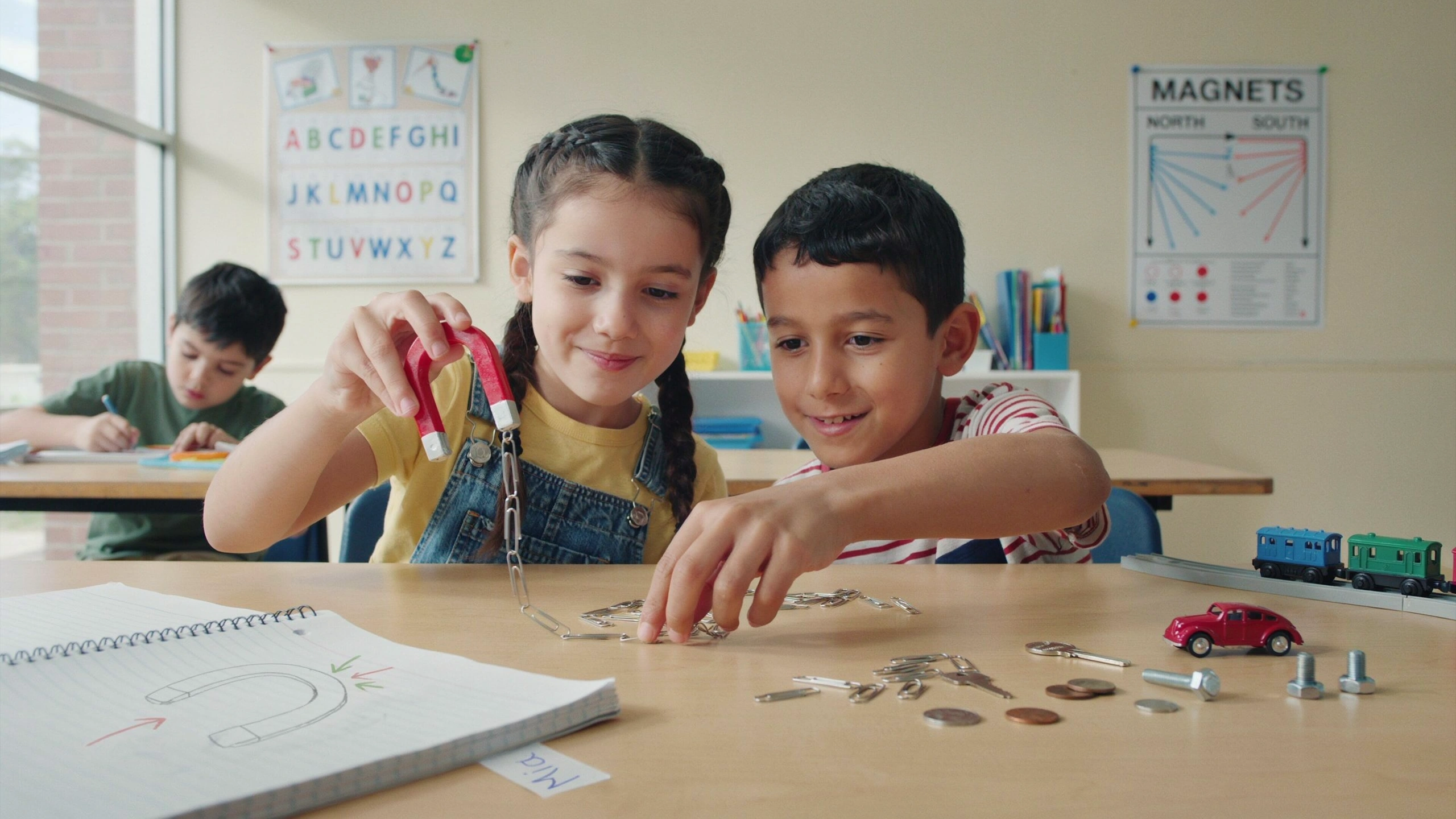
Magnets are fascinating objects that seem almost magical to children. They can attract some materials, push or pull without touching, and create invisible forces that spark endless curiosity. Through simple magnet exploration games, children can discover basic physics concepts while developing problem-solving skills and scientific thinking.
Magnet activities are perfect for home learning, classrooms, and STEM projects because they are affordable, easy to prepare, and highly engaging for young learners.
Why Magnet Activities Are Great for Kids
Exploring magnets helps children understand science through hands-on discovery. Instead of memorizing facts, they can experiment, observe, and draw their own conclusions.
Benefits include:
- Developing curiosity about how things work
- Understanding basic physics concepts
- Improving prediction and observation skills
- Encouraging problem-solving
- Strengthening fine motor skills
- Building confidence through experimentation
Magnets also introduce children to invisible forces, an exciting idea that encourages deeper scientific thinking.
Safety Tips Before Starting
Before beginning magnet activities:
- Always supervise young children.
- Keep small magnets away from very young children who may put objects in their mouths.
- Use age-appropriate materials.
- Store magnets safely after activities.
- Avoid placing magnets near electronic devices.
A safe environment allows children to explore freely and confidently.
Understanding the Basics of Magnets
Before starting experiments, introduce a few simple ideas:
Magnets Have Two Poles
Every magnet has:
- A north pole
- A south pole
Opposite poles attract each other, while similar poles push away.
Magnets Create Invisible Forces
A magnetic field surrounds a magnet. Although we cannot see it, we can observe its effects through movement and attraction.
Not All Materials Are Magnetic
Magnets usually attract materials containing iron, such as:
- Steel objects
- Iron nails
- Some metal tools
Materials like plastic, wood, and glass are not attracted to magnets.
Activity 1: Magnetic Treasure Hunt
Materials
- Magnet
- Basket
- Household objects
Examples:
- Paper clip
- Coin
- Wooden stick
- Plastic toy
- Aluminum foil
- Metal spoon
Instructions
- Place different objects around the room.
- Give children a magnet.
- Ask them to test each object.
- Separate items into “magnetic” and “not magnetic” groups.
Science Behind It
Children learn that magnets only attract certain materials and begin understanding material properties.
Activity 2: Create a Magnetic Fishing Game
Materials
- Paper clips
- Small paper fish
- String
- Stick
- Magnet
Instructions
- Attach a magnet to the end of a string.
- Create paper fish with paper clips attached.
- Use the magnet to “catch” the fish.
Science Behind It
The magnet attracts the metal paper clips, demonstrating magnetic force even without direct contact.
Activity 3: Make a Magnet Maze
Materials
- Cardboard
- Small metal object
- Magnet
Instructions
- Draw a simple maze on cardboard.
- Place a small metal object on top.
- Move a magnet underneath the cardboard.
- Guide the object through the maze.
Science Behind It
Magnetic forces can pass through some materials, allowing the magnet to move objects from a distance.
Activity 4: Magnetic Car Challenge
Materials
- Small toy car
- Magnet
- Tape
- Cardboard track
Instructions
- Attach a magnet to the front of the toy car.
- Use another magnet to push or pull the car.
- Create different tracks and test movement.
Science Behind It
Magnets can create pushing and pulling forces. Children can explore how distance and magnet direction affect movement.
Activity 5: Explore Magnetic Strength
Materials
- Different magnets
- Paper clips
- Ruler
Instructions
- Test different magnets.
- Count how many paper clips each magnet can lift.
- Compare results.
Science Behind It
Different magnets have different strengths depending on their size, shape, and material.
Activity 6: Make a Magnetic Compass
Materials
- Needle
- Magnet
- Cork
- Bowl of water
(Adult assistance recommended.)
Instructions
- Carefully magnetize the needle by rubbing it with a magnet.
- Place the needle on a small piece of cork.
- Float it in water.
- Observe its direction.
Science Behind It
A magnetized needle aligns with Earth’s magnetic field, creating a simple compass.
Encourage Scientific Thinking
During activities, ask children:
- What objects do you think the magnet will attract?
- Why did some objects move and others did not?
- Does the magnet work through different materials?
- Which magnet seems strongest?
- How could we test your idea?
These questions encourage children to make predictions and analyze results.
Skills Children Develop
Magnet exploration activities strengthen:
- Scientific observation
- Classification skills
- Logical thinking
- Problem-solving
- Fine motor coordination
- Experiment design
- Vocabulary development
- Curiosity and creativity
Extend the Learning
Children can continue exploring magnets by:
- Creating a magnet collection chart.
- Testing objects made from different materials.
- Building a magnetic sculpture.
- Learning about magnetic animals and navigation.
- Exploring how magnets are used in everyday technology.
These activities connect science lessons to the real world.
Final Thoughts
Magnets provide a simple but powerful introduction to the world of physics. Through playful experiments, children discover that invisible forces can create real movement and change.
Magnet exploration games turn curiosity into scientific discovery. With just a few magnets and everyday objects, children can practice observing, testing, and explaining how the world around them works.
Every experiment becomes an opportunity to ask questions, explore possibilities, and develop a lifelong love of science.