
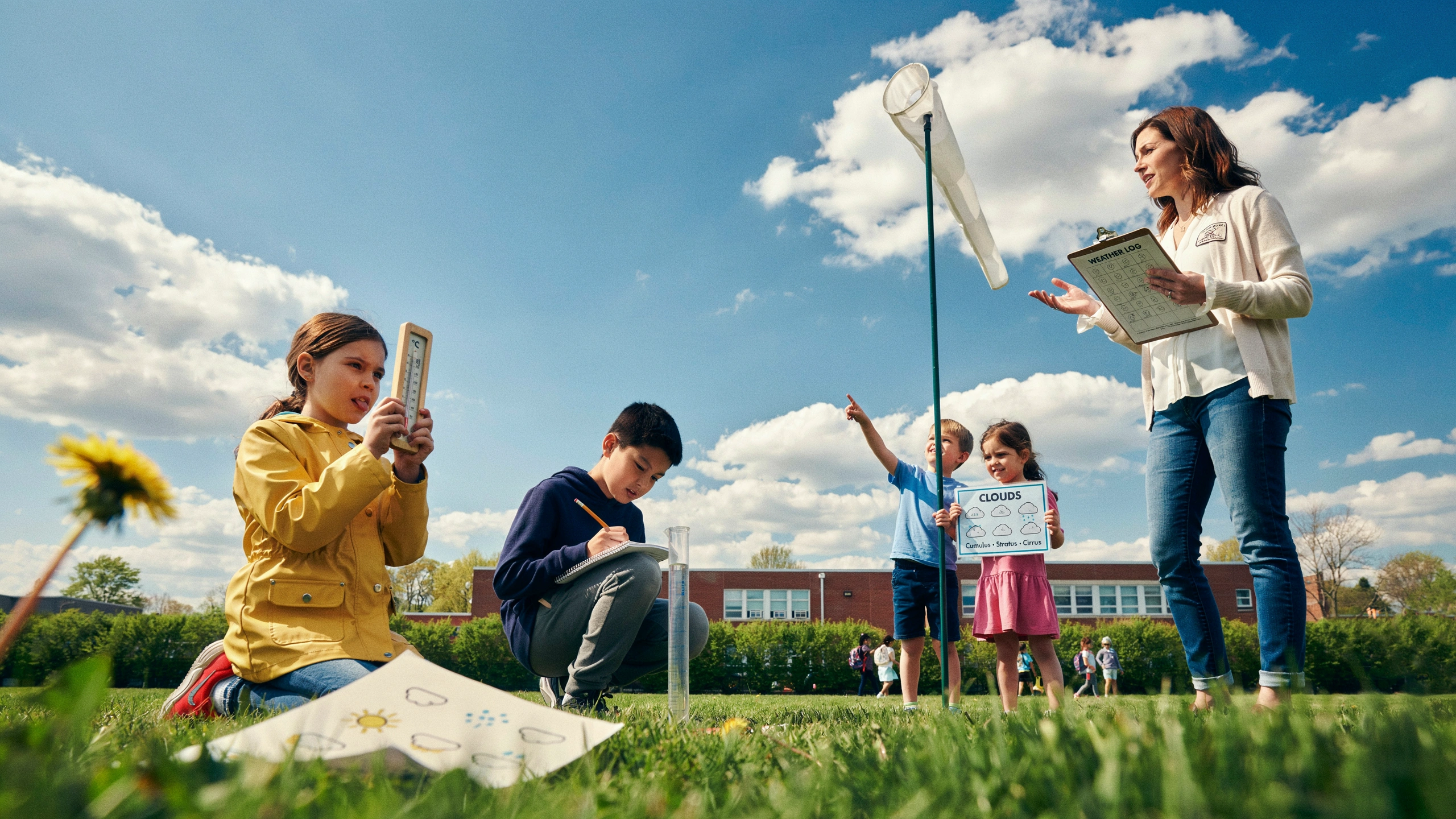
Weather is part of children’s everyday lives. They see clouds in the sky, feel the wind, notice temperature changes, and experience rain or sunshine. These daily observations provide a perfect opportunity to introduce young learners to science in a practical and exciting way.
Weather observation activities help children understand natural phenomena while developing important skills such as recording information, identifying patterns, and making predictions.
Whether at home, in a classroom, or outdoors, these simple science activities turn children into little weather scientists.
Why Weather Activities Are Important for Kids
Learning about weather helps children connect science to the world around them. Instead of simply hearing about weather concepts, they can observe and investigate them directly.
Benefits include:
- Developing observation skills
- Understanding natural patterns
- Improving prediction abilities
- Learning scientific vocabulary
- Encouraging outdoor exploration
- Building curiosity about the environment
Weather science also helps children understand how nature affects daily life.
Weather Safety Tips
When exploring weather:
- Always check weather conditions before outdoor activities.
- Avoid outdoor experiments during dangerous weather.
- Stay protected from strong sunlight.
- Dress appropriately for the temperature.
- Supervise children during outdoor observations.
Science exploration should always be safe and enjoyable.
Activity 1: Create a Weather Journal
Materials
- Notebook
- Pencil
- Colored pencils
- Calendar
Instructions
- Choose a time each day to observe the weather.
- Record:
- Temperature feeling (hot, warm, cold)
- Cloud appearance
- Wind conditions
- Rain or sunshine
- Outdoor observations
- Draw pictures or symbols to represent the weather.
Science Behind It
Scientists collect data over time to identify patterns. A weather journal introduces children to the same process used by meteorologists.
Activity 2: Make a Homemade Rain Gauge
Materials
- Plastic bottle
- Scissors (adult assistance)
- Ruler
- Marker
- Tape
Instructions
- Cut the top part of the bottle.
- Turn the top upside down and place it inside the bottle.
- Mark measurement lines on the bottle.
- Leave it outside during rainy days.
- Measure collected rainwater.
Science Behind It
A rain gauge measures the amount of precipitation that falls in a specific area. Children learn how scientists collect weather data.
Activity 3: Build a Simple Wind Detector
Materials
- Paper strips
- String
- Stick or pencil
- Tape
Instructions
- Attach paper strips to the stick.
- Place it outdoors.
- Observe how the strips move.
- Compare movement on calm and windy days.
Science Behind It
Wind is moving air. The paper strips show the direction and strength of air movement.
Activity 4: Create a Cloud Viewer
Materials
- Paper
- Pencil
- Cloud identification pictures
Instructions
- Sit outside and look at the sky.
- Observe different cloud shapes.
- Draw what you see.
- Compare clouds on different days.
Science Behind It
Clouds form when water vapor in the air cools and turns into tiny water droplets. Different cloud types can provide clues about weather conditions.
Activity 5: Make a Simple Thermometer Model
Materials
- Clear plastic bottle
- Water
- Food coloring
- Straw
- Modeling clay
Instructions
- Fill the bottle with colored water.
- Insert a straw through the cap.
- Seal around the straw with clay.
- Observe how the water level changes with temperature.
Science Behind It
Liquids expand when heated and contract when cooled. This activity demonstrates the basic principle behind thermometers.
Activity 6: Explore Evaporation
Materials
- Two cups
- Water
- Marker
Instructions
- Fill both cups with equal amounts of water.
- Place one cup in sunlight and one in shade.
- Mark the water levels.
- Observe changes over several days.
Science Behind It
Heat from the sun increases evaporation, changing liquid water into water vapor.
Activity 7: Make a Tornado in a Bottle
Materials
- Clear bottle
- Water
- Dish soap
- Glitter (optional)
Instructions
- Fill the bottle with water.
- Add a few drops of dish soap.
- Close the bottle tightly.
- Swirl the bottle in a circular motion.
- Watch the mini tornado form.
Science Behind It
The spinning motion creates a vortex, similar to the rotating movement seen in some weather systems.
Encourage Weather Scientists to Ask Questions
During observations, ask children:
- What changes do you notice today?
- Why do you think clouds move?
- Which day was the warmest?
- How can we measure rain?
- Can we predict tomorrow’s weather?
These questions develop curiosity and scientific reasoning.
Skills Children Develop
Weather activities help children improve:
- Observation skills
- Data collection
- Recording abilities
- Critical thinking
- Pattern recognition
- Communication skills
- Environmental awareness
These skills form the foundation for future science learning.
Extend the Learning
Children can expand their weather studies by:
- Creating a weekly weather chart.
- Watching weather forecasts and comparing predictions.
- Measuring shadows at different times of the day.
- Learning about seasons.
- Building a classroom weather station.
- Researching extreme weather events.
These activities connect science concepts to real-world experiences.
Final Thoughts
Weather observation activities are a simple and effective way to introduce children to science. By watching the sky, measuring changes, and recording discoveries, children learn that science is all around them.
Every cloud, breeze, and raindrop becomes an opportunity to explore, ask questions, and understand the natural world. With simple tools and a curious mind, young learners can begin their journey as little meteorologists.