
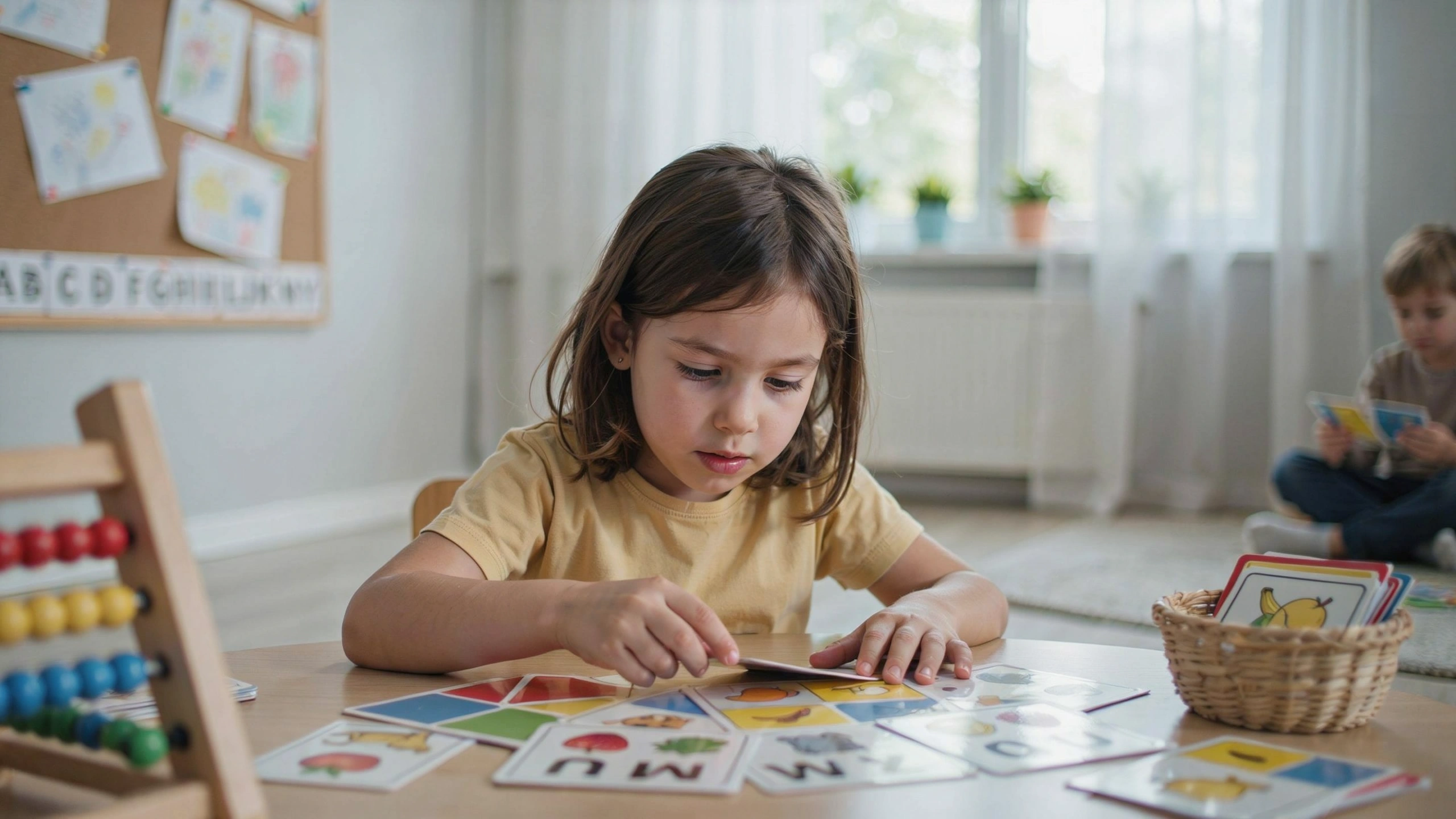
Visual memory is one of the most important cognitive skills children develop during their early years. It allows them to remember what they see, recognize patterns, recall images, and make connections between new and familiar information. Strong visual memory supports reading, writing, mathematics, and everyday problem-solving.
The best way to strengthen this skill is through fun, play-based activities. Visual memory games encourage children to observe carefully, remember details, and recall information in an enjoyable and stress-free environment. In this article, you’ll discover a variety of visual memory games that help young children learn faster while building confidence and concentration.
What Is Visual Memory?
Visual memory is the brain’s ability to store and recall information that has been seen. Children use visual memory every day when they:
- Recognize letters and numbers
- Remember the appearance of words
- Identify shapes and colors
- Recall faces and objects
- Follow picture instructions
- Complete puzzles
- Copy drawings or patterns
As visual memory improves, children become more efficient learners because they can process and retrieve information more easily.
Why Visual Memory Is Important
Developing strong visual memory helps children:
- Learn to read more quickly
- Improve spelling skills
- Recognize mathematical symbols
- Solve puzzles with confidence
- Strengthen attention to detail
- Build problem-solving abilities
- Increase classroom participation
Because visual memory is connected to many academic skills, regular practice can make learning easier and more enjoyable.
1. Memory Card Matching
Matching card games are one of the most popular visual memory activities.
Place pairs of picture cards face down and let children turn over two cards at a time. If the pictures match, they keep the pair. If not, they try again on their next turn.
Skills Developed:
- Visual recall
- Concentration
- Patience
2. What’s Missing?
Arrange several familiar objects on a table.
Allow children one minute to study the objects before covering them. Remove one object and ask them to identify what is missing.
Increase the number of objects as children become more confident.
3. Picture Observation Challenge
Show a colorful picture for 30 seconds.
Hide the picture and ask questions such as:
- How many animals did you see?
- What color was the balloon?
- Was there a tree?
- What was the child holding?
This activity improves observation and attention to detail.
4. Copy the Pattern
Create a simple pattern using colored blocks, beads, or buttons.
Let children study it briefly before recreating the same pattern from memory.
As their skills improve, make the patterns longer and more detailed.
5. Sequence Recall Game
Line up several objects in a specific order.
For example:
- Teddy bear
- Toy car
- Ball
- Book
After a short viewing time, mix up the objects and ask children to restore the original sequence.
This strengthens sequential visual memory.
6. Spot the Difference
Provide two nearly identical pictures with small differences.
Children carefully compare the images and identify every change.
This classic activity develops careful observation and sustained attention.
7. Shape Memory Challenge
Display several geometric shapes for a few seconds.
Hide them and ask children to:
- Name the shapes
- Draw the shapes
- Arrange them in the same order
This activity supports early geometry skills while improving memory.
8. Color Recall Game
Show children a collection of colorful objects.
Hide the objects and ask questions such as:
- Which object was blue?
- How many green objects were there?
- What color was the largest toy?
The game strengthens both color recognition and visual recall.
9. Build and Remember
Build a simple structure using building blocks or LEGO® bricks.
Allow children to study it for one minute before taking it apart.
Challenge them to rebuild the structure exactly as it was.
This activity develops spatial awareness and visual memory.
10. Picture Story Recall
Show children a series of picture cards that tell a simple story.
Mix up the cards and ask them to place the pictures back in the correct order.
This encourages logical thinking while strengthening memory and sequencing skills.
Tips for Making Visual Memory Games More Effective
Children benefit most when activities are enjoyable and gradually become more challenging.
Here are a few helpful tips:
- Keep sessions between 10 and 15 minutes.
- Reduce distractions during play.
- Start with simple activities before increasing difficulty.
- Encourage children to describe what they see.
- Praise effort and improvement rather than perfect answers.
- Rotate games regularly to keep children interested.
Consistent practice is the key to long-term improvement.
Everyday Ways to Build Visual Memory
Visual memory can also be strengthened during daily routines.
Try activities like:
- Asking children to remember items on a shopping shelf.
- Playing “I Spy” during walks or car rides.
- Recreating simple drawings from memory.
- Organizing toys by color or shape.
- Remembering where household objects belong.
- Following picture-based recipes or craft instructions.
These everyday experiences make learning natural and meaningful.
Benefits Beyond the Classroom
Strong visual memory supports many areas of a child’s development, including:
- Reading and writing readiness
- Mathematical thinking
- Creative problem-solving
- Independent learning
- Organization skills
- Confidence in completing tasks
- Improved focus and attention
As children strengthen their ability to remember visual information, they become more prepared for future academic challenges.
Final Thoughts
Visual memory is a foundational skill that helps children learn, explore, and understand the world around them. Through engaging games like matching cards, pattern copying, picture observation, and sequence recall, young learners can improve their memory while having fun.
By incorporating these activities into everyday play, parents and teachers can create meaningful learning experiences that build confidence, sharpen concentration, and support lifelong success. A few minutes of visual memory practice each day can have a lasting impact on a child’s cognitive development.