
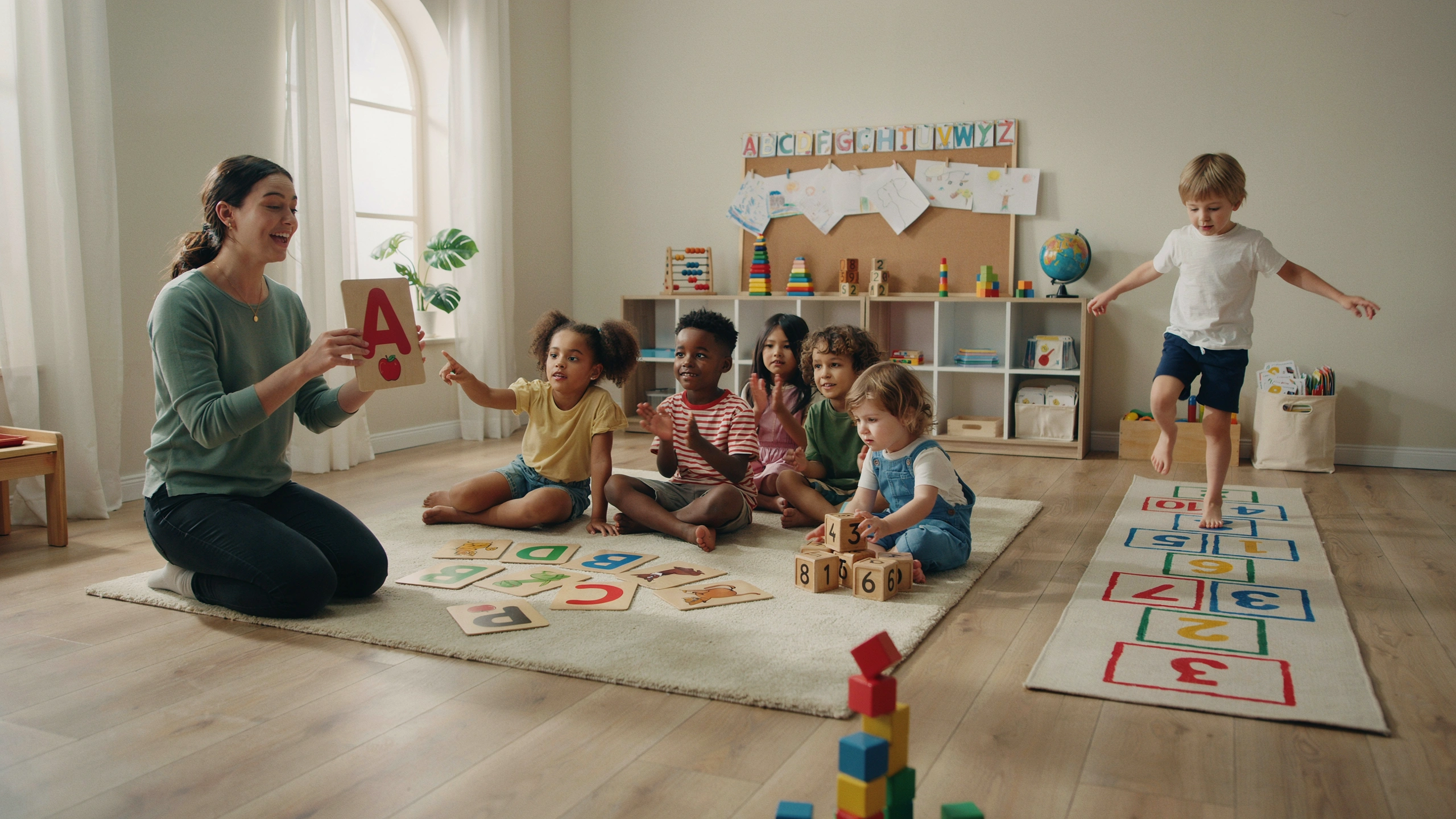
Early childhood education is most effective when learning is fun, interactive, and meaningful. Instead of teaching letters and numbers separately, parents and educators can combine both into engaging games that support literacy, numeracy, creativity, and physical development at the same time. Integrated alphabet and number activities encourage children to think, move, communicate, and solve problems while enjoying every moment of learning.
Whether you’re teaching at home, in preschool, or in kindergarten, these combined games provide a well-rounded approach that prepares children for future academic success.
Why Combine Alphabet and Number Learning?
Young children naturally make connections between different concepts when they learn through play. Combining letters and numbers allows them to practice multiple skills during a single activity, making learning more efficient and enjoyable.
Integrated alphabet and number games help children:
- Recognize uppercase and lowercase letters.
- Identify numbers and count accurately.
- Build vocabulary.
- Strengthen memory and attention.
- Develop fine and gross motor skills.
- Improve problem-solving abilities.
- Increase confidence in reading and math.
These activities also encourage curiosity and creativity while supporting overall cognitive development.
1. Alphabet and Number Treasure Hunt
Hide alphabet cards and number cards around the room or playground.
Children search for both types of cards.
When they find a letter, they:
- Say its name.
- Make its sound.
- Name a word that begins with it.
When they find a number, they:
- Say the number.
- Count to it.
- Collect the matching number of small objects.
This activity combines movement, literacy, and math.
2. Hop, Count, and Spell
Create a hopscotch board with alternating letters and numbers.
For example:
A – 1 – B – 2 – C – 3
Children hop through the course while saying each letter and number aloud.
Older children can spell simple words and solve easy counting challenges as they move.
3. Alphabet and Number Bingo
Design Bingo cards that include both letters and numbers.
The caller alternates between:
- Letter names
- Letter sounds
- Number names
- Simple counting clues
This keeps children focused while reinforcing two important learning areas.
4. Building Block Challenge
Label building blocks with letters and numbers.
Children build towers by following instructions such as:
- Stack the letters in alphabetical order.
- Build a tower with five blocks.
- Find the letter that starts the word “Sun.”
- Add two more blocks.
This activity develops literacy, numeracy, and engineering skills.
5. Alphabet and Number Sorting
Mix letter cards and number cards together.
Children sort them into separate groups before arranging:
- Letters in alphabetical order.
- Numbers from smallest to largest.
This strengthens observation, organization, and sequencing skills.
6. Storytelling with Letters and Numbers
Choose a letter and a number.
For example:
- Letter: B
- Number: 4
Children create a short story using four words or objects that begin with the letter B.
Example:
“Four blue birds built a beautiful bridge.”
This activity encourages imagination, vocabulary, and counting.
7. Art and Counting Collage
Choose one letter and one number each week.
Children decorate the letter using exactly the number of craft items shown.
For example:
- Letter M
- Number 8
Children glue eight buttons, pom-poms, or stickers onto the letter M.
This activity combines creativity with counting practice.
8. Alphabet and Number Obstacle Course
Set up an obstacle course with learning stations.
At each station, children complete tasks such as:
- Identify a letter.
- Count five objects.
- Jump to the number 7.
- Say a word beginning with the letter T.
Physical movement keeps children engaged while reinforcing academic skills.
9. DIY Learning Book
Invite children to create their own alphabet and number book.
Each page includes:
- One letter.
- One number.
- A drawing.
- A matching word.
- The correct quantity of objects.
For example:
- A
- 3
- Apple
- Three apples
Children enjoy reading and reviewing their personalized books again and again.
10. Alphabet and Number Relay Race
Divide children into teams.
Scatter letter and number cards around the play area.
Call out instructions such as:
- Find the letter C.
- Bring back number 6.
- Match the letter D with a picture of a dog.
- Count six blocks before returning.
This energetic game encourages teamwork, listening, and quick thinking.
Tips for Successful Combined Learning Activities
Keep activities short and engaging to match young children’s attention spans.
Introduce only a few letters and numbers at a time.
Use colorful, hands-on materials whenever possible.
Encourage children to talk about what they are learning by asking questions like:
- What letter did you find?
- What sound does it make?
- How many objects did you count?
- Which number comes next?
Celebrate curiosity, effort, and creativity rather than perfect answers.
Common Mistakes to Avoid
Avoid introducing too many new concepts in one activity.
Focus on gradual learning and plenty of repetition.
Do not rely only on worksheets.
Children benefit much more from active games that involve movement and exploration.
Avoid correcting every mistake immediately.
Instead, guide children with encouraging questions and allow them to discover answers independently.
Remember that every child learns at a different pace.
Conclusion
Combining alphabet and number games creates a rich learning environment where children develop literacy, numeracy, creativity, and problem-solving skills all at once. Whether they are hunting for letters and numbers, hopping through obstacle courses, building towers, creating stories, or making personalized books, each activity strengthens multiple areas of development through joyful play.
By integrating letters and numbers into everyday experiences, parents and educators help children build a strong foundation for school readiness and lifelong learning. With imagination, encouragement, and interactive games, early education becomes an exciting adventure that inspires confidence, curiosity, and a love of discovering new ideas.