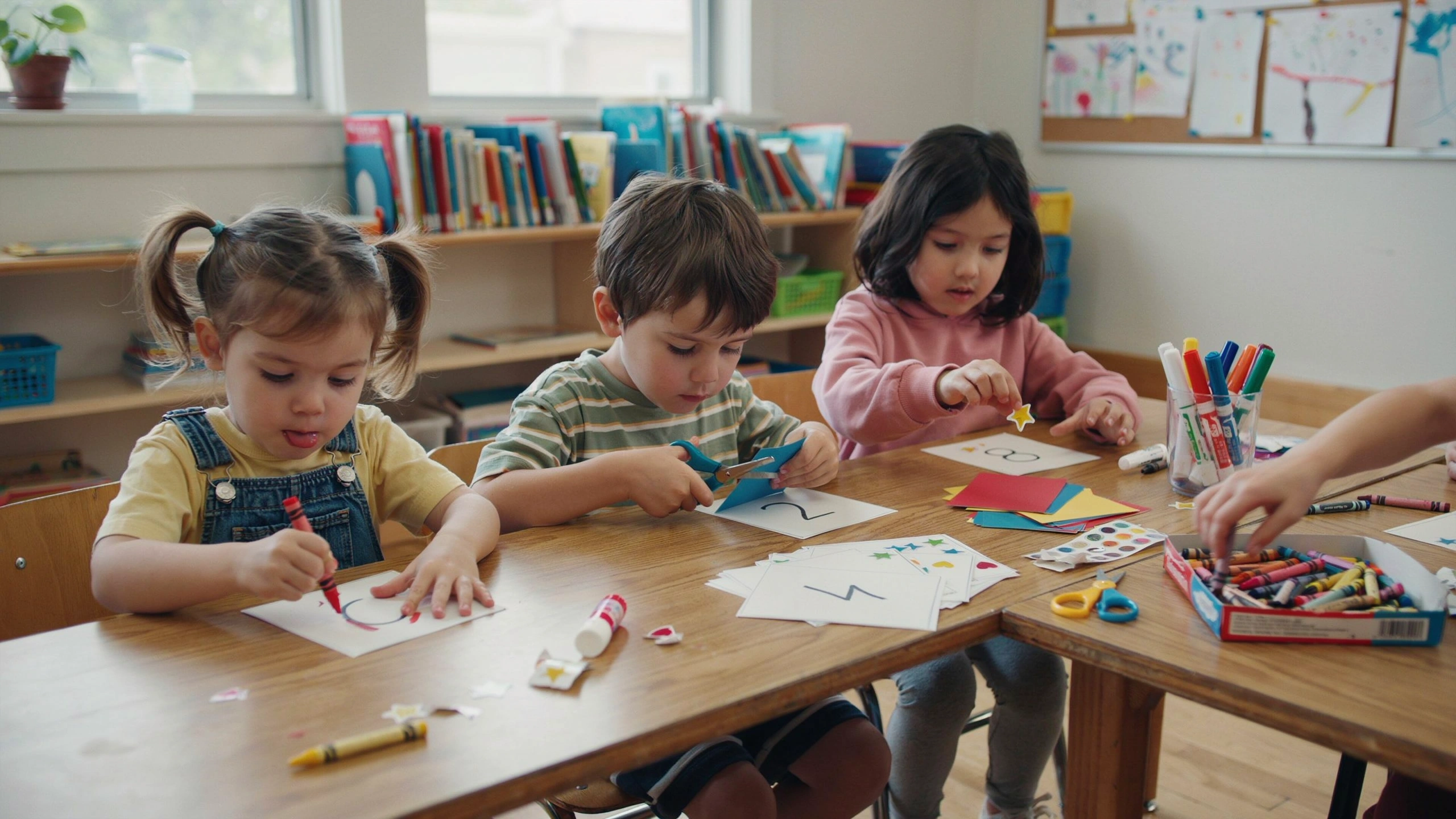
Number flashcards are one of the simplest yet most effective tools for teaching early math skills. When children create and use their own flashcards, learning becomes more meaningful, interactive, and enjoyable. DIY number flashcard activities help children recognize numbers, count objects, compare quantities, and develop confidence through hands-on play.
Whether you’re a parent, teacher, or homeschool educator, homemade flashcards are affordable, customizable, and suitable for children of different ages and learning levels.
Why DIY Number Flashcards Are Effective
Making flashcards is a learning activity in itself. As children write numbers, decorate cards, and match them with quantities, they reinforce their understanding through repetition and creativity.
DIY number flashcard activities help children:
- Recognize numbers from 0 to 20 and beyond.
- Develop one-to-one correspondence.
- Improve counting skills.
- Strengthen memory and concentration.
- Build fine motor skills.
- Encourage creativity and independence.
- Prepare for addition and subtraction.
Personalized flashcards are often more engaging than store-bought materials because children take pride in creating them.
1. Basic Number Flashcards
Cut cardstock or thick paper into equal-sized cards.
Write one large number on each card, from 0 to 20.
Invite children to decorate the cards with:
- Stickers
- Markers
- Crayons
- Washi tape
- Colored borders
Bright, colorful flashcards are more appealing and easier for young learners to remember.
2. Number and Dot Cards
Create matching sets of cards:
- One card displays the numeral.
- The matching card shows the same quantity using dots.
For example:
- 5 ↔ ●●●●●
- 8 ↔ ●●●●●●●●
Children match the numeral to the correct dot pattern, strengthening number recognition and quantity awareness.
3. Picture Counting Flashcards
Draw or glue pictures of familiar objects onto flashcards.
Examples include:
- 3 apples
- 6 balloons
- 9 stars
- 10 flowers
Children count the objects and match them to the correct numeral card.
This activity combines vocabulary with early math skills.
4. Number Memory Game
Create two identical sets of number flashcards.
Place them face down and let children take turns flipping over two cards at a time.
If the cards match, they keep the pair.
This game develops:
- Memory
- Concentration
- Number recognition
- Turn-taking skills
5. Flashcard Treasure Hunt
Hide number flashcards around the room or playground.
Children search for the cards and place them in numerical order after finding them.
To extend the activity, ask children to collect the same number of objects as each card shows.
This game combines movement with mathematical thinking.
6. Number Sorting Challenge
Mix the flashcards together.
Ask children to sort them by:
- Smallest to largest
- Largest to smallest
- Odd and even numbers
- Single-digit and double-digit numbers
Sorting strengthens logical reasoning and observation skills.
7. Flashcard Addition Practice
Use two number flashcards to create simple addition problems.
For example:
- 2 + 3 = ?
- 5 + 4 = ?
Children use counters, blocks, or fingers to find the answer before selecting the correct answer card.
This introduces basic addition through hands-on learning.
8. Clip the Correct Number
Write a numeral on each flashcard and draw several groups of objects beneath it.
Only one group should match the numeral.
Children use a clothespin to clip the correct answer.
This activity improves:
- Number recognition
- Fine motor skills
- Visual discrimination
- Counting accuracy
9. Build a Flashcard Ring
Punch a hole in one corner of each flashcard and attach them to a binder ring.
Children can flip through the cards anywhere—at home, in the car, or during travel.
This portable learning tool encourages regular review and independent practice.
10. Create Personalized Number Books
Invite children to organize their flashcards into a small number book.
Each page includes:
- The numeral
- A matching quantity of objects
- A simple illustration
- The number word
For example:
- 7
- Seven
- Seven fish
- A colorful drawing
This personalized resource reinforces learning every time children read through it.
Tips for Successful Flashcard Activities
Use thick, durable paper or laminate flashcards for long-lasting use.
Introduce only a few new numbers at a time.
Practice regularly in short sessions of 10 to 15 minutes.
Encourage children to say each number aloud while pointing to it.
Ask questions such as:
- Which number comes before this one?
- Which number comes after it?
- Can you find something with the same quantity?
Keeping activities playful helps maintain motivation and interest.
Common Mistakes to Avoid
Avoid using flashcards only for memorization.
Always connect numbers with real objects and counting activities.
Do not overwhelm children with too many cards at once.
Begin with small groups before introducing larger numbers.
Avoid turning practice into a test.
Offer encouragement, celebrate progress, and allow children to learn at their own pace.
Conclusion
DIY number flashcard activities provide an inexpensive and engaging way to teach early math skills. Whether children are decorating flashcards, matching numerals to quantities, playing memory games, solving addition problems, or building their own number books, every activity strengthens number recognition and mathematical confidence.
By creating personalized learning materials and incorporating them into everyday play, parents and educators help children develop a strong foundation for future math success. With creativity, consistency, and hands-on exploration, simple flashcards become powerful tools that inspire a lifelong love of learning.