
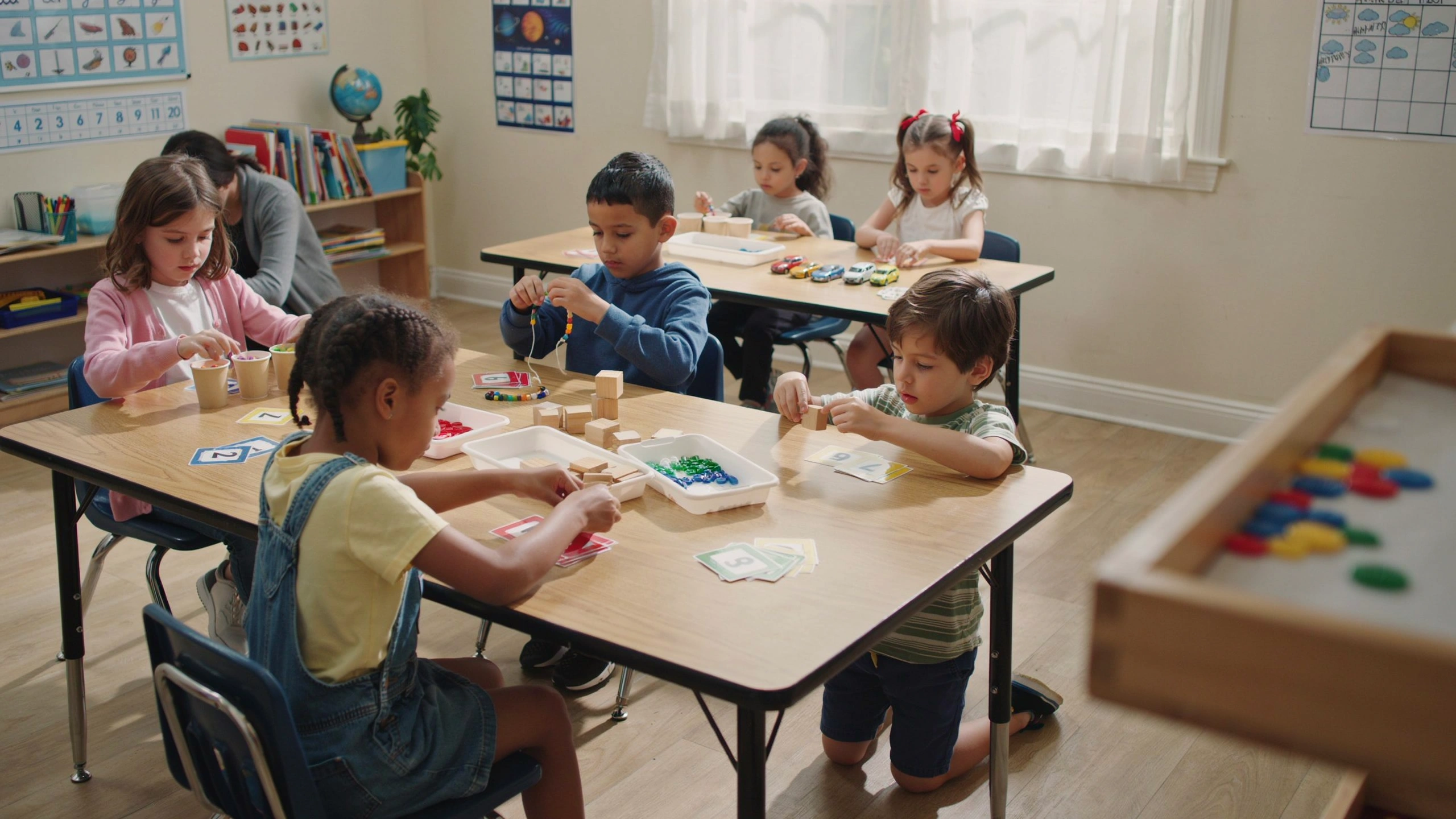
Sorting is one of the earliest math skills children develop, and it plays a key role in building number sense. By grouping, comparing, and organizing numbers, preschool and kindergarten learners begin to understand patterns, sequences, and relationships between quantities. Number sorting games make this learning process enjoyable while encouraging critical thinking, observation, and problem-solving.
Whether you’re teaching at home or in the classroom, these hands-on activities help children explore numbers through play and discovery.
Why Number Sorting Is Important
Number sorting teaches children to recognize similarities and differences while strengthening early math skills. It also lays the foundation for counting, addition, subtraction, and logical reasoning.
Number sorting activities help children:
- Recognize numbers from 0 to 20 and beyond.
- Understand numerical order.
- Compare quantities.
- Develop classification skills.
- Improve visual discrimination.
- Strengthen concentration and memory.
- Build confidence in early mathematics.
The more children interact with numbers in meaningful ways, the more comfortable they become using them.
1. Number Card Sorting
Create a set of number cards and mix them together.
Ask children to sort the cards in different ways, such as:
- Smallest to largest.
- Largest to smallest.
- Odd and even numbers (for older learners).
- Single-digit and double-digit numbers.
This simple activity helps children become familiar with number patterns.
2. Color-Coded Number Sort
Write numbers on cards using different colors.
Invite children to sort the cards by:
- Color.
- Number value.
- Both color and value.
For example, all blue numbers can be arranged from the smallest to the largest.
This activity combines visual recognition with mathematical thinking.
3. Button Quantity Match
Place number cards on a table.
Children count out the correct number of buttons for each card.
Afterward, they sort the groups by quantity, from the fewest buttons to the most.
This reinforces the connection between numbers and real objects.
4. Number and Picture Matching
Prepare cards showing numbers and separate cards with groups of objects.
Examples include:
- 4 → Four apples.
- 7 → Seven stars.
- 10 → Ten flowers.
Children match each number to the correct picture before sorting the pairs in order.
This activity develops one-to-one correspondence.
5. Muffin Tin Number Sort
Label the cups of a muffin tin with different numbers.
Provide small objects such as:
- Pom-poms.
- Beads.
- Coins.
- Blocks.
- Pasta.
Children place the correct quantity into each cup.
Once complete, they compare which cups contain more or fewer objects.
6. Number Stick Sorting
Write numbers on craft sticks.
Mix them together and ask children to organize them into:
- Ascending order.
- Descending order.
- Even and odd groups.
- Number families (1–5, 6–10, 11–15, etc.).
This game is easy to prepare and perfect for independent practice.
7. Nature Number Sort
Collect natural items during an outdoor walk, such as:
- Leaves.
- Pebbles.
- Pinecones.
- Flowers.
- Twigs.
Assign a number to each group and ask children to sort the collections according to quantity.
Nature-based learning makes math meaningful and enjoyable.
8. Magnetic Number Sorting
Use magnetic numbers on a whiteboard or refrigerator.
Children organize them by:
- Numerical order.
- Even and odd numbers.
- Greater than and less than.
- Missing numbers.
Magnetic pieces provide a fun, hands-on learning experience.
9. Number Basket Challenge
Prepare several baskets labeled with different numbers.
Scatter small toys around the room.
Children count the correct number of toys into each basket.
Afterward, discuss:
- Which basket has the most?
- Which has the fewest?
- Are any baskets equal?
This activity combines movement with early math concepts.
10. Build and Sort Block Towers
Give children building blocks and number cards.
They build towers that match each number.
Once all towers are complete, children arrange them from shortest to tallest while discussing the corresponding numbers.
This activity strengthens spatial awareness, counting, and comparison skills.
Tips for Successful Number Sorting Activities
Begin with small numbers before introducing larger ones.
Use colorful, familiar objects to maintain children’s interest.
Encourage children to explain their thinking by asking questions like:
- Why did you place this number here?
- Which group has more?
- Can you find another way to sort these numbers?
Rotate activities regularly to keep learning fresh and engaging.
Offer praise for effort, observation, and problem-solving.
Common Mistakes to Avoid
Avoid introducing too many sorting rules at once.
Focus on one concept before adding another.
Do not rush children through the activity.
Allow time to observe, compare, and think independently.
Avoid correcting every mistake immediately.
Instead, ask guiding questions that help children discover the correct answer on their own.
Remember that every child develops mathematical understanding at a different pace.
Conclusion
Number sorting games provide a fun and meaningful way for preschool and kindergarten children to build essential early math skills. Whether they are organizing number cards, filling muffin tins, sorting natural materials, or building block towers, each activity strengthens number recognition, logical thinking, and confidence.
By incorporating sorting games into everyday learning, parents and educators create engaging experiences that prepare children for future success in mathematics. Through hands-on exploration and playful practice, children discover that numbers are not only useful but also exciting to learn.