
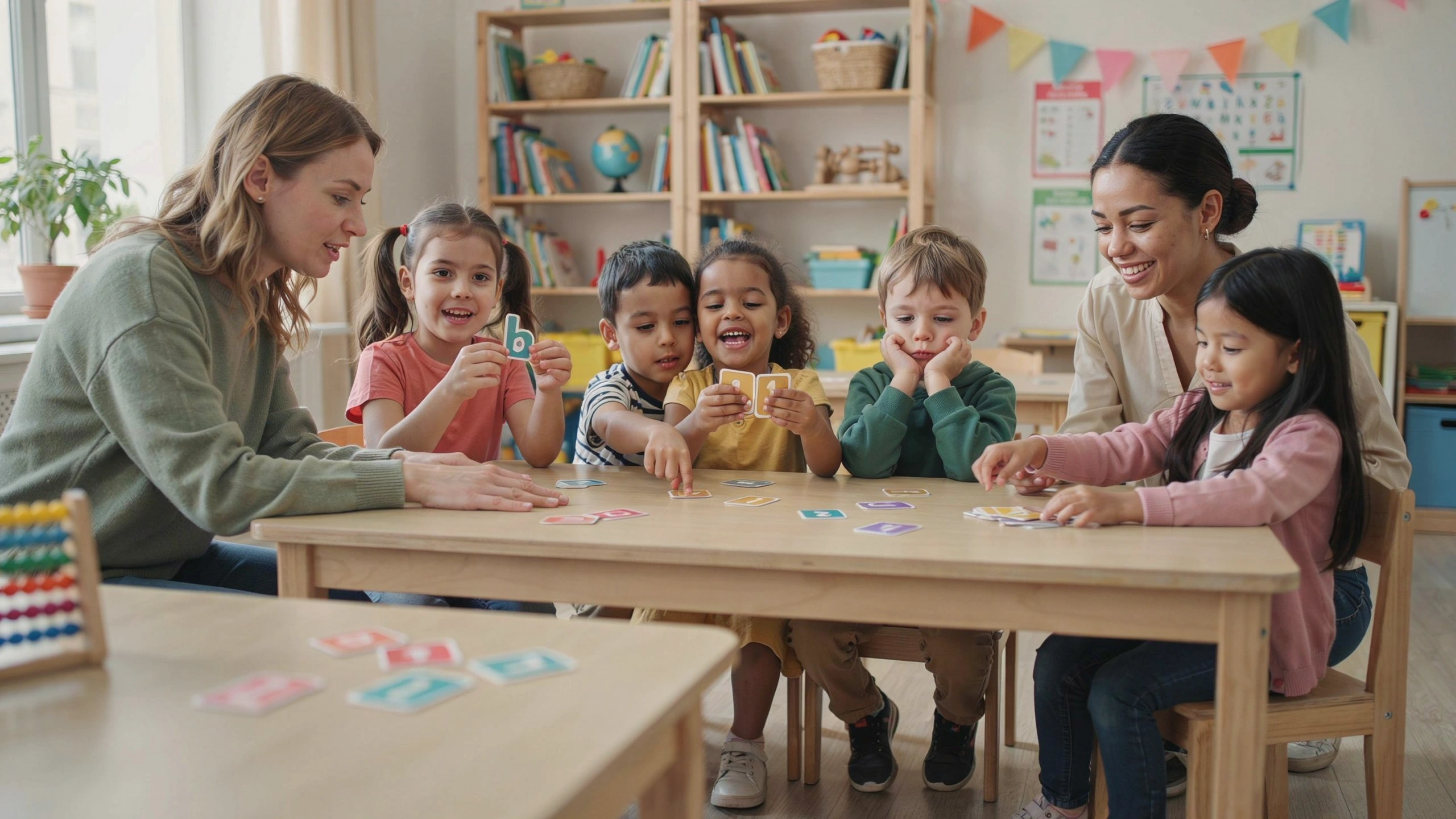
Learning the alphabet is one of the first and most important steps in a child’s reading journey. While memorizing letters is helpful, children learn much faster when they can actively interact with them through fun and engaging games. Alphabet matching activities encourage children to recognize letters, connect uppercase and lowercase forms, strengthen memory, and develop the confidence needed for future reading success.
Whether you’re a parent, teacher, or homeschool educator, these simple games can turn everyday learning into an exciting adventure.
Why Alphabet Matching Matters
Before children begin reading words, they need to recognize individual letters quickly and accurately. Alphabet matching activities help children:
- Recognize uppercase and lowercase letters.
- Improve visual discrimination skills.
- Strengthen memory and concentration.
- Build early phonics awareness.
- Develop confidence through playful learning.
- Prepare for reading and writing.
The more frequently children interact with letters in enjoyable ways, the stronger their literacy foundation becomes.
1. Uppercase and Lowercase Letter Match
Create two sets of alphabet cards—one with uppercase letters and another with lowercase letters. Spread them across a table and invite children to find matching pairs.
To make the activity more exciting:
- Use colorful cards.
- Set a timer for older children.
- Celebrate every successful match with encouragement.
This simple game helps children understand that both forms represent the same letter.
2. Alphabet Memory Game
Place pairs of matching letter cards face down. Children take turns flipping over two cards at a time, trying to find matching letters.
You can vary the difficulty by matching:
- Uppercase with uppercase
- Lowercase with lowercase
- Uppercase with lowercase
- Letter with a picture that begins with that letter
This activity strengthens memory while reinforcing letter recognition.
3. Letter-to-Object Matching
Gather small objects from around the house or classroom.
Examples include:
- A — Apple
- B — Ball
- C — Cup
- D — Doll
- F — Fork
Children match each object to its corresponding letter card, helping them connect letters with real-world vocabulary.
4. Alphabet Puzzle Challenge
Cut large alphabet letters into two or three puzzle pieces. Mix all the pieces together and let children rebuild each letter.
Puzzle activities improve:
- Problem-solving
- Visual perception
- Fine motor skills
- Shape recognition
Children enjoy the challenge while naturally becoming more familiar with letter shapes.
5. Sticky Note Letter Hunt
Write letters on colorful sticky notes and place them around the room.
Call out a letter and ask children to find it as quickly as possible.
For extra learning, ask:
- What sound does this letter make?
- Can you name something that starts with this letter?
- Can you find another letter that looks similar?
The movement keeps children active while reinforcing learning.
6. Alphabet Sorting Game
Prepare cards featuring letters in different colors, fonts, or sizes.
Ask children to sort them by:
- Letter
- Color
- Uppercase and lowercase
- Straight-line letters and curved letters
Sorting activities develop observation and classification skills.
7. Magnetic Letter Matching
Magnetic letters are excellent for interactive learning.
Place alphabet cards on a table and let children find the matching magnetic letter for each card.
This activity works well on:
- Refrigerators
- Magnetic boards
- Classroom whiteboards
Children enjoy the hands-on experience while improving letter recognition.
8. Clothespin Letter Match
Write letters around the edge of a paper plate.
Label clothespins with matching letters.
Children clip each clothespin onto the correct letter.
This game strengthens:
- Fine motor control
- Hand muscles
- Letter identification
- Hand-eye coordination
It is especially helpful for preschoolers preparing to write.
9. Alphabet Bingo
Create simple bingo boards with letters instead of numbers.
Call out letters randomly while children cover the matching spaces.
You can increase the challenge by calling:
- Letter sounds
- Words that begin with a specific letter
- Uppercase letters while children find lowercase letters
Alphabet Bingo combines excitement with repeated practice.
10. Outdoor Alphabet Treasure Hunt
Hide alphabet cards around the playground, backyard, or park.
Provide children with a checklist and encourage them to find every letter.
For additional learning, ask children to:
- Say the letter name.
- Make its sound.
- Think of a word beginning with that letter.
Outdoor activities combine movement, exploration, and literacy in a memorable way.
Tips for Successful Alphabet Learning
Keep activities short to match young children’s attention spans. Ten to fifteen minutes is often enough for preschool learners.
Offer praise for effort rather than perfection. Every successful match builds confidence.
Rotate activities regularly to keep learning fresh and engaging.
Allow children to explore at their own pace instead of rushing through games.
Use everyday opportunities—such as grocery shopping, reading signs, or looking at books—to point out letters in the environment.
Common Mistakes to Avoid
Some adults unintentionally make alphabet learning more difficult by introducing too many letters at once. Focus on a few letters before moving on to new ones.
Avoid turning games into tests. Learning should remain playful and enjoyable.
Remember that every child develops at a different pace. Consistent exposure is far more effective than pressure.
Conclusion
Alphabet matching games provide children with an enjoyable way to develop essential pre-reading skills. Through playful activities like memory games, treasure hunts, puzzles, and sorting challenges, young learners gradually become confident in recognizing letters and understanding their role in language.
The best part is that these games require very few materials and can easily be adapted for homes, classrooms, daycare centers, or homeschool environments. By making alphabet practice fun and interactive, adults help children build a strong foundation that supports reading, writing, and lifelong learning.