
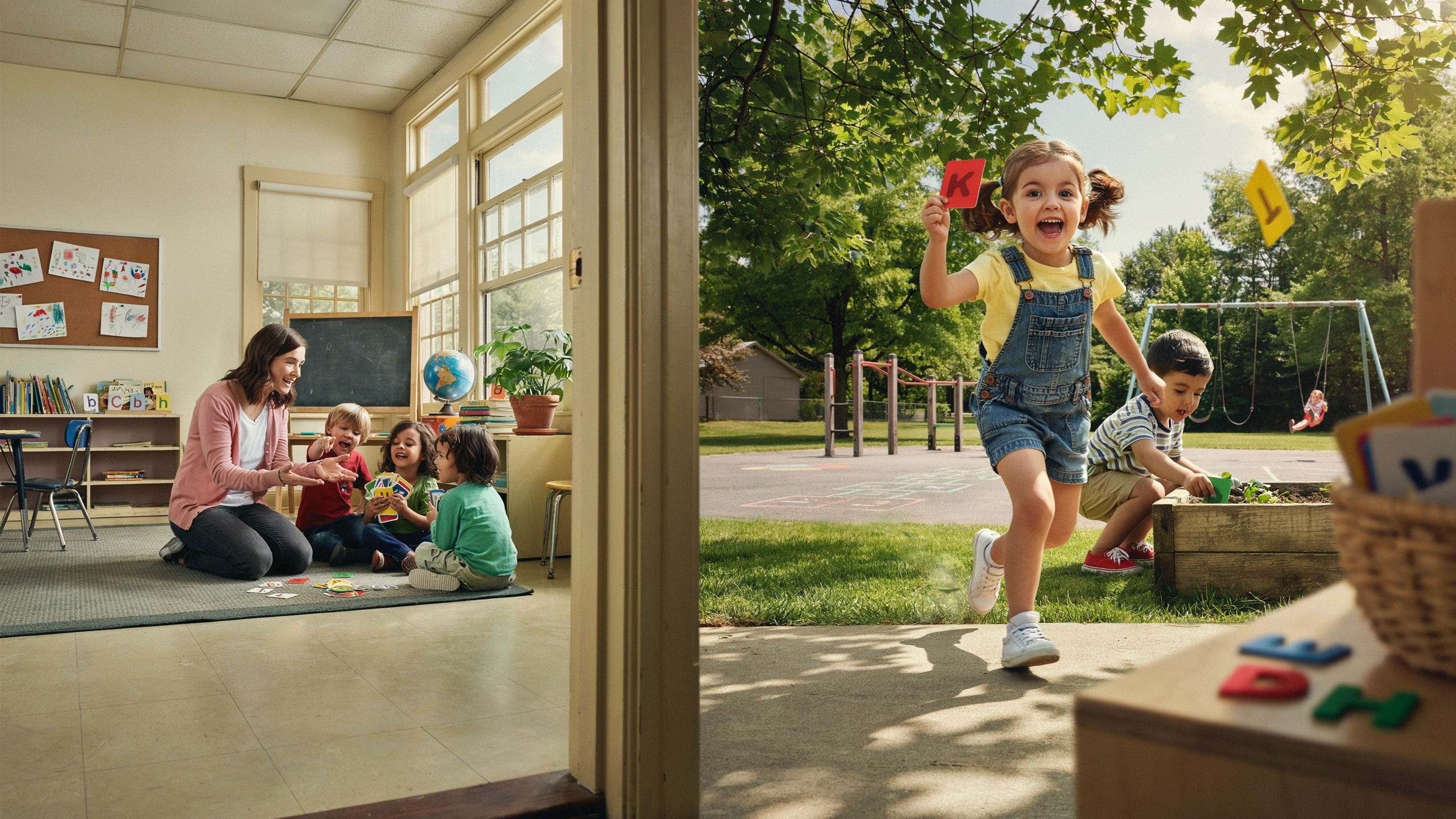
Teaching the alphabet doesn’t have to involve flashcards and repetitive drills. One of the most enjoyable ways to help young children recognize letters is through alphabet scavenger hunts. These interactive games transform everyday environments into exciting learning spaces where children actively search, discover, and explore.
Whether indoors, outdoors, in the classroom, or at home, alphabet scavenger hunts combine movement, observation, and play to create memorable learning experiences. Children stay engaged while developing essential literacy skills that prepare them for reading and writing.
Why Alphabet Scavenger Hunts Work
Young children learn best when they are actively involved in the learning process. Instead of sitting at a table, they move around, solve simple challenges, and discover letters in meaningful contexts.
Alphabet scavenger hunts help children:
- Recognize uppercase and lowercase letters.
- Improve visual discrimination skills.
- Build early phonics awareness.
- Strengthen memory and concentration.
- Develop problem-solving abilities.
- Increase physical activity while learning.
- Build confidence through successful discoveries.
Learning becomes an adventure instead of a lesson.
1. Indoor Alphabet Hunt
Hide alphabet cards throughout the house or classroom before children begin the activity.
Ask children to search for each hidden letter and place it in alphabetical order once they find it.
To make the game more exciting:
- Use colorful alphabet cards.
- Hide letters at different heights.
- Give small clues if children need help.
- Celebrate every successful discovery.
This simple activity keeps children moving while reinforcing letter recognition.
2. Nature Alphabet Hunt
Take learning outdoors by visiting a park, garden, or backyard.
Instead of hiding letters, encourage children to find natural objects that begin with each letter of the alphabet.
Examples include:
- A — Acorn
- B — Bird
- F — Flower
- G — Grass
- L — Leaf
- R — Rock
- T — Tree
Not every letter needs to be completed. The goal is observation and discussion rather than perfection.
3. Alphabet Picture Hunt
Provide children with magazines, newspapers, or printed catalogs.
Challenge them to cut out pictures that begin with specific letters.
For example:
- A — Apple
- C — Car
- D — Dog
- P — Pizza
- S — Sun
Glue the pictures onto alphabet pages to create a personalized alphabet book.
4. Color and Letter Hunt
Write several letters on colored paper.
Ask children to search for combinations such as:
- Find the red letter B.
- Find the blue letter M.
- Find the green letter S.
Combining colors with letters improves observation skills and increases the level of challenge.
5. Alphabet Treasure Map
Create a simple treasure map showing different locations around the room or playground.
Hide alphabet cards at each location.
Each discovered letter provides the next clue until children complete the entire alphabet or uncover a special prize.
Treasure hunts encourage teamwork, logical thinking, and persistence.
6. Sound Hunt
Instead of asking children to find a particular letter, ask them to find objects that begin with a specific sound.
For example:
“Can you find something that starts with the /b/ sound?”
Children might discover:
- Ball
- Book
- Bottle
- Bag
This activity strengthens phonemic awareness while reinforcing letter-sound relationships.
7. Alphabet Hunt with Sticky Notes
Write letters on colorful sticky notes and place them throughout the room.
Call out:
- Letter names
- Letter sounds
- Simple words
Children race to find the matching sticky note.
For older preschoolers, ask them to place the letters in alphabetical order after collecting them.
8. Digital Alphabet Hunt
If using a tablet or interactive whiteboard, display a large alphabet chart.
Ask children to locate letters as quickly as possible.
You can increase the difficulty by asking:
- Find all vowels.
- Find letters with straight lines.
- Find letters with curves.
- Find letters in your name.
Technology can add variety while still encouraging active participation.
9. Alphabet Hunt Around the Neighborhood
Take a short walk and encourage children to spot letters on:
- Street signs
- Store names
- License plates
- Mailboxes
- Buses
- Posters
Children quickly discover that letters are everywhere in daily life, making learning more meaningful.
10. Team Alphabet Challenge
Divide children into small groups.
Assign each team a set of letters to find.
After everyone finishes, teams work together to place the letters in alphabetical order or build simple words.
This activity promotes:
- Cooperation
- Communication
- Problem-solving
- Social skills
Learning becomes a shared adventure.
Tips for a Successful Alphabet Scavenger Hunt
Choose an area that is safe and easy for children to explore.
Adjust the difficulty based on the child’s age and experience.
Offer encouragement instead of focusing on mistakes.
Allow children to move freely while searching.
Use simple rewards such as stickers, stamps, or extra story time to celebrate participation.
Repeat scavenger hunts regularly with different themes to maintain excitement.
Common Mistakes to Avoid
Avoid hiding letters in places that are too difficult to reach or unsafe.
Do not expect children to identify every letter immediately.
Avoid making the activity feel like a competition where only speed matters.
Instead, encourage curiosity, teamwork, and careful observation.
Remember that every successful discovery builds confidence.
Conclusion
Alphabet scavenger hunts are a fun and effective way to introduce young children to letters while encouraging movement, exploration, and curiosity. Whether children search for hidden alphabet cards indoors, discover letters in nature, or spot them around the neighborhood, each adventure strengthens early literacy skills in an engaging and memorable way.
By turning the alphabet into a game of discovery, parents and educators create positive learning experiences that inspire children to enjoy reading from the very beginning. The excitement of finding each letter helps build confidence, supports language development, and lays the foundation for lifelong learning.