
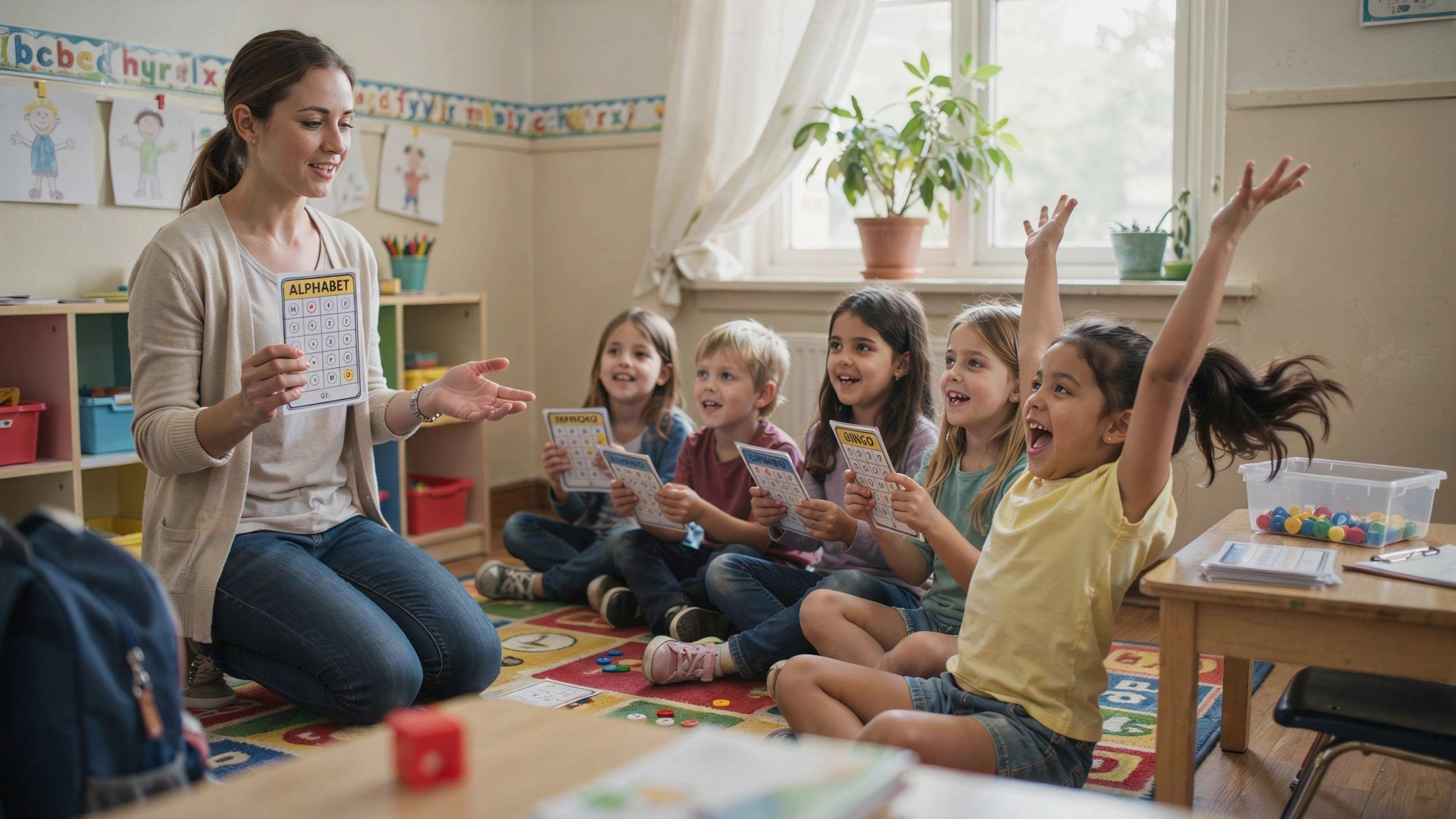
Learning the alphabet becomes much more enjoyable when children can play games while practicing essential literacy skills. One of the most popular and effective activities for preschoolers and kindergarten learners is Alphabet Bingo. This simple game combines excitement, listening, and letter recognition, making it an excellent choice for classrooms, homeschooling, and family learning time.
Whether children are just beginning to recognize letters or are strengthening their alphabet knowledge, Alphabet Bingo encourages active participation and repeated practice in a relaxed, enjoyable environment.
Why Alphabet Bingo Is an Effective Learning Tool
Young children learn best when repetition is combined with fun. Alphabet Bingo allows children to practice identifying letters over and over without feeling like they are completing a lesson.
Regular Alphabet Bingo games help children:
- Recognize uppercase and lowercase letters.
- Improve listening and attention skills.
- Strengthen visual memory.
- Build early phonics awareness.
- Develop concentration and patience.
- Increase confidence through successful participation.
- Encourage social interaction and teamwork.
The game is easy to adapt for different ages and learning levels.
How to Set Up Alphabet Bingo
Creating Alphabet Bingo is simple.
You will need:
- Bingo cards with different alphabet letters.
- Letter cards for the caller.
- Small counters, buttons, coins, or paper squares to cover the letters.
- A container or bag to hold the letter cards.
Each child receives a unique Bingo card containing a different arrangement of letters.
The caller randomly selects one letter at a time and announces it to the group.
Children cover the matching letter on their cards until someone completes a row, column, diagonal, or full card, depending on the game rules.
1. Uppercase Letter Bingo
This version is ideal for beginners.
The caller announces uppercase letters, and children search for the matching uppercase letter on their Bingo cards.
This activity helps children become familiar with the appearance of capital letters before introducing more advanced concepts.
2. Uppercase and Lowercase Matching Bingo
For children who already recognize basic letters, increase the challenge.
The caller displays an uppercase letter while the Bingo cards contain lowercase letters, or vice versa.
Children must recognize that both forms represent the same letter.
This strengthens one of the most important early reading skills.
3. Letter Sound Bingo
Instead of saying the letter name, the caller makes its sound.
For example:
- “/m/”
- “/s/”
- “/b/”
Children identify the correct letter based on its sound.
This variation builds phonics awareness and prepares children for reading simple words.
4. Picture Alphabet Bingo
Replace letters on the Bingo cards with pictures of familiar objects.
For example:
- Apple
- Ball
- Cat
- Dog
- Fish
The caller announces a letter, and children cover the picture that begins with that letter.
This connects vocabulary with alphabet knowledge.
5. Color Alphabet Bingo
Print letters in different colors.
The caller gives two clues.
For example:
- “Find the red letter A.”
- “Cover the blue letter M.”
Combining colors with letters improves attention and observation skills.
6. Alphabet Bingo Relay
Divide children into small teams.
Place large Bingo boards on the opposite side of the room.
One child from each team runs to the board, covers the correct letter, and returns before the next teammate takes a turn.
This energetic version combines movement with literacy learning.
7. Outdoor Alphabet Bingo
Take the game outside.
Use sidewalk chalk to draw large Bingo boards or laminate cards for outdoor use.
Children search for matching letters while enjoying fresh air and physical activity.
Outdoor learning often increases motivation and engagement.
8. Alphabet Bingo with Objects
Instead of calling letters, display real objects.
For example:
- Banana
- Pencil
- Toy car
- Spoon
Children identify the beginning letter and cover it on their Bingo card.
This activity strengthens vocabulary while reinforcing letter recognition.
9. Digital Alphabet Bingo
Interactive whiteboards, tablets, or classroom projectors can make Alphabet Bingo even more exciting.
Digital versions often include:
- Animated letters.
- Sound effects.
- Colorful visuals.
- Automatic random letter selection.
Technology adds variety while maintaining educational value.
10. Create Your Own Bingo Cards
Invite children to design their own Bingo cards.
They can:
- Write letters.
- Decorate with stickers.
- Color the boxes.
- Arrange letters differently.
Making the game themselves increases ownership and excitement.
Tips for Making Alphabet Bingo More Fun
Rotate different Bingo versions to keep children interested.
Offer praise for participation rather than only celebrating winners.
Allow children to take turns being the caller.
Use cheerful voices, songs, or small rewards to maintain enthusiasm.
Keep games short enough to match young children’s attention spans.
Review unfamiliar letters before beginning each round.
Common Mistakes to Avoid
Avoid making the game too competitive.
The goal is learning, not simply winning.
Do not introduce too many unfamiliar letters at once.
Begin with letters children already know and gradually add new ones.
Avoid rushing through letter calls.
Give every child enough time to think and respond confidently.
Most importantly, create a positive atmosphere where mistakes are seen as opportunities to learn.
Conclusion
Alphabet Bingo is a simple yet powerful game that transforms alphabet practice into an exciting learning experience. Whether children are matching uppercase and lowercase letters, identifying letter sounds, connecting pictures to letters, or creating their own Bingo cards, every round reinforces essential early literacy skills.
By incorporating movement, teamwork, creativity, and repetition, Alphabet Bingo helps children develop confidence while preparing them for reading and writing. With just a few basic materials and a little imagination, this classic game can become one of the most enjoyable parts of every child’s learning journey.