
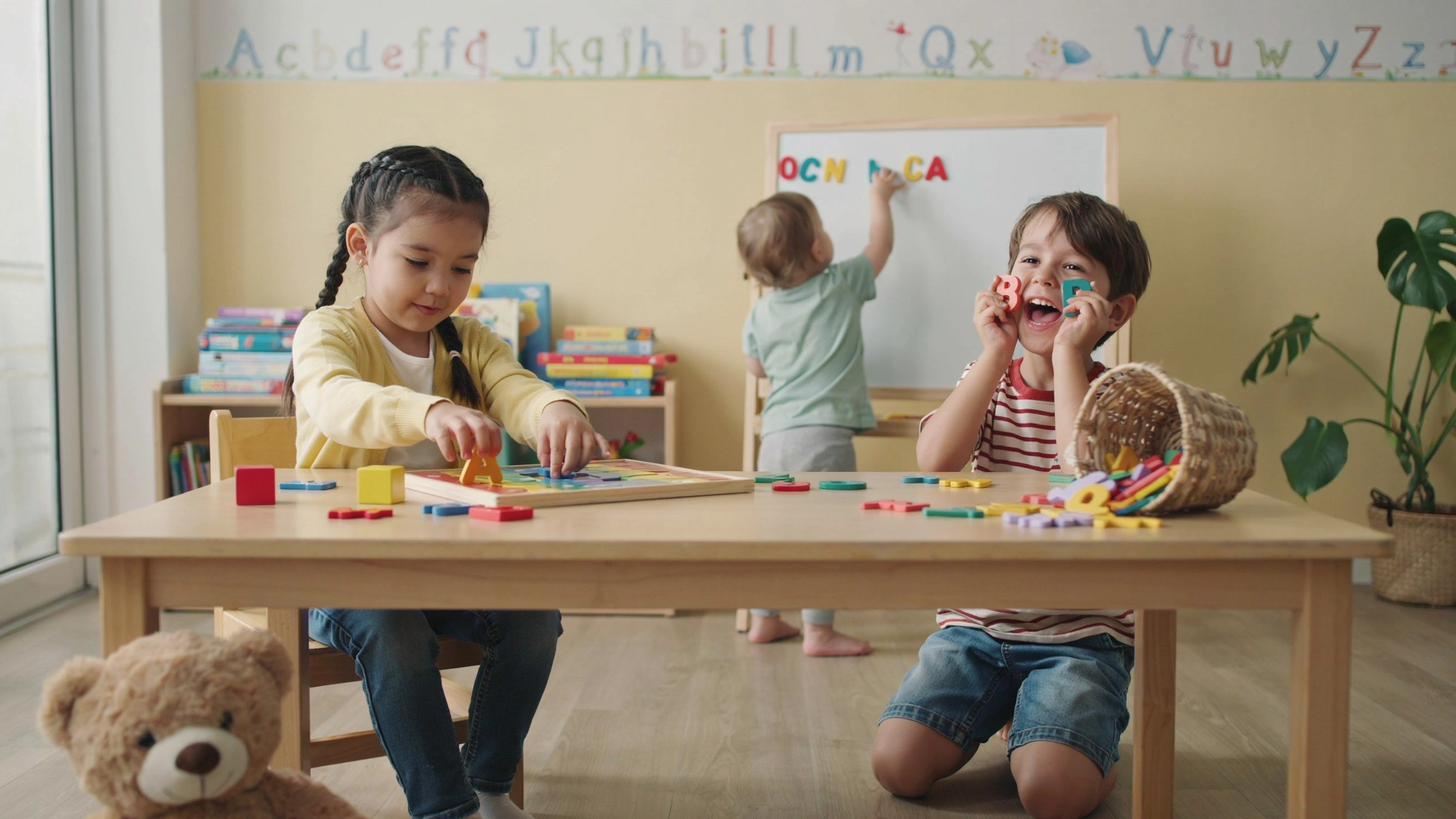
Learning the alphabet is one of the first milestones in a child’s literacy journey, and puzzles offer an exciting way to make that process enjoyable. Interactive alphabet puzzles encourage children to recognize letter shapes, solve simple challenges, and strengthen early reading skills through hands-on play. As children fit pieces together, they also develop problem-solving abilities, patience, and fine motor coordination.
Whether used at home, in preschool, or in kindergarten, alphabet puzzles transform learning into an engaging adventure that keeps children curious and motivated.
Why Alphabet Puzzles Are Effective
Puzzles require children to observe, compare, and think critically while interacting with letters. This active learning process helps children remember the alphabet more effectively than passive memorization.
Alphabet puzzles help children:
- Recognize uppercase and lowercase letters.
- Improve visual discrimination skills.
- Develop fine motor control.
- Strengthen hand-eye coordination.
- Build concentration and patience.
- Encourage logical thinking.
- Increase confidence through successful problem-solving.
The combination of learning and play creates a positive foundation for future reading success.
1. Wooden Alphabet Puzzles
Wooden alphabet puzzles are a classic learning tool for young children.
Each letter fits into its own matching space, allowing children to:
- Identify letter shapes.
- Practice letter placement.
- Develop hand strength by lifting puzzle pieces.
- Learn the alphabet through repetition.
Many wooden puzzles also include colorful pictures that begin with each letter, adding vocabulary practice.
2. Uppercase and Lowercase Matching Puzzle
Create puzzle pieces by cutting uppercase letters and their lowercase partners into matching halves.
Children must connect:
- A with a
- B with b
- C with c
This activity helps children understand that both forms represent the same letter.
3. Picture-to-Letter Puzzle
Prepare puzzle cards with a letter on one piece and a picture on the matching piece.
Examples include:
- A — Apple
- B — Ball
- C — Cat
- D — Dog
- F — Fish
Children match each picture with its beginning letter, strengthening both vocabulary and phonics skills.
4. Alphabet Sequence Puzzle
Mix up all 26 alphabet letters.
Children work to arrange them in the correct alphabetical order.
For younger learners, begin with only five or six letters before gradually increasing the challenge.
This activity reinforces alphabetical sequencing and memory.
5. Giant Floor Alphabet Puzzle
Create oversized puzzle pieces from cardboard or foam.
Spread them across the floor and invite children to work together to assemble the alphabet.
Large puzzles encourage:
- Teamwork.
- Communication.
- Physical movement.
- Cooperative learning.
This activity is especially popular in classrooms.
6. Alphabet Name Puzzle
Write each child’s name on sturdy paper and cut it into separate letter pieces.
Children rebuild their own names before trying classmates’ names.
Learning personal names makes alphabet recognition meaningful and memorable.
7. Magnetic Alphabet Puzzle
Use magnetic letters with a magnetic board.
Show children letter outlines or printed templates and ask them to place the correct magnetic letter in each position.
This activity combines puzzle-solving with hands-on exploration.
8. DIY Craft Stick Puzzle
Write one large letter across two or three craft sticks.
Separate the sticks, mix them together, and challenge children to rebuild the complete letter.
Older children can also decorate each finished puzzle with drawings of objects that begin with that letter.
9. Alphabet Puzzle Treasure Hunt
Hide puzzle pieces around the room or playground.
As children find each piece, they work together to complete the full alphabet puzzle.
This activity combines movement, exploration, and teamwork while reinforcing letter recognition.
10. Digital Alphabet Puzzles
Interactive educational apps and classroom whiteboards often include alphabet puzzles featuring:
- Drag-and-drop letters.
- Animated feedback.
- Letter sounds.
- Colorful illustrations.
These digital activities can provide extra variety while keeping children engaged.
Tips for Successful Alphabet Puzzle Activities
Choose puzzles that match the child’s developmental level.
Introduce only a small number of letters at first if children are beginners.
Encourage children to talk about each letter as they complete the puzzle.
Ask questions such as:
- What letter is this?
- What sound does it make?
- Can you think of a word that begins with this letter?
- Is it uppercase or lowercase?
Celebrate effort and persistence rather than focusing only on completing the puzzle quickly.
Common Mistakes to Avoid
Avoid choosing puzzles that are too difficult for the child’s age.
Overly complex puzzles can lead to frustration instead of confidence.
Do not correct every mistake immediately.
Allow children time to experiment, think, and solve problems independently.
Avoid using puzzles only once.
Repeated practice with familiar puzzles strengthens long-term memory and letter recognition.
Conclusion
Interactive alphabet puzzles provide children with a fun and meaningful way to explore letters while developing essential early literacy skills. Whether children are matching uppercase and lowercase letters, rebuilding their names, solving giant floor puzzles, or connecting pictures to beginning letters, each activity strengthens recognition, concentration, and problem-solving abilities.
By incorporating puzzles into everyday learning, parents and educators create engaging experiences that prepare children for reading and writing. With every completed puzzle, young learners gain confidence, improve fine motor skills, and discover that learning the alphabet can be both exciting and rewarding.