
Introduction
Preparing children for handwriting involves much more than practicing letters. Before they can confidently hold a pencil and write with control, they need to strengthen the small muscles in their hands, improve finger coordination, and develop patience through hands-on activities. The Pasta Threading Necklace Game is a fun and creative way to build these essential pre-writing skills.
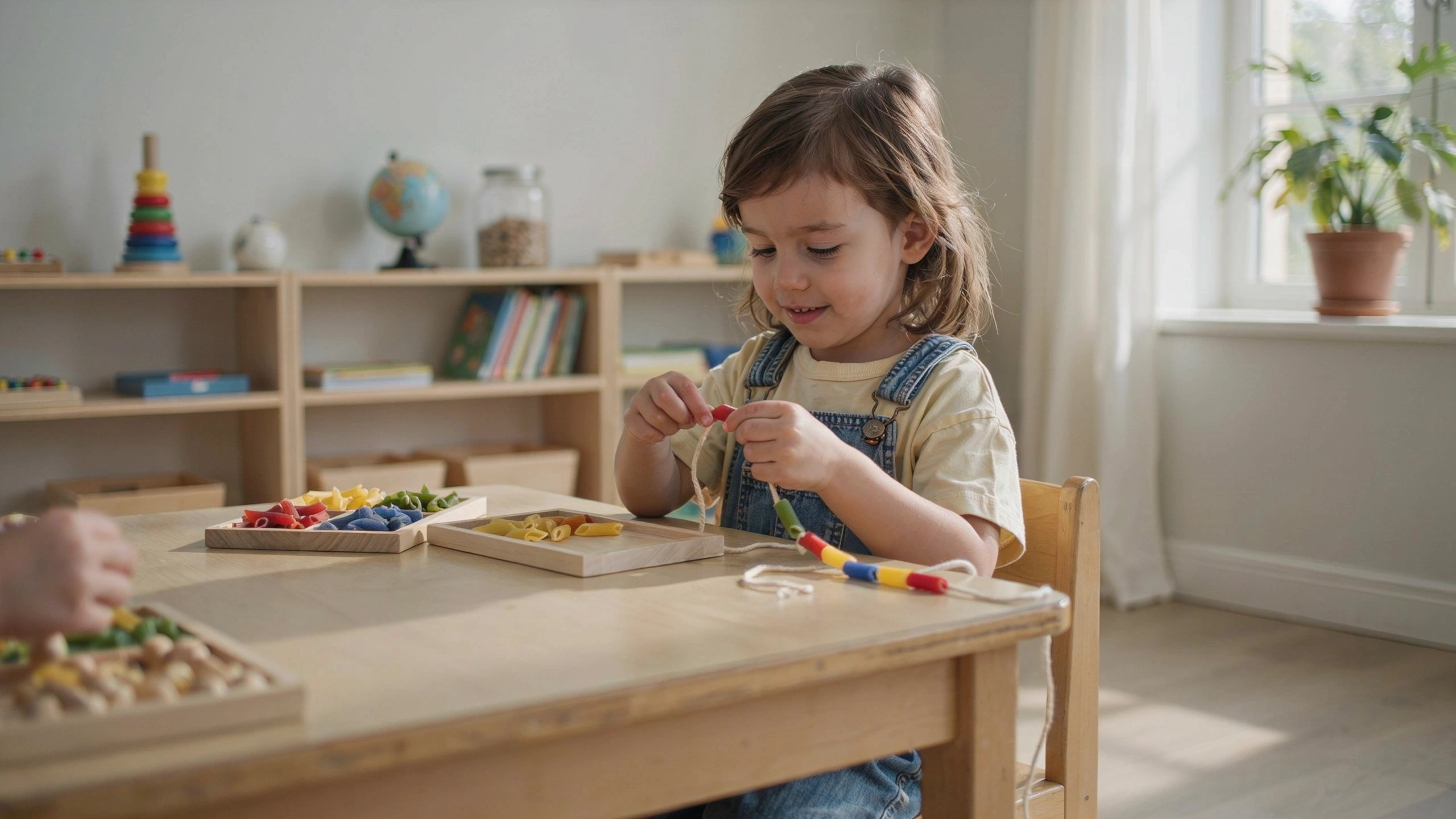
In this activity, children thread large pieces of pasta onto yarn or string to create colorful necklaces, bracelets, or decorations. While enjoying a craft project, they naturally improve fine motor control, hand-eye coordination, and concentration—all important foundations for writing.
This affordable activity is perfect for preschool classrooms, homeschooling, daycare centers, and family learning time at home.
Why Threading Activities Build Writing Readiness
Threading objects onto a string requires careful planning, precise movements, and finger control. These are the same skills children rely on when learning to hold and guide a pencil.
Regular threading activities help children:
- Strengthen hand and finger muscles.
- Improve pencil grip.
- Develop bilateral coordination.
- Increase hand-eye coordination.
- Build patience and focus.
- Prepare for handwriting success.
Children also enjoy creating something they can proudly wear or display.
Materials You’ll Need
Gather these simple supplies before starting:
- Large dry pasta (penne, rigatoni, or similar shapes)
- Thick yarn or shoelaces
- Child-safe blunt tape for wrapping yarn ends
- Food coloring (optional)
- Vinegar and rubbing alcohol for coloring pasta (optional, adult preparation only)
- Small bowls for sorting
- Scissors (adult use)
Colored pasta makes the activity even more exciting and encourages children to create unique designs.
How to Prepare Colored Pasta (Optional)
If you’d like to add color:
- Place dry pasta in a resealable bag.
- Add a few drops of food coloring and a small amount of vinegar or rubbing alcohol.
- Shake gently until the pasta is evenly coated.
- Spread the pasta on a tray and allow it to dry completely.
- Store the colored pasta in airtight containers until ready to use.
Adults should complete this preparation step before the activity begins.
How to Play
- Give your child a piece of yarn with one end secured by tape.
- Place bowls of pasta nearby.
- Encourage your child to thread one piece of pasta at a time.
- Continue until the necklace reaches the desired length.
- Tie the ends together to create a necklace or bracelet.
- Let children proudly wear or display their finished creations.
Encourage children to work slowly and enjoy the creative process.
Skills Children Develop
The Pasta Threading Necklace Game strengthens several important pre-writing abilities.
Fine Motor Strength
Picking up and threading pasta strengthens the muscles needed for handwriting.
Bilateral Coordination
One hand holds the yarn while the other threads the pasta, helping both hands work together.
Hand-Eye Coordination
Children carefully guide each pasta piece onto the yarn using precise visual and motor skills.
Finger Dexterity
Grasping small objects improves independent finger movements and precision.
Concentration
Completing a necklace encourages patience, attention, and persistence.
Creative Game Variations
Add excitement with different learning challenges.
Rainbow Necklace
Thread pasta in rainbow color order.
Pattern Challenge
Create repeating patterns using different pasta colors.
Alphabet Necklace
Use alphabet beads between pasta pieces to spell simple words.
Counting Necklace
Roll a die and thread the matching number of pasta pieces.
Nature Necklace
Alternate pasta with large wooden beads or natural materials like leaves (with adult supervision).
Tips for Parents and Teachers
Help children succeed with these practical suggestions:
- Begin with large pasta pieces that are easy to thread.
- Demonstrate the threading technique slowly.
- Encourage children to use both hands together.
- Praise creativity rather than perfect patterns.
- Offer different pasta shapes for variety.
- Supervise young children throughout the activity.
Short sessions keep children motivated and prevent frustration.
Extending the Learning Experience
Expand the activity with additional educational opportunities.
Invite children to:
- Sort pasta by shape or color.
- Count the number of pasta pieces used.
- Compare necklace lengths.
- Create simple mathematical patterns.
- Design matching bracelets for friends.
- Tell stories about their colorful creations.
These activities combine art, math, and language development while strengthening pre-writing skills.
Benefits Beyond Pre-Writing
The Pasta Threading Necklace Game supports many additional developmental areas, including:
- Creativity
- Problem-solving
- Pattern recognition
- Visual discrimination
- Independent learning
- Self-confidence
- Decision-making
Children enjoy making wearable crafts, giving them a sense of accomplishment while developing valuable motor skills.
Safety Tips
To keep the activity safe:
- Always supervise young children.
- Use large pasta pieces to reduce choking risks.
- Avoid allowing children to chew or eat the craft materials.
- Check yarn lengths to prevent tangling.
- Store leftover materials safely after the activity.
A well-supervised environment allows children to learn safely and confidently.
Conclusion
The Pasta Threading Necklace Game is a simple, affordable, and engaging activity that prepares children for handwriting by strengthening fine motor muscles, improving hand-eye coordination, and encouraging bilateral hand use. Every piece of pasta threaded onto the string helps children develop the precision and control needed for future writing.
Whether used at home, in the classroom, or during homeschool lessons, this enjoyable craft transforms everyday materials into valuable learning tools. With regular practice, children build stronger hands, greater confidence, and the essential skills needed for a successful writing journey.