
Introduction
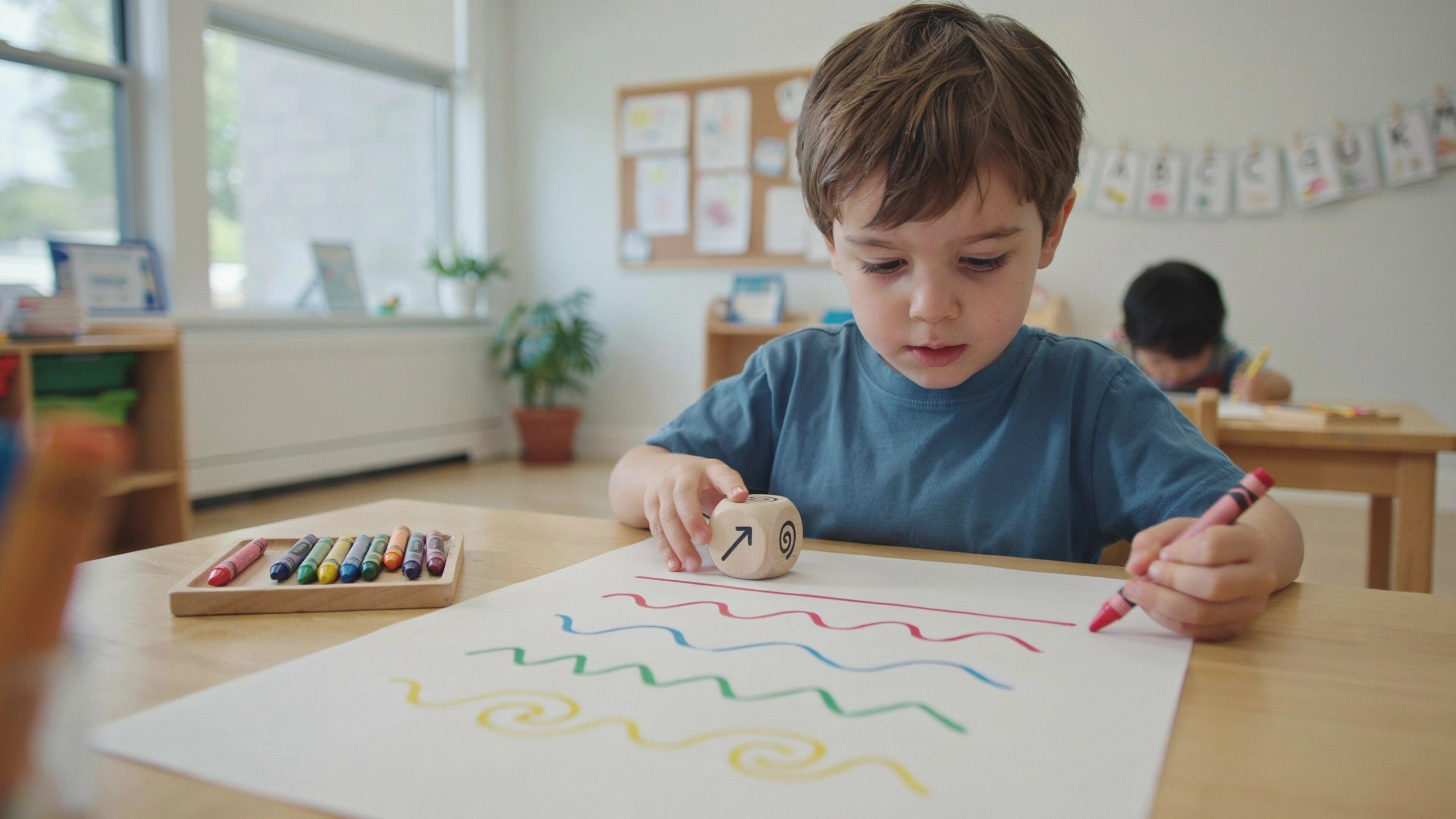
Learning to write begins with mastering simple hand movements. Before children can confidently form letters and numbers, they need plenty of opportunities to practice drawing lines, shapes, and patterns with control. The Rolling Dice and Drawing Lines game transforms these important pre-writing exercises into an exciting challenge that combines creativity, movement, and fun.
In this activity, children roll a die and draw a specific type of line based on the number they roll. Every turn is different, encouraging them to practice a variety of pencil movements while developing fine motor skills, concentration, and imagination.
This engaging game is ideal for preschoolers, kindergarten students, homeschooling families, learning centers, and early childhood classrooms.
Why Drawing Lines Prepares Children for Writing
Every letter and number is made from a combination of basic strokes. By practicing these simple movements, children build the muscle memory and control needed for successful handwriting.
Drawing line patterns helps children:
- Strengthen fine motor muscles.
- Improve pencil grip.
- Develop hand-eye coordination.
- Increase wrist flexibility.
- Build visual-motor integration.
- Gain confidence before formal handwriting lessons.
Making these exercises feel like a game encourages children to practice more often.
Materials You’ll Need
Prepare these simple supplies:
- One standard six-sided die
- Blank paper
- Pencils
- Crayons or colored pencils
- Ruler (optional)
- Printable line guide (optional)
You can laminate reusable worksheets and use dry-erase markers for repeated practice.
How to Play
Assign one drawing action to each number on the die.
Example:
- 1 – Draw a straight vertical line.
- 2 – Draw a horizontal line.
- 3 – Draw a zigzag line.
- 4 – Draw a wavy line.
- 5 – Draw a large circle.
- 6 – Draw a spiral.
Children roll the die, complete the drawing, and continue rolling until the page is filled with different patterns.
Skills Children Develop
The Rolling Dice and Drawing Lines game strengthens many essential pre-writing skills.
Fine Motor Control
Repeated pencil movements strengthen the small muscles needed for handwriting.
Pencil Grip
Holding and guiding the pencil during different drawing tasks reinforces a comfortable writing grip.
Hand-Eye Coordination
Children carefully watch the lines they create while controlling their hand movements.
Visual-Motor Integration
Matching the dice result to the correct drawing action strengthens the connection between visual processing and motor execution.
Concentration
Listening to instructions, remembering drawing rules, and completing each task help children improve focus and attention.
Creative Game Variations
Keep children excited by introducing new versions of the game.
Color Dice Challenge
Assign a different color to each roll and create colorful artwork.
Shape Builder
Replace lines with shapes such as squares, triangles, stars, and hearts.
Alphabet Practice
Assign simple letter strokes to each number and gradually build complete letters.
Story Drawing
Each roll adds a new element to a picture, such as a tree, cloud, sun, or flower.
Partner Challenge
Children take turns rolling the die and adding to the same drawing, encouraging teamwork and creativity.
Tips for Parents and Teachers
Help children enjoy the activity with these suggestions:
- Begin with large drawing movements.
- Demonstrate each line before playing.
- Encourage correct pencil grip.
- Praise effort and creativity.
- Allow children to decorate their finished drawings.
- Keep sessions short and enjoyable.
Frequent practice helps children develop confidence and smoother writing movements.
Extending the Learning Experience
You can easily combine this activity with other educational concepts.
Invite children to:
- Count the number of each type of line they drew.
- Create repeating patterns using different lines.
- Trace their drawings with colored pencils.
- Turn their line patterns into animals, vehicles, or scenery.
- Practice writing simple letters after completing the game.
- Describe their artwork using new vocabulary words.
These activities reinforce creativity, language development, and early math skills while continuing to strengthen pre-writing abilities.
Benefits Beyond Pre-Writing
The Rolling Dice and Drawing Lines game supports many additional developmental skills, including:
- Creativity
- Problem-solving
- Decision-making
- Pattern recognition
- Visual perception
- Independent learning
- Self-confidence
Because every dice roll creates a new challenge, children stay motivated and eager to continue practicing.
Safety Tips
To ensure a safe and enjoyable experience:
- Use child-safe pencils and crayons.
- Provide a stable writing surface.
- Keep small dice away from children who may put them in their mouths.
- Supervise younger children during the activity.
- Store all materials neatly after playtime.
A well-organized learning space helps children stay focused and enjoy the activity.
Conclusion
The Rolling Dice and Drawing Lines game is a fun, creative, and effective way to prepare children for handwriting. By combining simple dice rolls with line-drawing challenges, children strengthen fine motor control, improve pencil grip, and develop the confidence needed for writing success.
With only a die, paper, and a pencil, parents and teachers can create an engaging learning experience that encourages repeated practice without becoming repetitive. Through playful exploration and consistent participation, children build the strong foundation they need for handwriting while discovering that learning can be exciting, creative, and rewarding.