
Introduction
Education is evolving to prepare students for a world that values creativity, collaboration, communication, and problem-solving. Traditional teaching methods, which often emphasize memorization and standardized testing, are gradually being complemented by more engaging and meaningful approaches. One of the most influential of these approaches is Project-Based Learning (PBL).
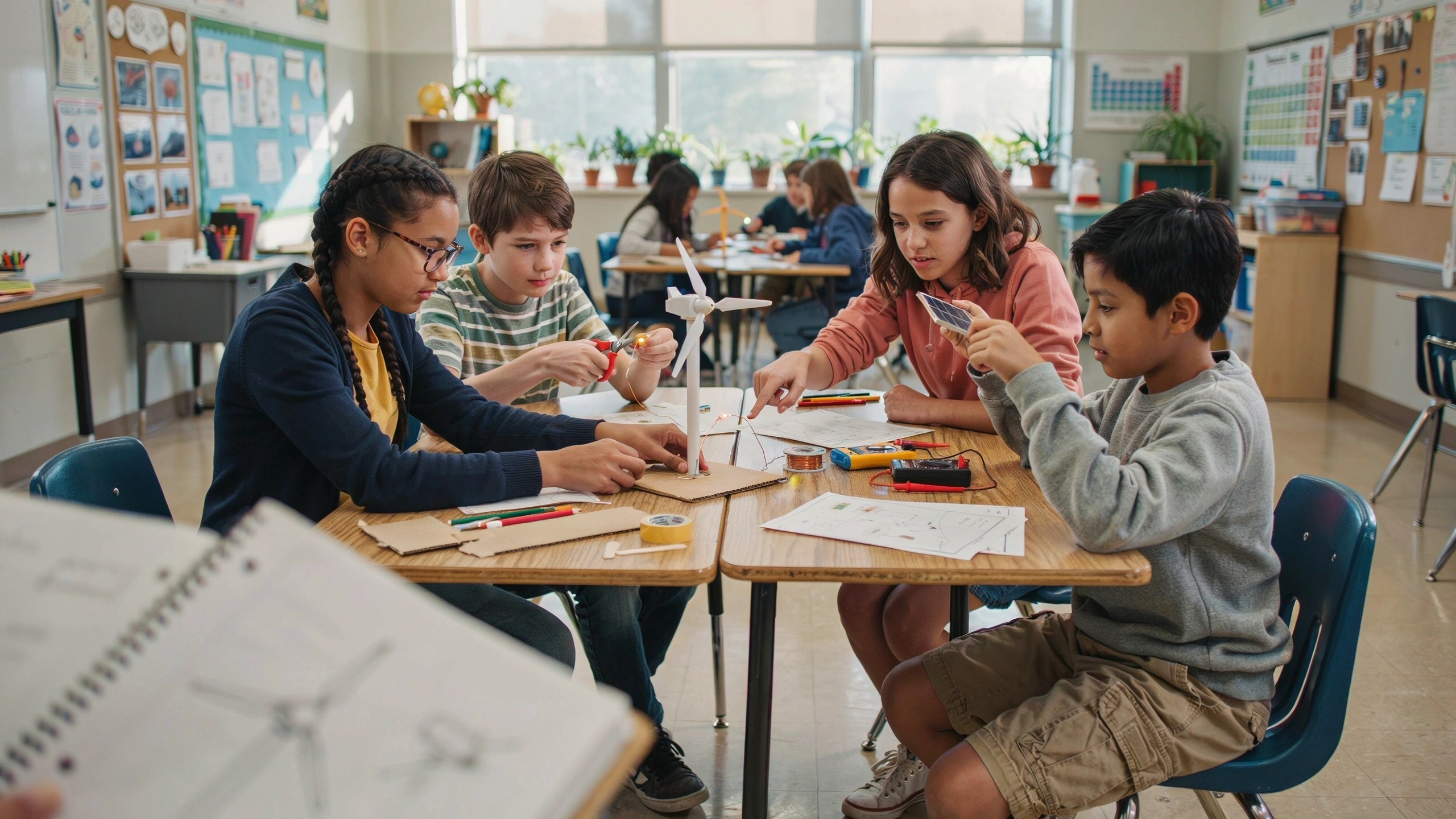
Project-Based Learning places students at the center of the learning process by challenging them to investigate real-world problems, develop innovative solutions, and present their findings. Instead of simply learning about a topic, students actively apply their knowledge through hands-on experiences. As schools around the globe seek to prepare learners for the future, Project-Based Learning is becoming the new standard in modern education.
What Is Project-Based Learning?
Project-Based Learning is a teaching method in which students gain knowledge and skills by working over an extended period to investigate and respond to a meaningful question, challenge, or real-world problem.
Unlike traditional assignments that often have a single correct answer, PBL encourages students to explore multiple solutions, conduct research, collaborate with peers, and create original products or presentations.
Projects may include:
- Designing a sustainable community.
- Creating a business plan.
- Developing a scientific investigation.
- Producing a documentary or podcast.
- Building engineering prototypes.
- Organizing community service initiatives.
Each project connects classroom learning with real-life situations, making education more relevant and engaging.
Why Project-Based Learning Matters
Today’s students need more than academic knowledge. Employers increasingly seek individuals who can think critically, communicate effectively, solve complex problems, and work collaboratively.
Project-Based Learning develops these essential skills while helping students understand how classroom concepts apply to everyday life.
Instead of asking, “Will this be on the test?” students begin asking, “How can we solve this problem?”
This shift encourages deeper understanding and lasting learning.
Student-Centered Learning
One of the greatest strengths of Project-Based Learning is that students become active participants rather than passive listeners.
Students:
- Ask meaningful questions.
- Conduct independent research.
- Analyze information.
- Test ideas.
- Make decisions.
- Reflect on their learning.
- Present their conclusions.
Teachers guide the learning process while allowing students to take responsibility for their own education.
This approach builds confidence, independence, and motivation.
Developing Critical Thinking Skills
Many real-world problems do not have simple solutions.
Project-Based Learning challenges students to evaluate evidence, compare different viewpoints, identify patterns, and make informed decisions.
For example, students studying climate change may analyze scientific data, interview local experts, examine environmental policies, and propose practical solutions for their community.
These experiences strengthen analytical thinking and decision-making abilities.
Encouraging Collaboration
Modern workplaces depend heavily on teamwork, and schools are increasingly recognizing the importance of collaborative learning.
During projects, students learn to:
- Share responsibilities.
- Listen to different perspectives.
- Resolve disagreements respectfully.
- Support one another.
- Achieve common goals.
These interpersonal skills are valuable not only in school but throughout life.
Making Learning More Meaningful
Students often become more engaged when they understand the purpose behind their learning.
Project-Based Learning connects academic subjects to authentic situations.
For example:
- Mathematics can be used to create financial budgets.
- Science can solve environmental challenges.
- History can inspire museum exhibitions.
- Language arts can produce newspapers or podcasts.
- Technology can develop mobile applications.
Meaningful learning increases curiosity and improves long-term knowledge retention.
Integrating Multiple Subjects
One project often combines several academic disciplines.
For example, designing a sustainable city may require students to use:
- Mathematics for budgeting and measurements.
- Science for renewable energy solutions.
- Geography for land use planning.
- Technology for digital design.
- Language Arts for presentations and reports.
- Art for architectural illustrations.
This interdisciplinary approach reflects how knowledge is applied outside the classroom.
The Role of Technology
Technology enhances Project-Based Learning by providing students with powerful tools for research, communication, creativity, and collaboration.
Students can use:
- Online research databases.
- Digital design software.
- Video editing applications.
- Presentation tools.
- Collaborative documents.
- Virtual simulations.
- Artificial Intelligence for brainstorming and feedback.
Technology allows projects to become more interactive and prepares students for digital careers.
Assessing Student Learning
Assessment in Project-Based Learning goes beyond traditional exams.
Teachers evaluate:
- Research quality.
- Critical thinking.
- Creativity.
- Collaboration.
- Communication.
- Problem-solving.
- Final products.
- Student reflections.
This comprehensive assessment provides a more accurate picture of student learning and growth.
Challenges of Project-Based Learning
Although Project-Based Learning offers many benefits, successful implementation requires careful planning.
Some common challenges include:
Time Management
Projects often require several weeks of planning, research, collaboration, and revision.
Teacher Preparation
Educators need professional development to design effective projects and facilitate student inquiry.
Assessment Complexity
Evaluating collaboration, creativity, and problem-solving requires clear rubrics and multiple forms of assessment.
Resource Availability
Some projects require technology, materials, or community partnerships that may not be available in every school.
Despite these challenges, many educators find that the educational benefits far outweigh the difficulties.
The Future of Project-Based Learning
As education continues to evolve, Project-Based Learning is expected to become even more widespread.
Future classrooms may include:
- Global collaborative projects with students from different countries.
- AI-supported research and personalized project guidance.
- Virtual Reality field experiences.
- Community partnerships with local businesses and organizations.
- Student-led innovation challenges addressing real-world issues.
These opportunities will prepare learners for careers that demand adaptability, creativity, and lifelong learning.
Conclusion
Project-Based Learning is transforming education by making learning more engaging, relevant, and meaningful. Instead of memorizing information for exams, students develop the knowledge, skills, and confidence needed to solve authentic problems and contribute positively to society.
By encouraging collaboration, creativity, critical thinking, and communication, Project-Based Learning prepares students not only for academic success but also for the rapidly changing world beyond the classroom.
As schools continue to embrace innovative teaching practices, Project-Based Learning is proving to be more than just a trend—it is becoming a cornerstone of 21st-century education.